
I’ve Been a Vet for 17 Years. We’ve Been Treating Dog Allergies Wrong This Entire Time.





Some patients stay with you long after they leave the exam room.
There was a four-year-old Golden Retriever named Biscuit. His owner carried him in first thing on a Tuesday.
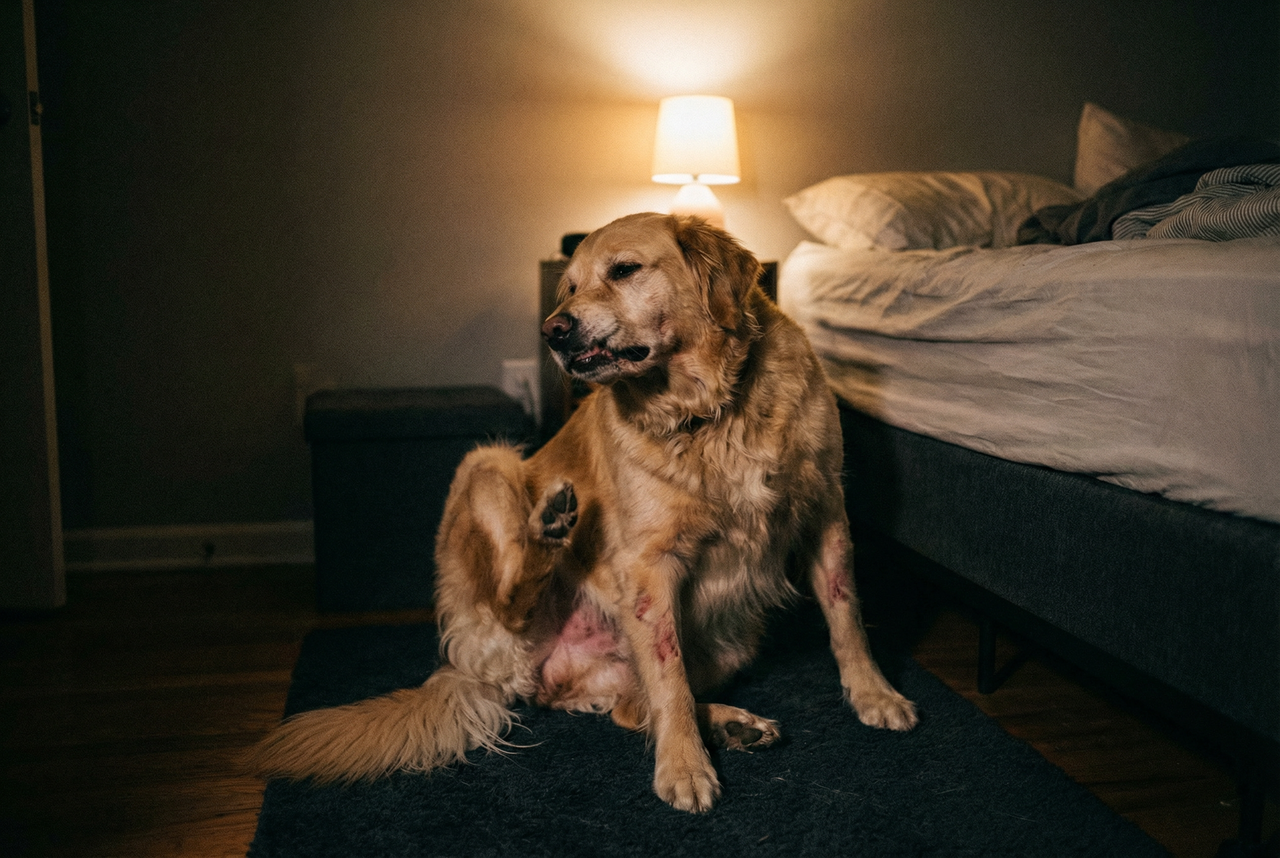
She was running on almost no sleep — three nights of it — because Biscuit had been tearing at himself without pause: raking at his ears, chewing his paws, dragging his stomach along the rug just to take the edge off.
She broke down in my exam room.
“I’ve done every single thing you asked me to,” she told me. “The Apoquel. The Cytopoint shots. The medicated shampoo. The prescription diet. And none of it helps anymore.”
I flipped through his file. A year and a half of interventions. More than $2,400 spent on medications. And he was in rougher shape than the day we’d begun.
That morning, I didn’t have anything useful to offer her.
But Biscuit is the case that made me start pulling apart everything my training had told me about allergies in dogs.
What Vet School Taught Me About Itching
Dog won’t stop scratching? Call it environmental allergies. Start Apoquel.
Apoquel loses its punch? Layer in Cytopoint injections.
Cytopoint fading sooner? Give it more often.
Still itchy? Order the allergy panel. Run an elimination diet. Add medicated baths. Reach for heavier immunosuppressants.
That’s the script. I ran it faithfully for fifteen years.
And I kept watching the identical arc play out: a stretch of relief, then the itch returns. Relief again, then it’s worse. A loop that never truly closes — it just keeps getting pricier.
I’ll be candid. For most of my career I made peace with that. “Chronic allergies mean chronic management” is the lesson we’re handed. We’re not aiming for a cure. We’re aiming to keep it contained.
Then, roughly two years back, I began jotting down informal notes on my allergy cases. Nothing formal — just logging how they turned out. And the trend was impossible to unsee.
Dogs put on Apoquel — about 60–70% got real relief in the opening months. That’s exactly what you hope for.
But come month eight or nine? Maybe 30–40% were still doing well. The others needed bigger doses, extra drugs, or had simply flatlined.
And the ones kept on long-term immunosuppressants? I began noticing more secondary infections. Skin problems that didn’t look like the allergy they’d started with. Digestive trouble. A small cluster of tumor cases in dogs under seven — which is not what you’d expect.
I’m not claiming those medications caused the tumors. I can’t make that claim. What I can say is that holding a dog’s immune system down for years on end isn’t something any of us felt easy about in school.
The drugs aren’t really the villain here. The trouble is what we’re failing to do while we hand them out.
We never stop to ask why the immune system is overreacting to begin with.

The Phone Call That Changed How I Practice
About six months ago, a vet I’d gone through school with rang me up. She’s someone I respect, and she’s every bit as wary of supplements as I am. She wanted to talk through a patient who’d been giving her fits — a dog that would not stop itching.
Three years on Apoquel. Every option exhausted.
Then she said something that caught me completely off guard.
“I pulled him off all of it and put him on a gut-restoration protocol. Five weeks later the scratching just… stopped.”
I nearly chuckled. Gut health? For a skin allergy? That struck me as wellness-blog talk — not the sort of thing a board-certified vet recommends.
But she meant it. And it wasn’t a fluke case of one.
“Sarah, I’ve now done this with fourteen dogs. Twelve are completely off allergy meds. The last two are down to half of what they were taking. I’m not overselling it.”
She forwarded me the research she’d been working through. And I have to walk you through what I found — because it reshaped the way I look at every itching case that comes through my door.
80% of Your Dog’s Immune System Lives in Their Gut
I realize that figure sounds off. But it’s settled immunology.
The lining of the gut is the body’s single largest immune surface. It’s the place where the immune system sorts out what to fight and what to leave alone. When that machinery is running right, your dog meets pollen, dust, grass — all the ordinary outdoor stuff — and simply shrugs it off. No flare. No inflammation. No itch.
But once the gut microbiome gets thrown off — the good bacteria die back and the harmful ones take over — the intestinal lining begins to break down.
This is what researchers mean by intestinal permeability. You may know it by its nickname: “leaky gut.”
Here’s the chain of events: partially digested proteins and environmental particles slip through the damaged gut wall straight into the bloodstream. The immune system reads them as intruders. It fires off an inflammatory response. Cytokines pour out.
That inflammation surfaces as itching. Paw licking. Ear infections. Hot spots. Angry, reddened skin.
It looks precisely like environmental allergies. Every symptom lines up.
But the environment isn’t what’s driving it. The gut is.
And here’s the piece that stopped me cold: Apoquel works by blocking the inflammatory cytokines — the JAK pathway, specifically. It quiets the immune response, and the itch dies down.
But it does nothing about the damaged gut that set the immune reaction off in the first place.
So the instant the medication fades, the gut is still leaking. The immune system reignites. The itching comes right back.
We weren’t losing because we’d picked the wrong drug. We were losing because we’d been treating a symptom as though it were the disease.
Why Everything Else Fails Too
Once the gut connection clicked, every treatment that had ever let me down suddenly made sense.
Hypoallergenic food trials. We’d burn eight weeks stripping out proteins, hunting for the “trigger food.” But most of the time the food isn’t the culprit. A dog with a sound gut can handle chicken without a hitch. It’s the damaged lining letting undigested proteins through that sparks the reaction. Heal the gut, and the food “allergy” often vanishes.
Allergy testing panels. We’d run a $500 test, flag 15 environmental triggers, and instruct the owner to dodge them all. But we never asked why the dog’s immune system was firing at everyday things. A healthy immune system doesn’t go after grass pollen. A dysregulated one does — because the gut told it to.
Cytopoint injections. Same idea as Apoquel by a different route. It blocks the itch signal. It doesn’t touch the cause. Terrific for a couple of weeks. Then you’re back at square one.
Medicated shampoos. You can’t rinse away an internal immune problem. The skin is the symptom, not the origin.
I’d prescribed every one of these for years. Confidently. Because that’s the training.
But seen through the gut lens, we’d been fighting the flames while the gas line kept leaking.
So I Did What I Always Do — I Went to the Research

I gave three weeks to reading everything I could get my hands on about the canine gut microbiome and immune function.
The studies were sitting right there. They’d been there for years. I just hadn’t gone looking.
Dogs with chronic “allergies” showed gut dysbiosis again and again — thinner microbial diversity, overgrowth of harmful bacteria, a weakened intestinal barrier. When researchers rebuilt gut health in those dogs, the immune markers settled down. Inflammatory cytokines fell. The skin symptoms cleared.
Not in every dog. Nothing works in every dog. But the results were strong enough that I couldn’t look away.
The real question was this: what does effective gut restoration actually take?
Because I’ll level with you — most probiotics on the shelf are close to useless for this.
Single-strain products. No repair for the gut lining. No anti-inflammatory backup. You’re dropping a few bacteria into a wrecked environment and praying they survive stomach acid. Most of them don’t.
The research pointed to five things that have to work in concert for gut restoration to mean anything:
Five components. All five pulling in the same direction. I couldn’t find a single product that brought them together.
Then My Colleague Told Me What She’d Been Using
The vet who’d called me — the one with fourteen dogs off their allergy meds — had tracked down exactly one formula that ticked every box.
It’s called Nira Pet.
I’ll be straight with you. My first reaction was doubt. I’m always wary of supplements. The pet supplement business is largely unregulated, and most products don’t hold what their labels promise.
But three things about this one stood out.
First — the formula matched the research precisely. Two clinically studied spore-forming probiotic strains. Postbiotics. Prebiotics (inulin). Colostrum for gut-lining repair. Ashwagandha for cortisol. It wasn’t a scattershot mix of ingredients. It was the exact five-part protocol the studies backed.
Second — eight third-party certifications. An NASC quality seal. cGMP manufacturing. Independent lab verification. In a category where most products carry zero verification, that carried weight with me. What’s printed on the label is genuinely in the jar.
Third — it runs about $27 a jar with the bundle. Most of my chronic allergy patients were laying out $200–$500 a month on Apoquel and Cytopoint. Even if it only worked for a share of them, the risk-to-reward was obvious.
So I started recommending it. Carefully. Only to my chronic cases — the dogs who’d been on allergy medication for six months or longer with fading results. The ones where I’d run out of good moves.
What I’ve Seen in My Patients Over Four Months
I want to be careful here. I’m a vet, not a salesperson. So here’s the honest picture.
I’ve recommended Nira Pet to twenty-three dogs in my practice since I started. Here’s what I’ve watched happen:
Weeks 1–2: Most owners notice digestion improving first — firmer stools, less gas. The gut responds before the skin does. I tell every owner the same thing: don’t look for miracles in week one. The bacteria need time to colonize. Hold current medications steady.
Weeks 2–3: This is usually when the phone starts ringing. Scratching noticeably down. Paw licking less compulsive. Several owners told me their dogs slept through the night for the first time in months. This is the stage where I’ll start talking taper with owners who are clearly improving.
Weeks 4–6: This is where it genuinely surprised me. Of my twenty-three dogs, eighteen showed at least a 60–70% drop in scratching by week four. Fourteen came off allergy medication entirely by week six — under my supervision, with careful tapering. The rest either improved moderately or are still early in the process.
Week 8 and beyond: The dogs who responded well have stayed well. No relapse. That’s the part that separates it from medication. Stop Apoquel and the itch is back within days. These dogs paused their probiotics for a week as a test — and the improvement held. Because we’d actually addressed the underlying problem.
I won’t pretend the numbers are flawless. Four dogs in the group barely improved. That’s real. Not every itching case is gut-driven — some dogs truly do have severe environmental allergies that need medication. I still reach for Apoquel when it’s the right call.
But eighteen out of twenty-three? That’s a success rate I’ve never gotten out of any allergy drug.
And the gains weren’t only skin-deep. Owners described better energy, glossier coats, fewer ear infections, stronger appetite. When the gut heals, everything downstream improves.
What Real Owners Have Told Me
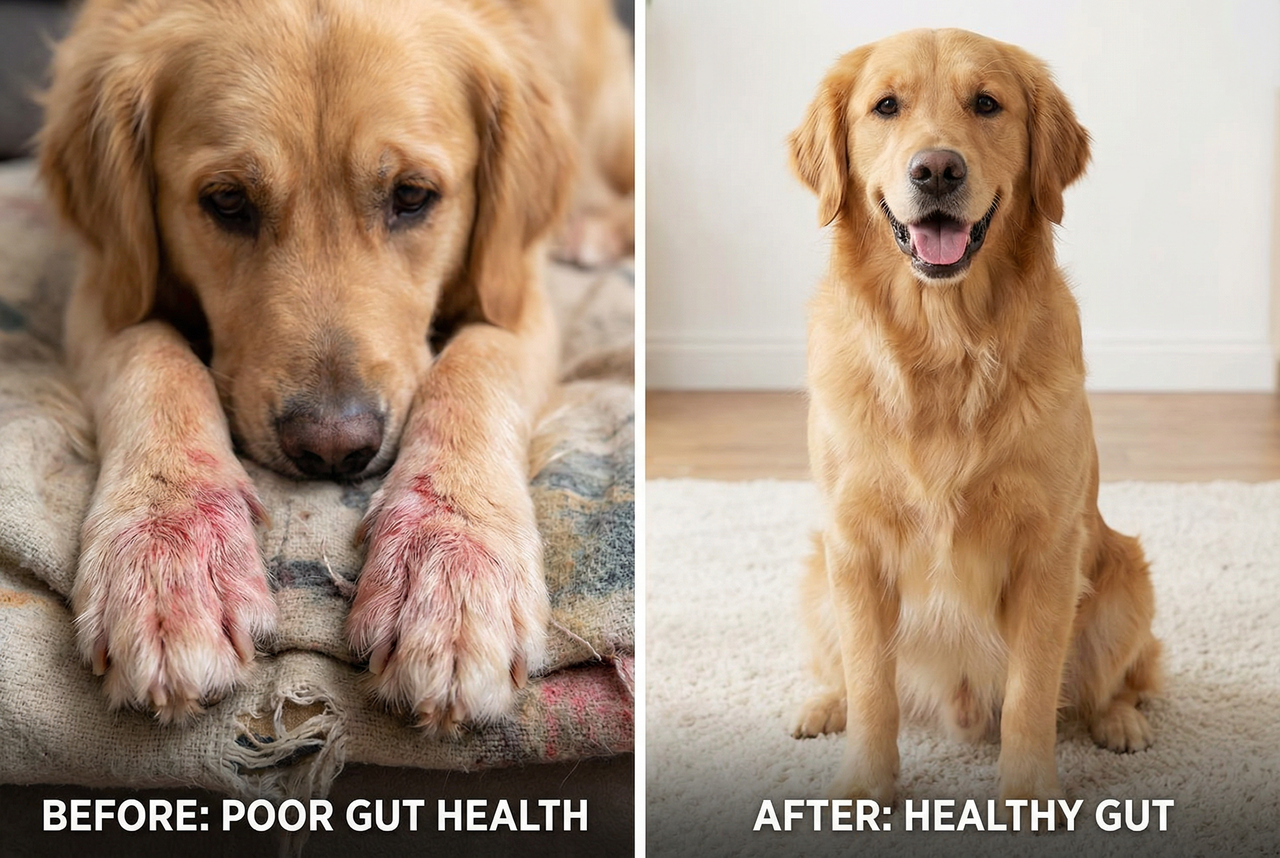
I asked a handful of my clients whether they’d be willing to share how it went. Here’s what they said:
“I came across these soft chews while I was hunting for an allergy medication. Turns out my girl never had allergies at all — she just needed something to calm the itching from the inside. That’s exactly what it did. The itching is gone.”
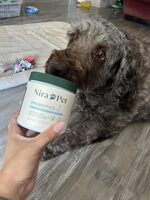
“This is the only thing that finally got my baby off Apoquel and Cytopoint. If those two names sound familiar to you, give this a shot instead. You’ll thank me later.”
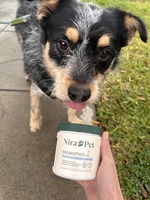
“I felt like I’d thrown everything at getting Chucky to quit scratching himself raw. Even our vet had run out of ideas. I finally gave these a try on the 30-day trial — and I haven’t had to reach for anything else since.”
These aren’t rare stories. I hear some version of them just about every week now.
Here’s What I Think You Should Know
If your dog has been on Apoquel or Cytopoint for more than a few months and the itch keeps returning — or the medications are doing less and less over time — the answer probably isn’t a stronger drug.
The problem is almost certainly in their gut.
You can keep muffling the immune response with medications that cost $150–$300 a month, knowing the itch comes back the moment you stop.
Or you can work on restoring the gut — the actual root cause.
That’s not a sales pitch. That’s just the math. And the science.
Nira Pet is currently running a Buy 2, Get 1 Free promotion — a full 12-week supply, which is exactly the gut-restoration timeline the research supports.
They also stand behind a 30-day money-back guarantee. Full refund if your dog doesn’t improve. No questions.
I’ve recommended this to twenty-three dogs in my practice. Eighteen are off their allergy medications. I only wish I’d understood this approach five years ago.
If I could go back and tell my patients’ owners one thing, it would be this: your dog’s immune system isn’t broken. Their gut is. And that’s something you can actually fix.
How to Try It
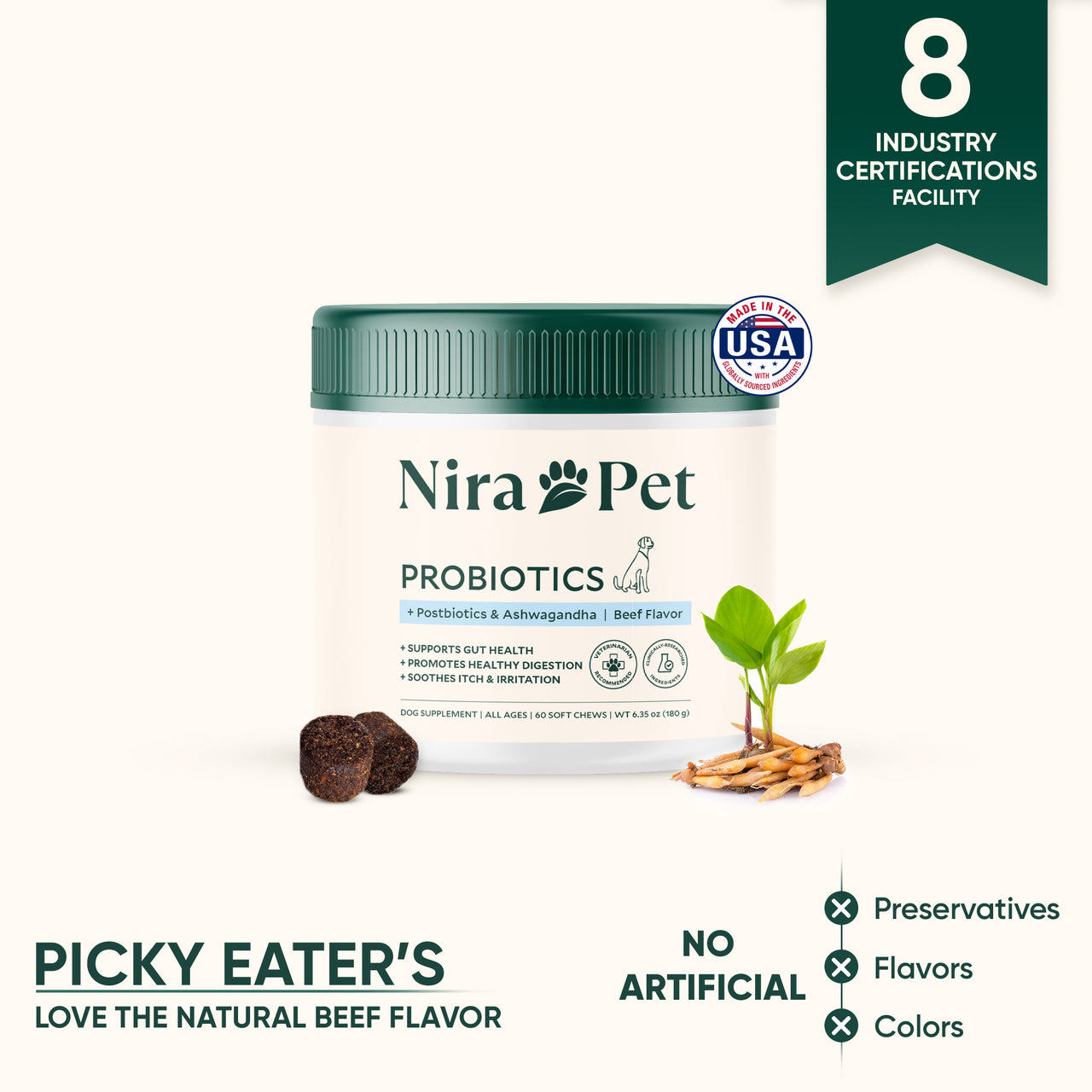
Nira Pet sells direct — no retail, no middlemen.
They put quality ahead of mass production, which means they sell out from time to time. If the button above shows availability, there’s stock on hand. If it doesn’t, they usually restock within a few days.
You can pause, skip or cancel the subscription whenever you like. No hoops.
These statements have not been evaluated by the Food and Drug Administration. This product is not intended to diagnose, treat, cure, or prevent any disease. Individual results may vary. Always consult your veterinarian before starting a new supplement. This is an advertisement and not a news article, blog post, or consumer protection update.
© 2026 Nira Pet. All Rights Reserved.