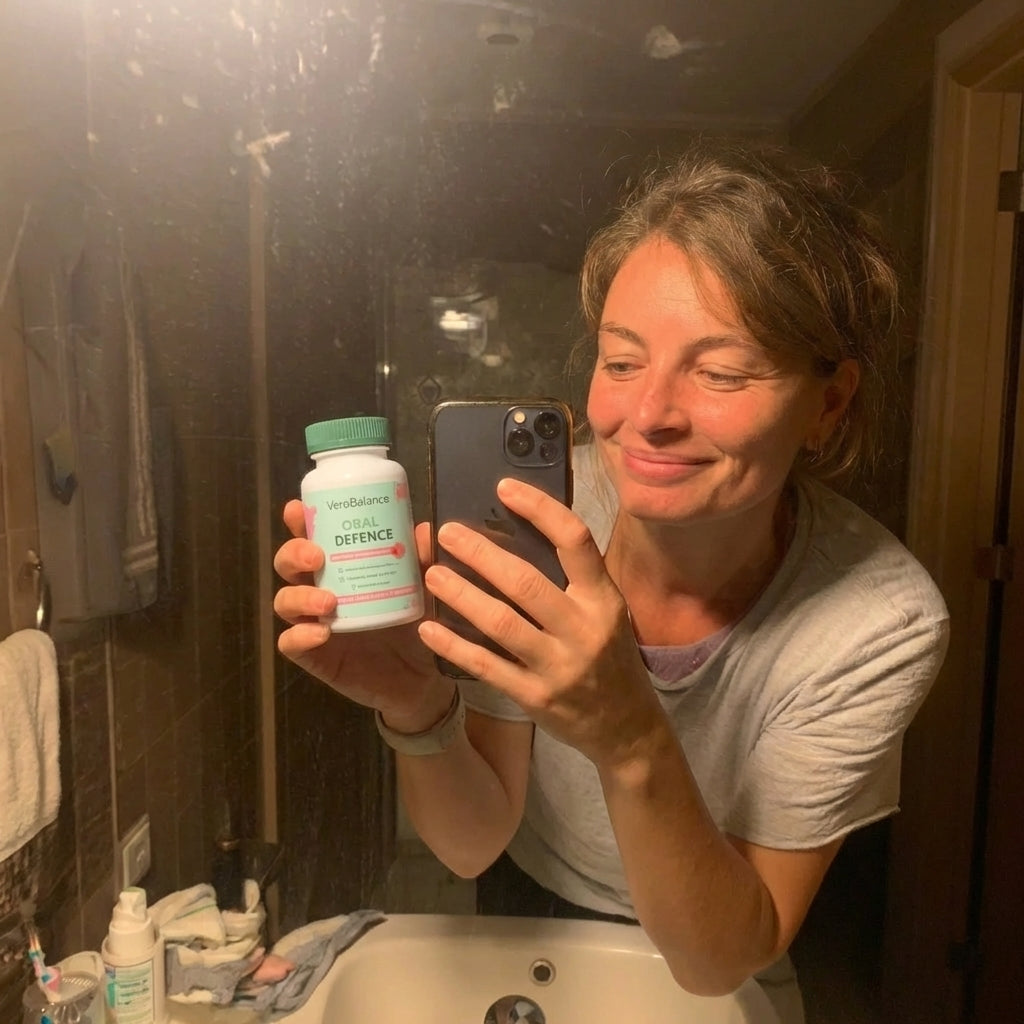
Top Researchers Expose the Truth: “This Is the Only Way to Protect Your Teeth If You Suffer From Chronic Dry Mouth, And Your Dentist Has No Idea Of It.”
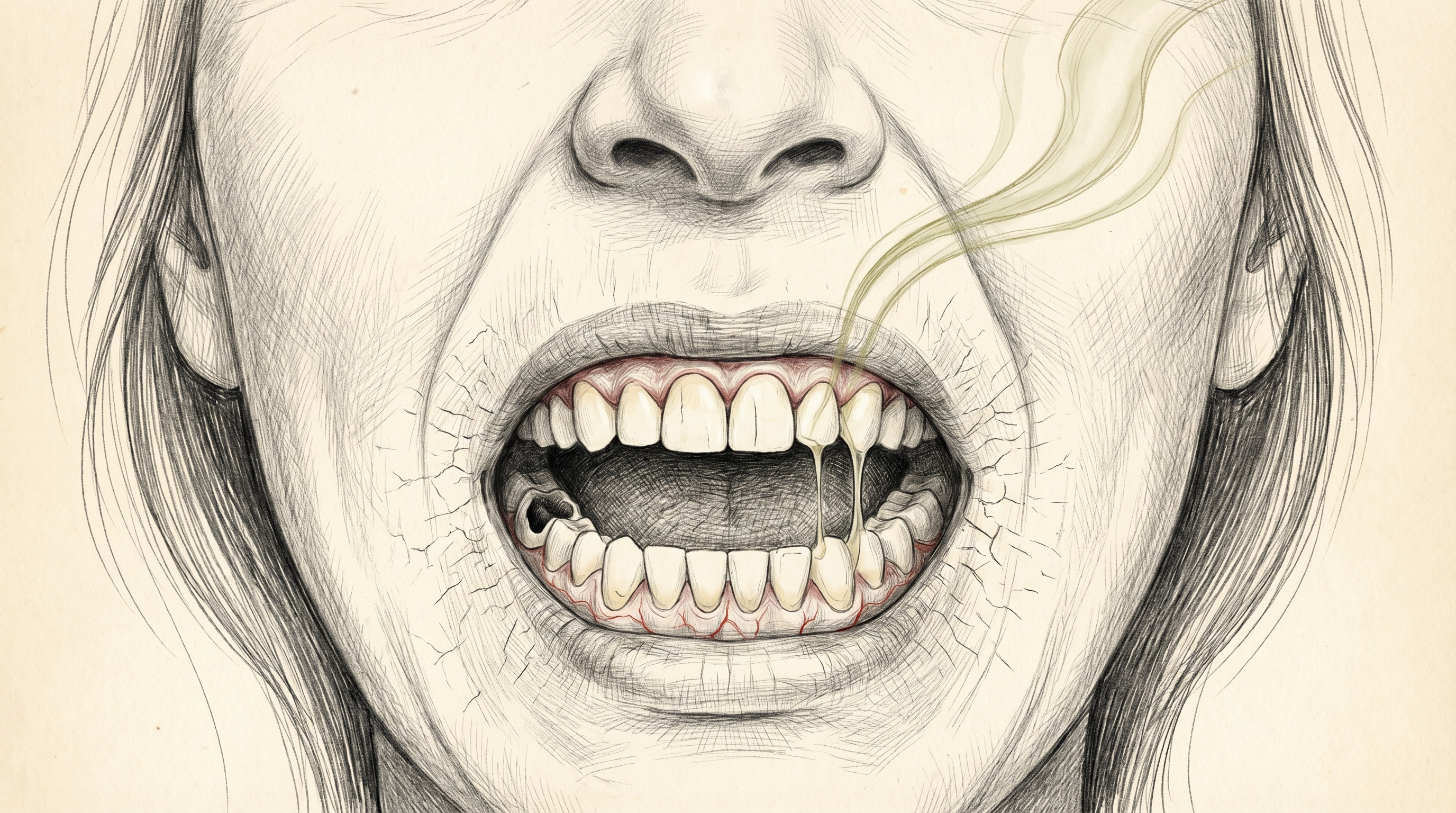
Dear Friend Struggling With Dry Mouth,
If you jolt awake at 3am with a mouth so parched it genuinely hurts, and you reach for the glass on the nightstand that buys you maybe thirty seconds before the dryness rolls back in…
If you take a water bottle everywhere — into meetings, into the car, onto the nightstand, tucked in a coat pocket — and your mouth is still bone-dry by mid-morning anyway…
If you've caught a faint clicking sound when you part your lips in a silent room, or felt your tongue peel off the roof of your mouth the moment you try to speak up in a meeting…
If your dentist keeps turning up fresh cavities, your hygienist keeps commenting on your enamel, and every visit wraps up with that same hollow instruction — “just make sure you're staying hydrated”…
Then what follows is going to hit you two ways. First, you'll finally feel understood. Then, honestly, you'll feel furious. Because the real reason your mouth keeps drying out — no matter what you do, no matter how much you drink — has nothing to do with how much water is going in. You've been sold a story by a $17 billion oral-care industry that has never once designed a single product for what is truly going wrong inside your mouth.
The Night Everything Changed


One of my patients — I'll call her Linda — is 54. For eleven years she ran the compliance department of a regional hospital network. She is careful, exacting, and about the least dramatic person you'll ever meet. So when Linda says something is bad, take her at her word.
She came in about two years ago for what she assumed was an ordinary cleaning. The moment she settled into the chair I could see something had shifted. She looked worn down in a way a single rough night doesn't explain. Her hands were knotted together in her lap. Before I could even greet her she said, “Just give it to me straight, Dr. Carter. How bad is it?”
It was bad. Over eighteen months — eighteen months in which she never skipped a cleaning, brushed twice daily without exception, and dutifully rinsed with the Biotene her old dentist had told her to use — she'd picked up four new cavities. The enamel along her back molars had thinned measurably. The gum pockets on both sides of her lower jaw had deepened.
“I don't get it,” she said. “I do everything right. I've always done everything right.”
For fourteen months she'd been taking a daily blood-pressure tablet and a low-dose antidepressant. She'd also just started on a CPAP machine for sleep apnea — a device that had transformed her breathing but handed her a relentless new problem: every single night her mouth dried out completely, and she'd wake up genuinely uncomfortable despite the humidifier attachment.
I knew those were the culprits. But knowing the cause and having something that would actually help her were two very different things. And as she sat there fighting back what looked like the start of tears, it landed on me that the advice I'd been trained to hand out — drink more water, try Biotene, see you in three months — was never going to be enough. It never had been.
“I wake up in the middle of the night and my mouth is so dry I can taste it,” she told me. “There's water right there. I drink it. It helps for maybe a minute. Then it's gone again. By morning my mouth feels like something crawled in and died. I've tried everything. My doctor says it's just a side effect, nothing to be done. My last dentist said try Biotene. I've been on Biotene for a year and I'm sitting here with four new cavities.” She stopped. “I am so tired of being told to drink more water.”
That night I sat at my desk for three hours and didn't get up until I'd finally asked the question I should have asked twenty-two years earlier: why does this keep getting worse — even for people doing everything we tell them to do?
What I Found Made Me Want to Throw Out Every Product in My Office

Over the next four months I turned into someone my staff found a little unsettling. I dug up every study I could locate on drug-induced and systemic xerostomia — the clinical name for exactly what Linda and tens of millions of others are living through. I reached out to endocrinologists, pharmacologists and salivary-gland researchers at the University of Washington and the Mayo Clinic School of Medicine. I sat in on a closed symposium in Boston about how medications and medical devices affect oral tissue. I went straight to the primary literature — not the research funded by oral-care brands, but the independent work the $17 billion toothpaste-and-mouthwash business has zero interest in printing on the side of a Listerine bottle.
I burned through more than $22,000 on journal access, conference fees and independent lab consultations. What I found was damning.
The oral-care industry has known for decades that certain medications, CPAP therapy, aging and various systemic conditions fundamentally rewire the biology of the mouth. They've known the products on their shelves — alcohol rinses, surface-coating sprays, ordinary dry-mouth gels — were never engineered for that biology. And they keep selling them anyway. Because they work just barely well enough, for just barely long enough, that you come back for the next bottle.
🔬 Here is what the research actually shows:
- More than 400 commonly prescribed medications — antidepressants, antihistamines, blood-pressure drugs, diuretics, bladder medications — list dry mouth as a primary side effect, and many measurably suppress the salivary glands.
- CPAP users, even on humidified machines, dry out faster through the night because of the continuous airflow moving through the mouth.
- Aging on its own can cut baseline saliva output by as much as 40% in many adults by their sixties.
This is not dehydration. This is the systemic shutdown of the biological system that protects your teeth, your gums, your enamel and your breath — all at the same time.
Let me put that in plain language. Your saliva is not water. Calling saliva “mouth water” is like calling blood “body water.” They are entirely different fluids doing entirely different jobs. Your saliva carries antimicrobial peptides that actively track down and kill cavity-causing bacteria. It ferries calcium and phosphate to your enamel around the clock, quietly repairing microscopic damage. It holds pH-buffering compounds that neutralize acid every time you eat. It is a precision-built defense system that hummed along in the background for decades without you ever giving it a thought.
Then the medications started. The CPAP went on. The years stacked up. And the system fell quiet. And every time you reached for that water glass — every sip, every bottle, every well-meant piece of advice you ever followed — you weren't replacing that system. You were watering down the last little bit of it still working.
The Real Root Cause of Persistent Dry Mouth (That Nobody Is Talking About)

Here is what actually unfolds inside your mouth once salivary function is suppressed — and why nobody in a clinical setting ever sits you down to walk you through it the way I'm about to.
Your salivary glands — three pairs of them, tucked on either side of your jaw and beneath your tongue — respond directly to a tangled set of signals: hormonal input, nerve signaling and the chemical environment created by whatever medications are moving through your bloodstream. Before any of those factors interfered, the whole thing ran on autopilot. You made somewhere between 0.5 and 1.5 liters of saliva a day and never had to think about it once.
When medications scramble the nerve signals feeding those glands — and antidepressants, antihistamines and blood-pressure drugs all do this, each by a different route — the glands get told to throttle back. For some people, mildly. For others, dramatically. CPAP users carry an extra burden: the constant airflow through the mouth all night accelerates the evaporation of whatever saliva is there, a drying effect even a healthy gland can't fully keep up with.
In a 2021 paper in the Journal of Oral Pathology and Medicine, patients on chronic xerostomic medications showed salivary flow rates 40% lower than matched controls not taking those drugs. Forty percent. Sit with what that does to your mouth's defenses.
Without enough saliva:
- Cavity bacteria run wild. Saliva carries lactoferrin, lysozyme and immunoglobulin A — three natural antibacterial agents that keep Streptococcus mutans, the main cavity culprit, in check. Strip them away and bacterial populations can climb tenfold.
- Oral pH collapses. Healthy saliva holds a pH of 6.7 to 7.4 — the window where enamel rebuilds itself. When flow drops, pH drops with it. At pH 5.5 enamel starts dissolving. Not over years. Over hours. Every day.
- Enamel loses its repair kit. Saliva feeds calcium and phosphate to the enamel surface nonstop. Cut that delivery and the tiny damage from eating and speaking piles up faster than the enamel can mend. That's why your hygienist is suddenly talking about erosion after years of clean checkups.
- Gum tissue loses cover. Saliva lubricates and calms inflammation. Without it, gum tissue dries, cracks, inflames and starts to recede.
- Bacteria pump out more sulfur compounds. This is the engine behind dry-mouth breath — that thick, stale morning taste no amount of brushing fully clears. Dry conditions are exactly where those odor-producing bacteria thrive.
This is not a hygiene problem. It is a biology problem. Your body's oral defense system has been suppressed by medications you rely on, a device keeping you breathing at night, or physical changes you never signed up for. And the advice you were handed — drink more water, use Biotene, stay hydrated — was written for dehydration. You don't have dehydration. You have a suppressed salivary defense system. Those are not the same thing.
The Water Trap — Why The #1 Thing You've Been Told To Do Is Quietly Making It Worse

Stop with me here for a second, because what I'm about to say cuts against something you've almost certainly been told by your doctor, your dentist and every oral-care brand you've ever bought from.
Drinking more water is not helping your dry mouth. For people with medication-induced or systemic xerostomia, steadily downing large amounts of water all day is actually making things measurably worse.
Here's the mechanism — and once you see it you can't un-see it. Your struggling glands are still making some saliva. Not enough. But some. And the saliva they do make is highly concentrated — loaded with the enzymes, minerals, antimicrobial peptides and pH buffers your mouth needs to defend itself. Every time you drink, you dilute that concentration. The antimicrobial peptides drop below the level where they can fight bacteria. The calcium and phosphate fall below the point where enamel can remineralize. The pH buffers get flushed out before they can neutralize the acid pooling on your teeth.
With the best of intentions, you are dismantling your mouth's last line of defense — eight to twelve times a day.
This is what I've started calling The Water Trap. Millions of people are stuck in it right now. The two bottles on the nightstand. The endless sipping in meetings. The glass by the bed at 3am. It all feels like doing something. It all feels like responsible self-care. And none of it — none of it — touches the biological problem underneath. Your mouth doesn't need more liquid. It needs its own defense system back.
The Real Root Cause of Why Everything You've Tried Has Failed

Let me walk you through, one by one, why everything you've already tried came up short — because grasping this is what separates the people who find real relief from the ones who just keep cycling through the pharmacy aisle.
- Water: a momentary rinse. It doesn't stimulate gland function. It doesn't restore enzymes, antimicrobial peptides or minerals. And in large volumes it actively dilutes the saliva you have left. Every doctor and dentist recommends it because it's free and carries no liability. It is not a treatment.
- Biotene (every format — spray, rinse, gel, lozenge): the most-recommended dry-mouth product in America. It contains some salivary enzymes and a moisturizing polymer, and it delivers real but temporary relief — roughly 30 to 60 minutes for the rinse, less for the spray. The gel lasts longer but plenty of people can't stand the texture. The core limit: it's a surface coating. It moisturizes the inside of your mouth the way lip balm moisturizes your lips — genuinely, but briefly. Stop applying it and your mouth slides straight back to its dry baseline. It never touches the glands. It's the best the current market offers, and it still isn't enough.
- Alcohol-based mouthwash: for this group, not just useless but actively harmful. Alcohol strips the oral lining, wrecks the salivary enzyme environment and worsens dryness within hours. Anyone with medication- or CPAP-related xerostomia using an alcohol rinse is accelerating every problem they're trying to fix. It's one of the most consistent findings in the research — and it appears on almost no label.
- Sugar-free gum: chewing does stimulate saliva through the trigeminal nerve, and that's real — but only while you're chewing. The second you stop, the stimulation stops. It's also unusable in most professional settings, a bad idea for anyone with TMJ trouble or significant dental work, and flat-out impossible at 3am half-asleep. Gum is a daytime-only, socially limited partial fix.
- More water: covered above. The Water Trap is real.
- Your doctor's advice: “It's a side effect of your medication.” “Drink more water.” “Try Biotene.” Three sentences. Zero mechanism. Zero acknowledgment of the damage stacking up in real time. For a lot of my patients, the dismissal is the wound that lingers longest — not the dry mouth itself, but being told something serious is happening to their body and handed a hydration pamphlet.
The pattern is identical across all of them: they chase the symptom. Not one addresses the cause. The cause is a suppressed salivary defense system. Anything that doesn't work on that system will feel like brief relief followed by a return to baseline — which is exactly how every one of these has felt for you.
This Breakthrough Is Pissing Off An Entire Industry

After four months of research I brought what I'd learned back to my practice. I began recommending a different approach to the patients in front of me — the ones arriving with climbing dental bills, fresh cavities at every visit and the same exhausted look Linda had worn in my chair. I stopped telling them to drink more water. I stopped offering Biotene like it was a genuine solution. I started hunting for products that actually worked on the salivary enzyme mechanism — not just the surface-moisture symptom.
The results weren't subtle. Linda was first. By her six-month recall her enamel measurements had stabilized. No new cavities. Her hygienist, who'd been watching those gum pockets with rising concern, said her tissue looked “noticeably firmer.” Linda sat up and said, “My dentist a year ago would not recognize this chart.”
Then Patricia, 58, a high-school principal juggling dry mouth from blood-pressure medication and two years on a CPAP machine. She started waking once a night instead of three or four times. “I hadn't even mentioned it to my husband,” she said. “He noticed on his own and asked if I was sleeping better.”
Then Robert, 62, a retired corporate attorney on a daily antidepressant for four years, who'd been mortified by the clicking sound his dry mouth made during the depositions he still consulted on. “I know how this sounds,” he told me, “but I can talk straight through a two-hour meeting now without thinking about my mouth once.”
Word travels the way it does in a dental practice — quietly, then all at once. Patients mentioned it to friends. Friends called the office asking what they should be using. Within three months, people I'd never treated were calling to ask if I'd recommend it without a full consultation.
That's when I realized what I'd wandered into. And that's when the pushback started. A periodontist I'd respected for fifteen years phoned me on a Tuesday afternoon and said, with barely any preamble, “Michael, be careful what you're steering patients toward outside of established protocols. People are paying attention.” I asked who. He didn't answer. I already knew.
The oral-care industry doesn't want you understanding that your dry mouth is a biological problem with a biological answer. They want you understanding that your dry mouth needs a product you apply every few hours and then reapply. Repeat customers. Lifetime revenue. A business built not on solving your problem but on managing it just enough to keep you buying. When something threatens that model — when patients start showing up to cleanings with measurably better outcomes without dropping $6,000 on procedures — the phone calls begin. I kept recommending it anyway.
The Mind-Blowing Discovery
The answer had been sitting in the published literature the whole time. What a dry, medication-suppressed, CPAP-parched mouth needs is not more moisture from the outside. It needs biological support from within — something that works with the salivary system instead of papering over it with a synthetic coating.
The research pointed to three specific biological levers that, pulled together at once, can meaningfully change the oral environment even when the glands can't be restored to full output:
- First: salivary stimulation through xylitol. Xylitol isn't just a sugar substitute. In studies on xerostomic populations it's been shown to actively stimulate salivary secretion through a pathway that doesn't rely on the very signals medications and CPAP airflow have disrupted — making it one of the few compounds that can lift salivary output in a systemically suppressed mouth. At the same time it inhibits Streptococcus mutans, the main cavity bacterium that thrives in dry, low-saliva conditions.
- Second: enzymatic saliva support. Natural saliva carries three critical enzymes — amylase, lysozyme and lactoferrin — that handle antibacterial, anti-inflammatory and pH-balancing duties. When flow drops, these enzymes drop with it. Delivering them straight to the oral environment — not as a coating but as a slow-dissolving biological supplement — restores some of what the glands are no longer producing.
- Third: tissue-level hydration through hyaluronic acid. Unlike water or surface polymers that coat and evaporate, hyaluronic acid hydrates oral tissue at the cellular level. It's the same compound that holds moisture in skin — and on oral tissue it delivers hydration that outlasts the usual surface-coating window. Clinical work shows it beats standard dry-mouth rinses on objective moisture measures.
The fourth piece was the delivery system. A spray evaporates. A rinse gets spat out. A gel is fine for some and not others. A slow-dissolving lozenge releases these compounds gradually over 15 to 20 minutes — and, uniquely, it can be used before sleep, as you drift off, and most importantly at 3am with no risk at all. For CPAP users who wake mid-night with a completely parched mouth, this is the only format that works in that moment without breaking the return to sleep. The format and the mechanism are inseparable — you can't get sustained biological benefit from something that vanishes in 60 seconds.
Combine those elements in a single lozenge — xylitol for salivary stimulation, a salivary enzyme complex for defense restoration, hyaluronic acid for lasting tissue hydration, microcrystalline hydroxyapatite for direct enamel reinforcement — and you're not coating your mouth. You're handing the oral defense system the raw materials it needs to do its job on less saliva than it was built to run on. That's a fundamentally different approach from everything you've already tried.
When You Mess With a $17 Billion Industry, They Come For You

Let me be straight with you, because you deserve honesty more than a polished brand story. When I started openly sharing what I'd found — in my practice, at continuing-education events, in conversations with colleagues — the reaction from certain corners of dentistry wasn't enthusiasm. It was concern. Voiced in the measured language of professional concern, but concern with an unmistakable edge.
I was told that recommending specific formulations to patients outside established clinical-trial protocols was “outside the scope of appropriate dental advice.” I was told the companies whose products I'd stopped defaulting to had “serious questions about the claims” being made. A distributor I'd worked with for twelve years suddenly found the products I was asking about “difficult to source.”
I understand the mechanics. I spent twenty-two years inside this industry. I know what happens when something threatens the cycle — the cycle that keeps patients coming back for procedures, treatments and repurchases that manage the symptom and never touch the cause. That cycle is worth $17 billion a year in the United States alone. It doesn't release a revenue stream without a fight.
But here's what those concerned colleagues didn't factor in: I had Linda in my chair with a clean chart for the first time in two years. I had Patricia sleeping through the night for the first time since starting CPAP. I had Robert getting through a two-hour deposition without once thinking about his mouth. When you've got that, the calls from distributors get remarkably easy to ignore.
Introducing The Lozenge That's Making Dentists Take Notice

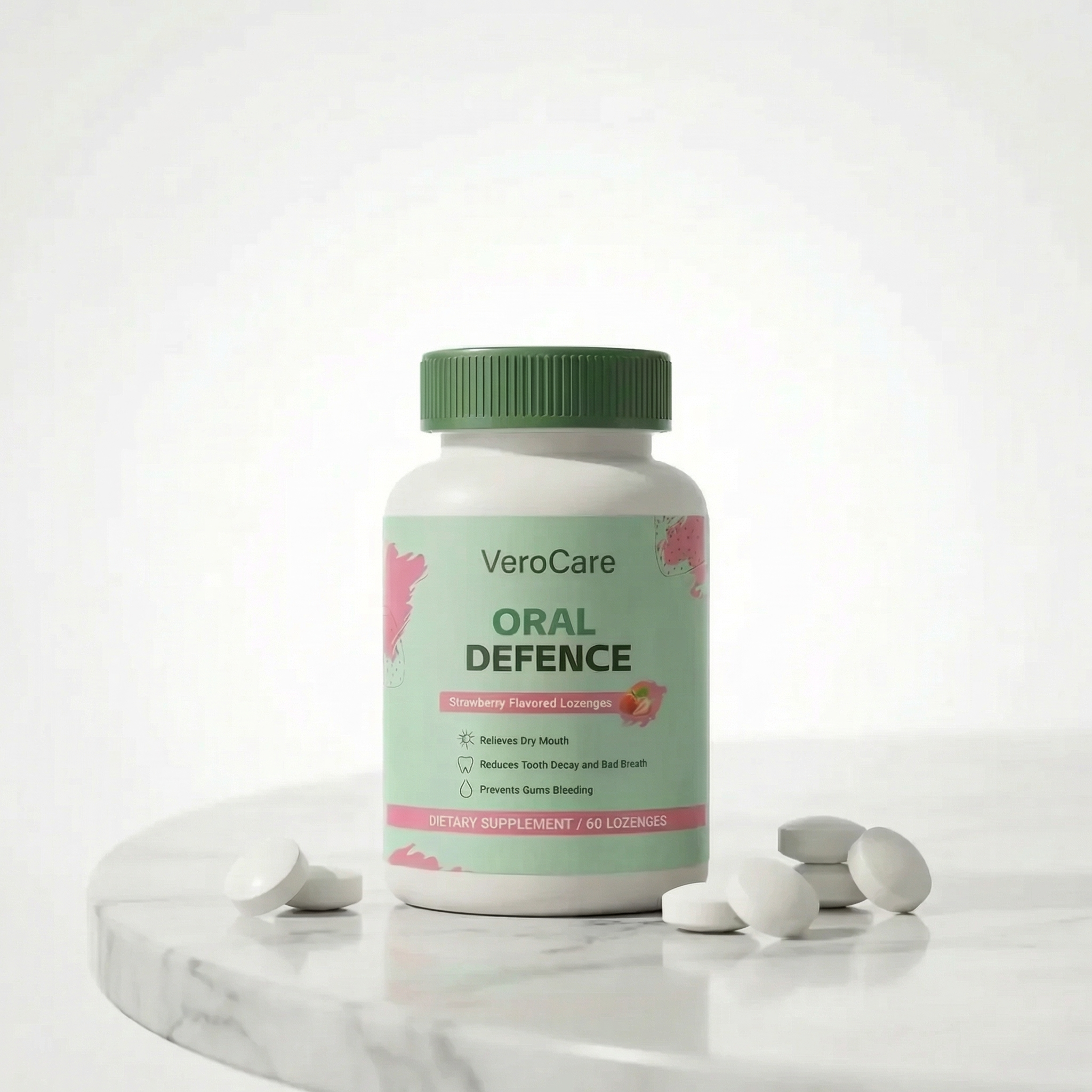
What I've been recommending to my patients — and what I now recommend to anyone who asks me what actually works for chronic dry mouth — is VeroCare™ Oral Defence Lozenges. Not because it's the only product on earth with xylitol or salivary enzymes. But because it's the first one I've found that pulls every element of the biological approach into a single, passively dissolving lozenge — in a formula that's safe alongside every medication in the dry-mouth profile, including antidepressants, antihistamines, blood-pressure drugs and diuretics, and that works in every situation where existing products can't, right down to 3am for CPAP users waking with a bone-dry mouth.
Here's what VeroCare delivers in each lozenge:
- Xylitol — stimulates natural saliva flow and inhibits cavity-causing bacteria through a pathway that doesn't depend on the signals medication or systemic suppression has interrupted. The biological nudge your struggling glands need, no pharmacological prerequisite.
- Salivary Enzyme Complex (Enzyme Trio + Enzyme Blend) — replaces the enzymatic defense your saliva is no longer supplying in adequate amounts. Antimicrobial support from within, not a coating from without.
- Lactoferrin — a bioactive protein with natural anti-inflammatory properties that supports gum comfort and directly limits microbial growth. One of the primary proteins in healthy saliva — present here precisely because it's missing from your mouth.
- Microcrystalline Hydroxyapatite — a biomimetic mineral that reinforces the tooth surface from the outside in, directly addressing the enamel thinning that reduced salivary calcium delivery produces.
- Oligopeptide P11-4 — supports natural remineralization at the tooth surface, maintaining structural integrity where pH crashes and bacterial acid have been doing their worst.
- Probiotic Complex — rebalances the oral microbiome that dry conditions have destabilized. When saliva is low, harmful bacteria outcompete the good ones; this restores some of that balance.
- Beta-Glucanase & Lactoferrin Synergy — breaks down oral biofilm and creates a more balanced environment for every other ingredient to work within.
Zero alcohol. Zero SLS. Zero artificial dyes. Sugar-free. Safe with antidepressants, blood-pressure medication, antihistamines, diuretics and every other drug commonly tied to dry mouth as a side effect. Compatible with CPAP therapy. And it comes as a lozenge — not a gum, not a spray, not a rinse — because the lozenge is the only format that works at 3am, in meetings, on flights, before bed and at every other moment when dry mouth is at its worst and every other format is either impossible or inadequate.
Here's Exactly How It Works — The Oral Defence System

When you set a VeroCare lozenge on your tongue and it starts to dissolve, here's what happens — minute by minute:
0–5 Minutes: The Stimulation Phase
Xylitol triggers saliva stimulation through contact with the oral lining. Most people notice more moisture within the first few minutes — not the fleeting sensation of a spray, but genuine salivary flow. At the same time the enzyme complex begins releasing into the mouth, kicking off the restoration of the defense proteins that medication suppression or overnight CPAP drying has depleted.
5–12 Minutes: The Defence Restoration Phase
Lactoferrin and the enzyme blend reach full concentration. The antimicrobial action begins — the same work your saliva did automatically before the medications started or the CPAP went on. Oral pH shifts toward the alkaline range where enamel is protected and bacteria are held down. Gum tissue, bathed in lactoferrin's anti-inflammatory compounds, starts to calm.
12–20 Minutes: The Structural Repair Phase
Microcrystalline hydroxyapatite and Oligopeptide P11-4 go to work on the tooth surface — reinforcing enamel, supporting remineralization, addressing the microscopic damage that accumulates through every dry stretch of the day and night. This is the phase that matters for the hygienist appointment. This is where the enamel numbers improve.
Beyond 20 Minutes: The Residual Window
Unlike a spray that evaporates or a rinse that drains, the compounds released during dissolution linger in the mouth for an extended stretch. The conditions VeroCare creates — elevated pH, enzymatic defense, restored microbial balance — hold well past the dissolution window. Take one before bed and you build an oral environment that can protect itself far longer than the 30 minutes any coating product manages. Take one at 3am when you wake — from dryness, or from lifting your CPAP mask for a moment — and you go back to sleep. No gum. No jaw fatigue. No swallowing risk. Just a dissolving lozenge doing what your salivary glands used to do on their own.
That is the Oral Defence System. And nothing else on the market delivers it.
The Results That Have Dental Hygienists Asking Questions

Across my patient base over the past eighteen months, the results have been consistent enough that I can describe them with confidence.
Within the first week: the compulsive reach for the water bottle starts to ease. Mornings feel less brutal. The thick, paste-like quality of the morning mouth begins to lift. Most people call it “the first thing that's made a real difference.”
Within two weeks: nighttime waking from dryness drops meaningfully. The 3am emergency — the one wrecking sleep and starting every day in the red — becomes occasional instead of nightly. CPAP users in particular report this shift, often noting the bedtime lozenge changed the whole character of their nights.
Within one month: the oral environment has measurably changed. pH is steadier. Bacterial populations are down. Gum tissue looks less inflamed. Patients who dreaded their next appointment start to feel something they'd stopped expecting: cautious optimism.
Within two months: this is when the hygienist notices. “Whatever you've been doing — keep doing it.” Four words, said by someone who has watched your chart get worse for two years, said without prompting, without knowing what changed. Those four words are what every patient who's sat in my chair over the last eighteen months has wanted to hear — not from me, but from the person who's been watching the damage build and finally isn't seeing it anymore.
Here's what my patients say in their own words:
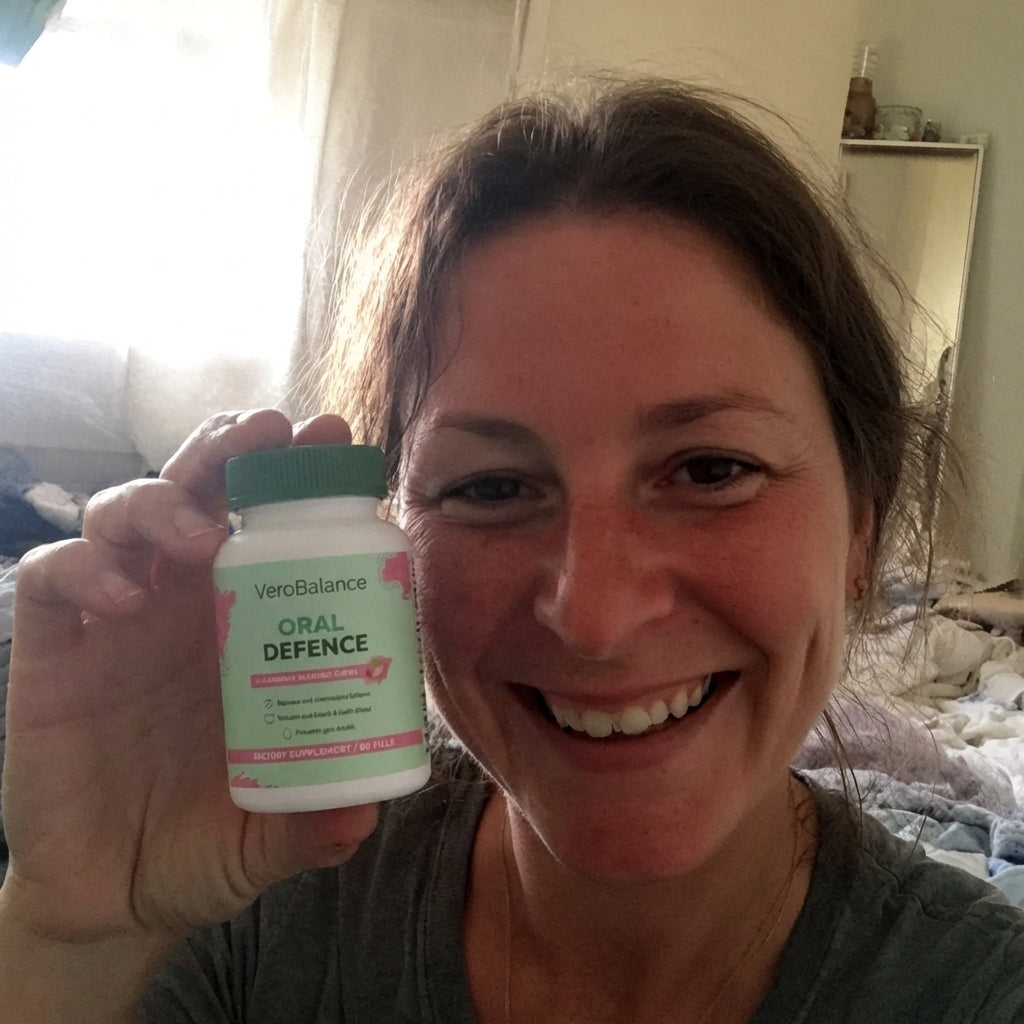
“I'd been waking three or four times a night, mouth so dry I could taste it. Water bought me thirty seconds. I'd tried the lot. VeroCare is the first thing that's actually carried me through the night. My hygienist asked what I'd changed at my last visit. I told her nothing. Then I cried in the car.”
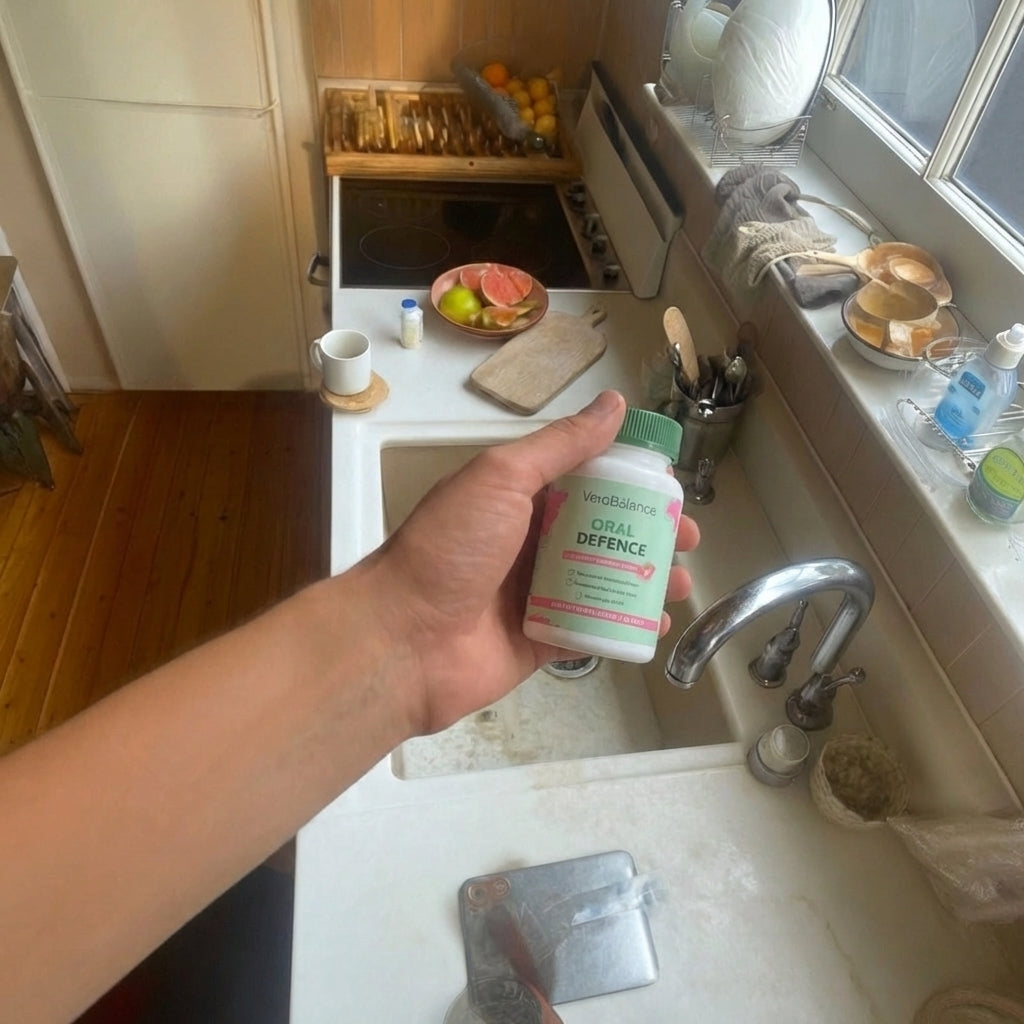
“Nobody warned me CPAP would do this to my mouth. My sleep doctor said use a humidifier. My dentist said try Biotene. Neither cut it. I started taking VeroCare before bed and before meetings, and my dentist said my enamel looked more stable than last time. I've told everyone I know who's fighting this.”
“I teach full days. The dry mouth from my medication has been genuinely miserable — the constant sipping, the voice cracking, the clicking sound I know my students can hear. I've wasted so much money on things that lasted twenty minutes. VeroCare is different. I've just stopped thinking about my mouth all day.”
“I've treated patients on chronic xerostomic medications for fourteen years. The number who come to me devastated about their teeth — people who brushed, flossed, did everything right — stopped surprising me long ago. What never stopped frustrating me is that no one had built a product for the actual mechanism. The formulation behind VeroCare is real science applied to a real biological problem. I recommend it to my patients.”
The Price That's Causing the Oral Care Industry To Pay Attention
Let me show you what chronic dry mouth actually costs in America when you manage it the way most people currently do:
The dental-procedure route
The management-product route
The VeroCare route
The oral-care industry's business model depends on you not doing the math. I just did it for you. A single prevented cavity pays for months of VeroCare — and VeroCare, unlike every product that came before it in your bathroom cabinet, is actually working on the mechanism that causes the cavities.
Check Availability NowThe 60-Day “Sleep Through The Night” Guarantee

I know you've tried things before — things recommended by people like me, that cost real money, and that worked just long enough to make you believe they might be different before dumping you right back where you started. I understand that kind of skepticism. I've watched it settle into the eyes of patients let down again and again.
So here's what I want you to do. Try VeroCare for 60 days. One lozenge before bed, every night. Use them through the day as needed. Take one at 3am when you wake — whether from dryness or from your CPAP routine — which, within two weeks, you'll likely be doing less often.
At the end of 60 days, ask yourself one question: am I sleeping through the night more than I was before? If the answer is no — if the 3am routine hasn't improved, if the morning mouth hasn't changed, if your next dental visit hasn't drawn at least some comment from your hygienist — contact the VeroCare team. Full refund. Every penny. No product to return. No explanation needed. You've already spent enough on things that didn't deliver. We're confident enough in what VeroCare does to stand behind it completely.
Get My 60-Day GuaranteeBut Here's The Catch — And It's A Real One
VeroCare contains a salivary enzyme complex — a specific Enzyme Trio and Enzyme Blend — sourced from a GMP-certified manufacturing partner with limited production capacity. Enzyme complexes aren't commodity ingredients. They require precise fermentation conditions, cold-chain handling and quality verification at every stage. Our supplier produces in controlled batches, and when a batch sells through, the next one is 6–8 weeks in production. We don't manufacture urgency — we're simply telling you the truth: when current inventory is gone, restocking takes time.
And — because counterfeit oral-care products are a genuine problem in the DTC supplement space — VeroCare's enzyme formulation is specific. Products claiming similar results without the verified enzyme complex don't deliver the same biological mechanism. The only way to guarantee you're getting the authenticated formulation is through the official VeroCare website.
If you've read this far, you're clearly not looking for another product that coats the surface and fades in 30 minutes. You understand what's actually happening in your mouth. You deserve something built for it.
The Choice That Will Define Your Next Dental Appointment

Right now you're standing at a crossroads every person with chronic dry mouth eventually reaches.
Path One: Keep doing what you're doing. Keep the two water bottles on the nightstand. Keep the Biotene in the cabinet. Keep waking at 3am — parched from your medication or from the airflow of your CPAP — drinking what helps for thirty seconds and lying back down into a dry mouth. Keep sitting in the dental chair every six months to hear that another cavity has appeared despite everything you're doing right. Keep being told to drink more water. Keep paying for things that manage the symptom while the cause keeps running underneath.
Path Two: Address what's actually happening. Understand that your mouth has a suppressed biological defense system — not a hydration problem. Give it the enzymatic support, the salivary stimulation and the enamel reinforcement your body once made sure it had automatically. Use a format that works at 3am, in meetings, alongside your CPAP routine and everywhere else that everything else fails. And walk into your next dental appointment carrying something you'd stopped expecting: hope instead of dread.
The choice looks straightforward to me. But I've sat across from enough people failed enough times to know hope isn't something you extend casually. It has to be earned. I believe VeroCare has earned it — and the 60-day guarantee means you can find that out for yourself, with nothing to lose.
Here's Exactly What To Do Next
- Click the button below that says “Check Availability Now.”
- Select your pack. The 30-day supply is where most people start — and most find, after two weeks, that they want to keep going. Choosing the subscription saves 40% and makes sure you never run out during a production cycle.
- Complete your order. VeroCare ships within 1–2 business days from our fulfillment center, and most orders arrive within 3–5 days.
- Take one lozenge before bed tonight. That's all. One lozenge, before sleep, on night one. If you use a CPAP, take it right before you put your mask on.
- Notice how your morning feels in 7 days — the morning mouth becoming less severe, less paste-like, less like starting the day already behind.
- Go to your next dental appointment and say nothing. Let the hygienist look at the chart, compare it to last time, and wait to hear the words you've been waiting far too long to hear: “Whatever you've been doing — keep doing it.”
Whatever you do, don't close this page telling yourself you'll come back later. Later is another night of waking at 3am. Later is another dental visit that ends the same way. Later is another month of the damage accumulating while your surface products do exactly what they were designed to do: run out and bring you back. Your mouth has been through enough.
Check Availability Now
With respect and clinical honesty,
Oral Microbiome Researcher — Champion of treating the cause, not just the symptom
P.S. — Linda came in for her most recent cleaning last month. Her enamel measurements are stable for the third appointment running. No new cavities since she started VeroCare fourteen months ago. Her hygienist called her “our easiest chart right now.” She wants me to tell this story to every person who walks in asking why their mouth is falling apart despite doing everything right. So I am.
P.P.S. — VeroCare is alcohol-free, SLS-free, sugar-free, and has no known interactions with antidepressants, blood-pressure medications, antihistamines, diuretics or any other drug commonly linked to dry mouth. It's compatible with CPAP therapy. We did the formulation work correctly.
P.P.P.S. — The 60-day guarantee is real. No return required. No questions asked. You have nothing to lose except the 3am water glass.
Check Availability Now