5 Reasons Your Vagus Nerve Dysfunction Keeps Triggering Dizziness, Reflux, and Heart Palpitations (And How to Restore Balance Naturally)
 By Rick D.
Last Updated July 8, 2025 · 11:11 am EDT
By Rick D.
Last Updated July 8, 2025 · 11:11 am EDT
Summary: If dizziness, reflux, heart palpitations, or a constant low-grade anxious haze have become part of your everyday life, none of it is in your head — and you are far from the only one. Most standard treatments only quiet the surface: acid blockers for reflux, beta-blockers for palpitations, antidepressants for the anxiety. What they miss is the shared root beneath all of it. Emerging work in neurogastroenterology and autonomic neuroscience shows that once vagus nerve function breaks down, the whole signaling line between the brainstem and the body starts to misfire — scrambling digestion, heart rhythm, balance and inflammation, and producing symptoms so scattered they get waved off as “all in your head.” Below are the 5 overlooked reasons vagus nerve dysfunction keeps feeding your symptoms — and how Neckline, a clinical-grade cervical therapy device, helps rebuild vagal tone, improve circulation and coax the autonomic nervous system back into balance.
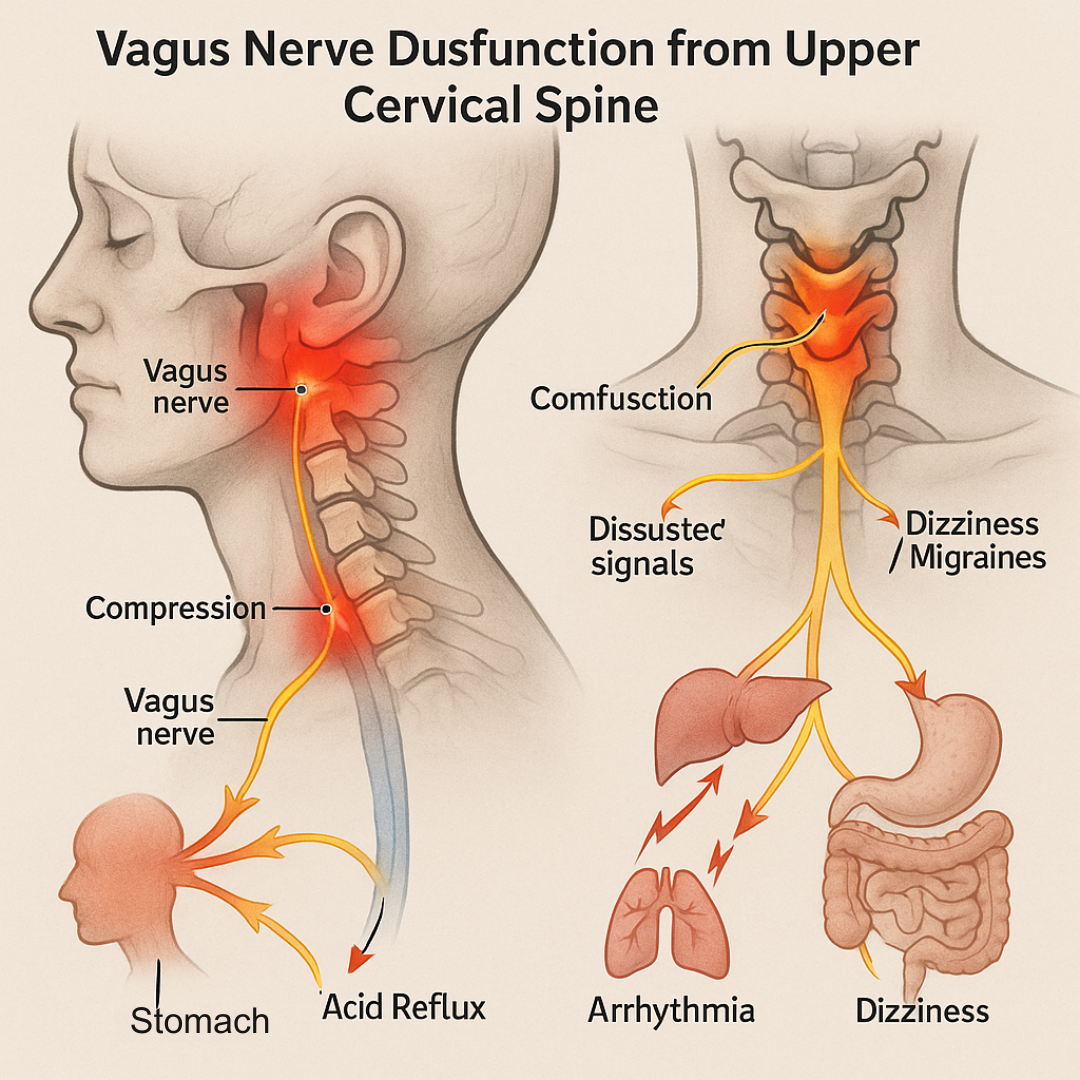
It is easy to assume reflux, palpitations and dizziness are three separate faults — one in the gut, one in the heart, one in the inner ear. But newer autonomic-neuroscience research keeps pointing to a single shared origin: vagus nerve dysfunction.
The vagus is the body’s main line of communication between the brainstem and your vital organs. When it gets compressed or thrown out of balance — frequently up at the cervical spine — the messages it sends to the heart, the digestive tract and the balance centers turn erratic. What follows is a spread of hard-to-trace complaints: acid reflux, an uneven heartbeat, migraines, dizziness, brain fog, even a rising sense of anxiety.
Until vagal tone is rebuilt and that mechanical pinching is eased, the nervous system stays parked in “fight or flight” — and the same symptoms keep circling back.
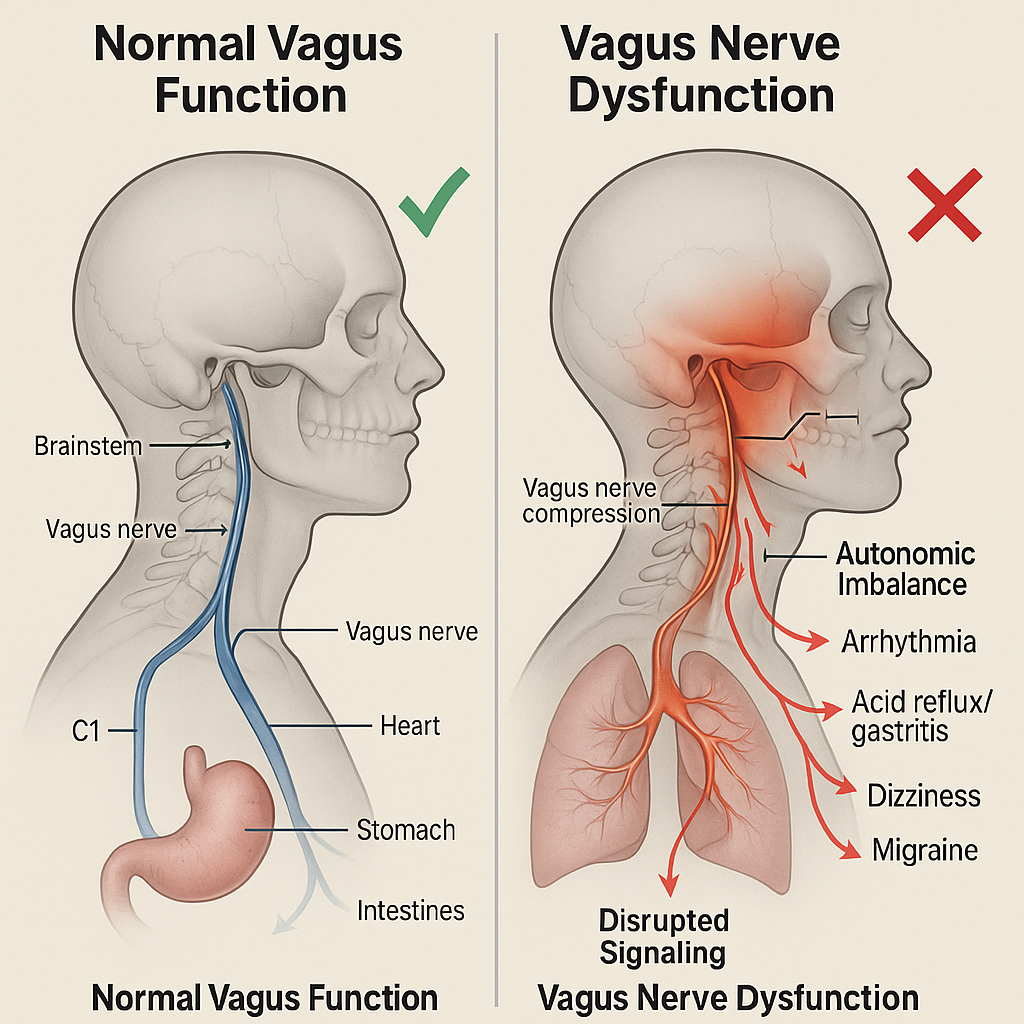
Again, most people file reflux, dizziness and palpitations under unrelated headings — digestion here, balance there, the heart somewhere else. Yet recent advances in autonomic neuroscience trace many of them back to one place: vagus nerve dysfunction.
The vagus is the longest cranial nerve you have, traveling from the brainstem down through the neck and into the chest and abdomen. Along the way it helps run digestion, heart rhythm, balance, inflammation and even mood. Pinch or destabilize it — often at the cervical spine or the suboccipital region — and its signaling starts to fall apart.
The knock-on effect is a chain reaction: acid reflux, arrhythmia, dizziness, brain fog, migraines and anxiety. Until vagal tone is restored and the compression relieved, the nervous system stays locked in fight-or-flight and the symptoms keep looping.
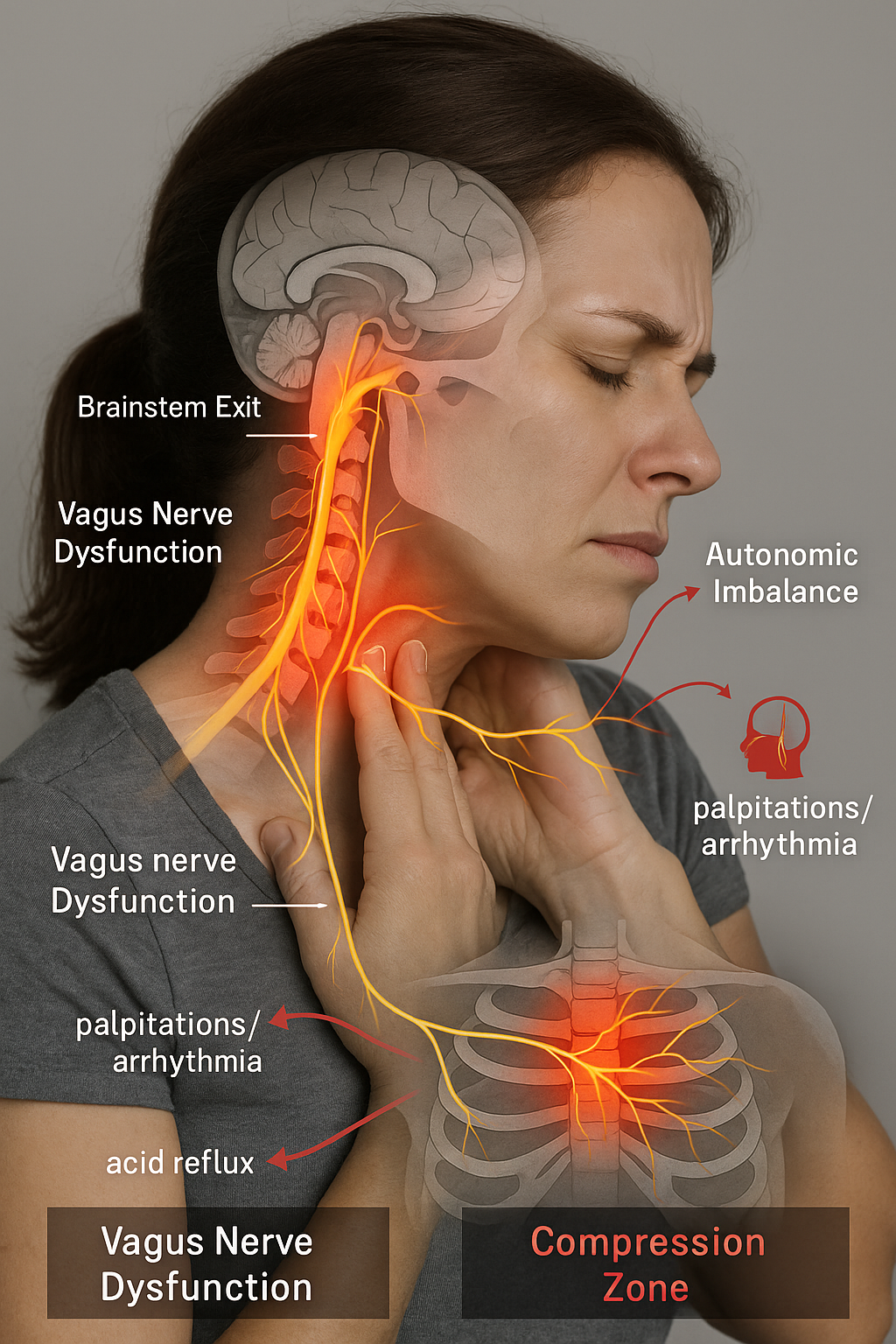
When the vagus is compressed or dysregulated, it rarely stops at mild discomfort — it traps the entire autonomic system in a loop. Instead of calmly governing digestion, heart rhythm and inflammation, the faulty signaling flips the body into crisis mode. The neck muscles clamp down to protect the area, inflammation climbs, and the nervous system settles into a state of chronic overdrive.
That is why the condition rarely arrives as one clean symptom. It shows up as a cluster: acid reflux, dizziness, migraines, palpitations, brain fog and anxiety all at once. The body is not glitching at random — it is stuck in a cycle of nerve compression and autonomic chaos.
Until vagal tone is restored and the entrapment released, the system simply cannot reset — no amount of medication or rest gets you all the way there.
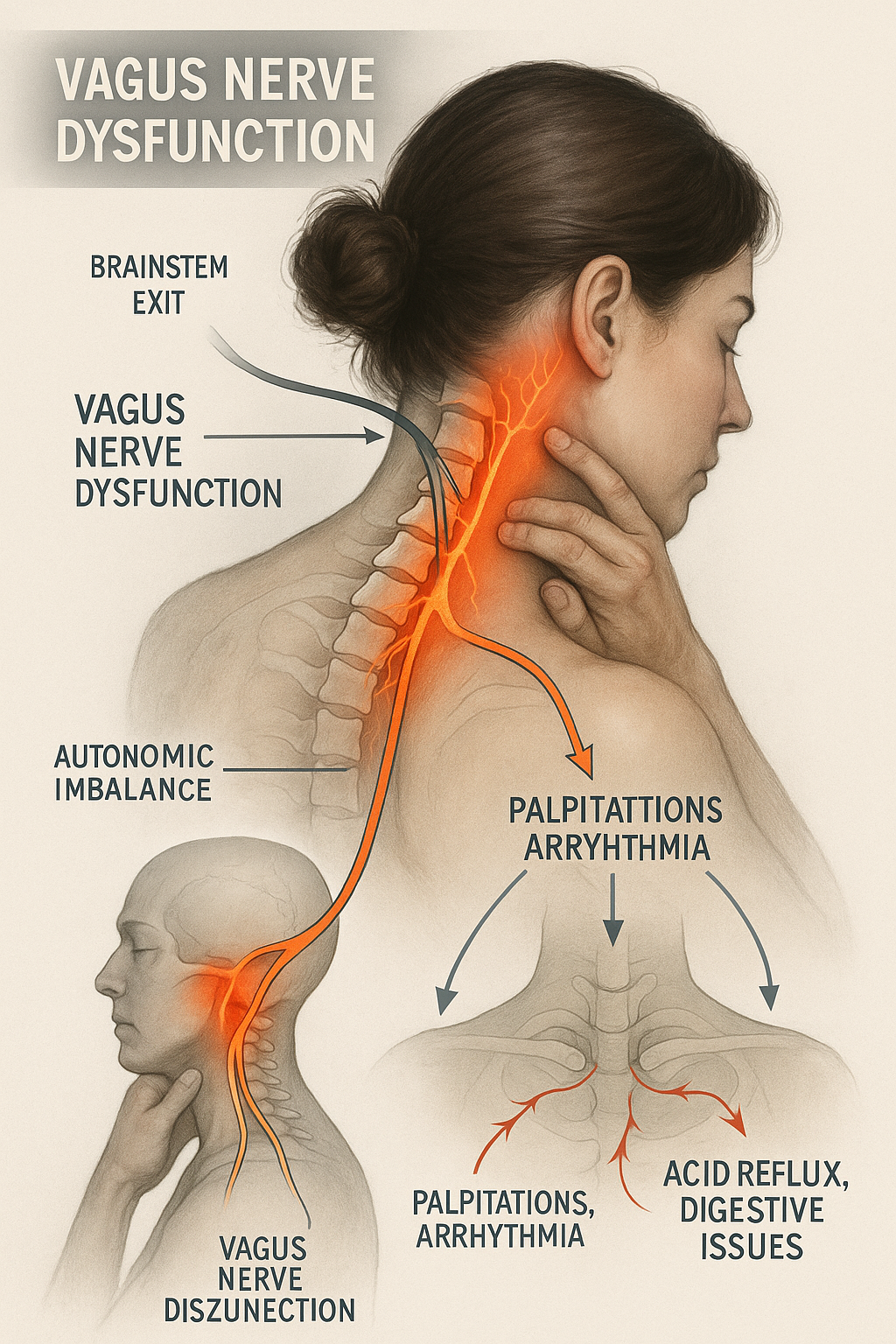
Once the vagus is compressed or thrown off, the trouble almost never stays put in the neck. Because this one nerve wires the brainstem to the heart, the lungs and the digestive tract, the dysfunction radiates outward — surfacing as acid reflux, palpitations, dizziness, migraines and anxiety.
So people end up chasing each symptom on its own — an antacid here, a heart medication there, a migraine pill on the bad days — never realizing the trouble actually begins in the cervical region, right where the vagus leaves the skull and runs down the neck.
Until that underlying vagus dysfunction is addressed, the nervous system stays out of balance and the very same symptoms keep coming back.
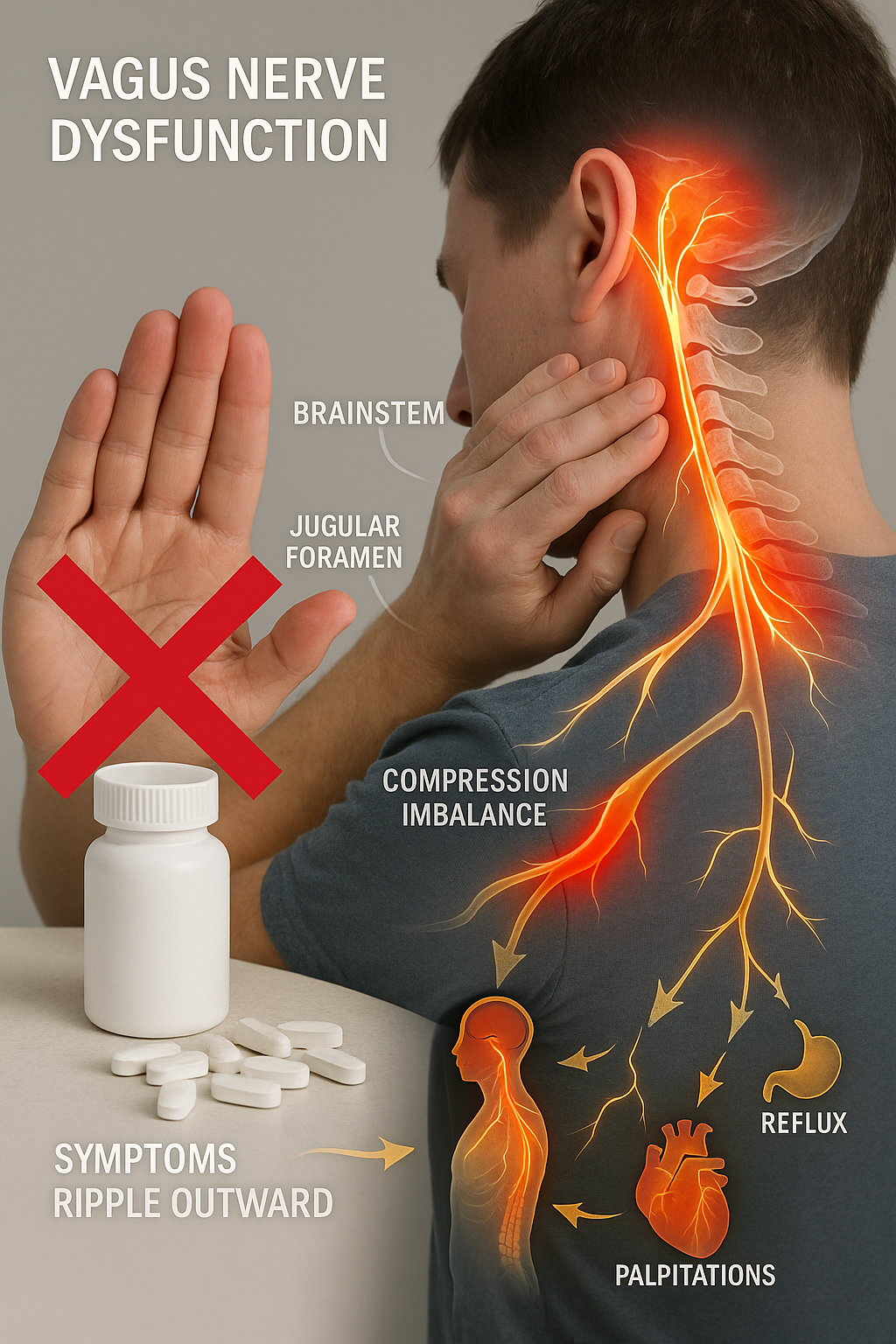
When the vagus misfires, the fallout is not scattered — it is systemic. This single nerve helps regulate digestion, heart rhythm, balance and inflammation, so when it goes off-key the whole body answers back with acid reflux, palpitations, dizziness, migraines and anxiety.
Antacids, beta-blockers and painkillers might take the edge off for a while, but not one of them rebuilds vagal tone or releases the cervical entrapment keeping the nerve unstable. That is exactly why the symptoms always find their way back. Medication can mute the signal for a few hours; it never repairs the dysfunction at its source — the nerve itself.
Until vagus signaling is reset and the pressure lifted, the nervous system stays stranded in fight-or-flight.
So What Can You Actually Do About It?
If you want relief that holds, you have to correct the vagus nerve dysfunction itself — not just silence what it produces. In practice, that means three things:
- ✓ Release the cervical tension that presses on the vagus at the jugular foramen and the upper neck.
- ✓ Rebuild healthy vagal tone so digestion, heart rhythm and balance can steady themselves again.
- ✓ Calm the neuroinflammation so the nervous system can finally climb down out of fight-or-flight.
That is precisely what Neckline was built to do — a clinical-grade solution that helps restore vagus function safely, at home.
This Device Calms the Nerve While You Relax
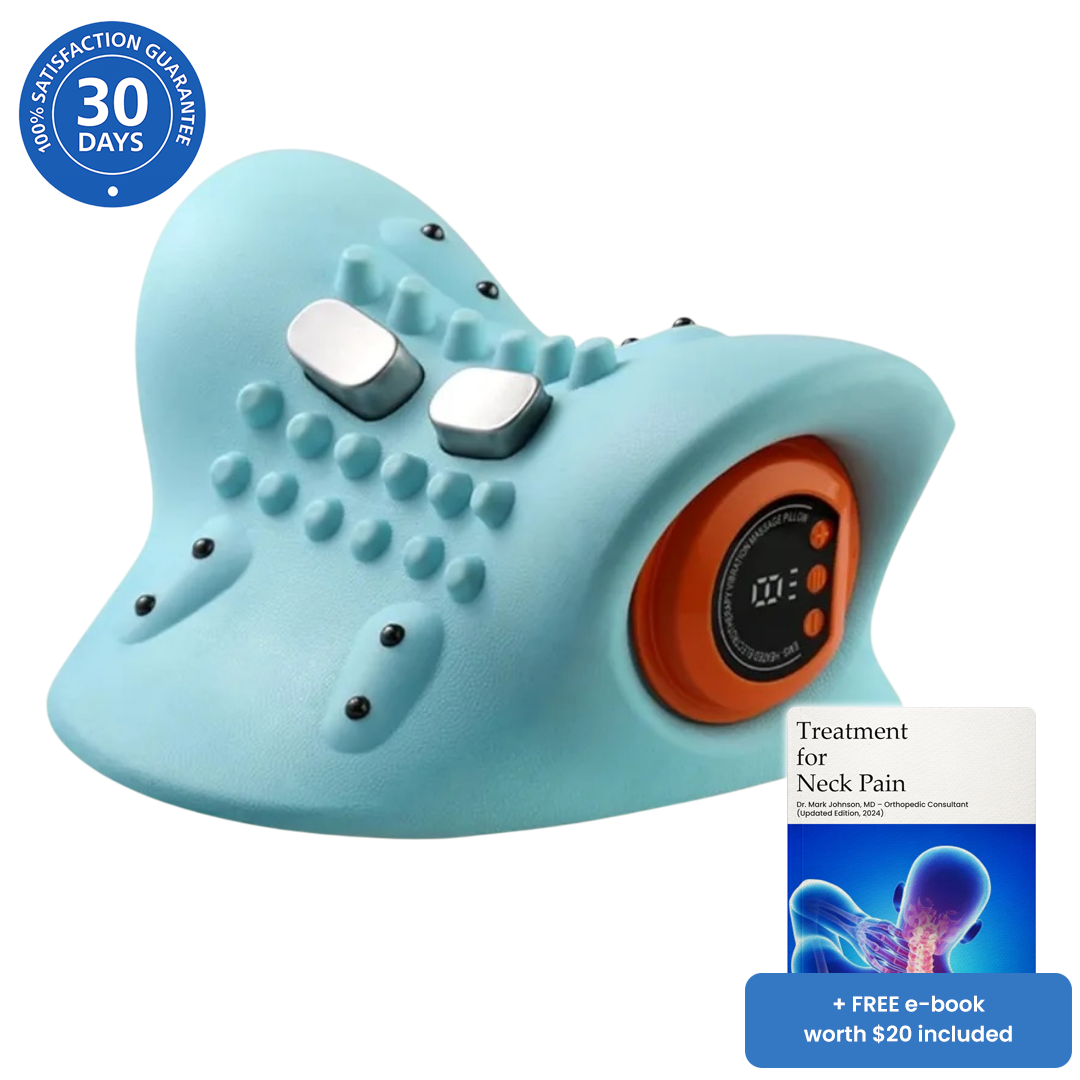
Neckline is a 4-in-1 therapy device designed to ease the compression and dysregulation of the vagus nerve. It brings four therapies together in one unit:
- Cervical Traction — gently decompresses the upper neck to take pressure off the vagus where it exits the brainstem.
- EMS (Electrical Muscle Stimulation) — helps rebuild tone in the deep stabilizing muscles that support the vagal pathways.
- 4D Floating Massage Heads — work loose the suboccipital tension that sits at one of the key sites of vagus nerve entrapment.
- Therapeutic Heat — improves blood flow, eases neuroinflammation and supports healthier vagal signaling.
Just 10 minutes a day can help the nervous system reset — easing reflux, palpitations, dizziness and anxiety from the root rather than the surface.
Reset Your Nervous System at the Source — Risk-Free!
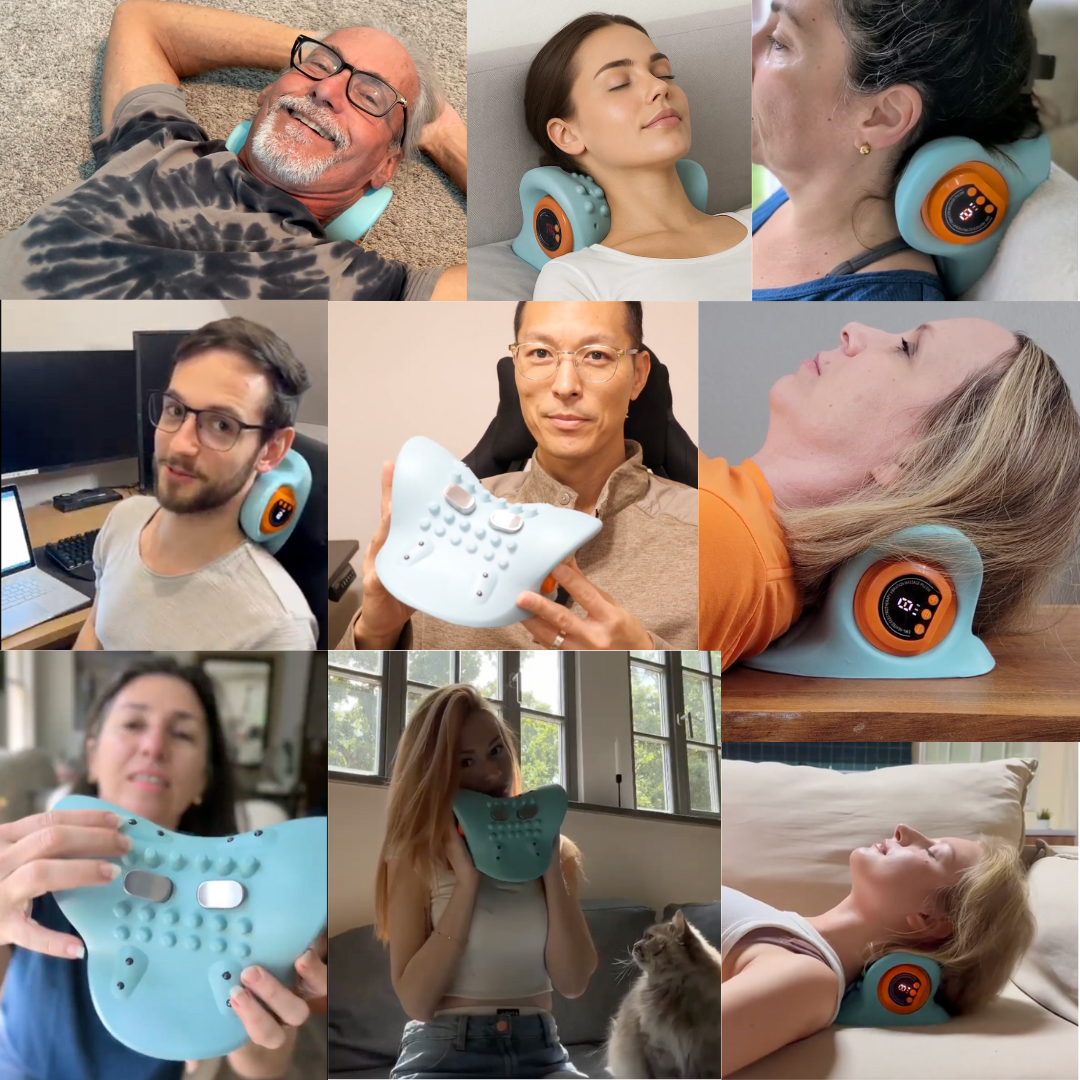
Thousands of people wrestling with vagus nerve dysfunction are already reaching for Neckline to calm the root of their symptoms — everything from acid reflux and palpitations to dizziness, migraines and relentless anxiety.
By helping to restore vagal tone, improve cervical circulation and release suboccipital tension, users are finally getting real relief — without leaning on medications or invasive procedures.
And the best part? Every order is covered by a 90-day risk-free guarantee, so you can put it to the test with zero pressure.


This limited-time deal is in high demand and stock keeps selling out.
Try it today with a 30-Day Money-Back Guarantee!

This is how our website visitors rated Neckline™. Based on 759 Reviews.
The information and other content provided on this page, or in any linked materials, is not intended and should not be taken as medical advice, and it is not a substitute for professional medical expertise or treatment. This is an advertisement, not a news article or consumer-protection report. Any story, persona and testimonial shown here is illustrative, may be dramatized, and individual results vary.
If you or anyone else has a medical concern, consult your healthcare provider or seek other professional medical treatment. Never disregard professional medical advice, or delay seeking it, because of something you have read on this page or in any linked materials. If you think you may have a medical emergency, call your doctor or emergency services immediately.
Calm the root cause — try Neckline risk-free.
Check Availability
Comments
127 CommentsWould this do anything for vestibular migraine and ocular migraine?
I place it right at the base of my skull and it settles that heavy, swimmy feeling that would normally build into a full-blown migraine. The pressure behind my eyes and the nausea have eased off a lot too. Nobody is paying me to say this — I’m just genuinely impressed. I do a few gentle neck stretches alongside it and honestly it has changed my days. Worth a shot if you’re struggling.
Picked this up a couple of weeks ago and it has helped a lot. I actually flip it over and use it both ways so I can reach the base of my skull and work a bit further down my neck depending on where it hurts. My stomach feels calmer and my mood is better on top of that. I’m not paid to say any of this — I’m just amazed at what it’s doing. I also use a neck decompression sling, and between the two of them I’m maybe 90% better.
Do you ship from within the US?
Hi Amelia — yes. I’m in LA, they say they ship from the US, and they really do. Mine turned up just a few days after I ordered.
Fantastic little device, thank you! Tension, headaches, TMJ pain, neck pain — all better. Highly recommend.
For about six months now I’ve had a full feeling in both ears and a constant static hiss in the right one — they’re calling it Eustachian tube dysfunction. My neck and jaw stay tense all the time. No pain, no TMJ diagnosis. Do you think something like this could help?
Honestly taken aback by how well this works. I barely see my chiropractor anymore because I’m not in constant pain. The EMS, heat and vibration settings are all excellent.
I’m stunned. After years of neurologists and appointments for trigeminal neuralgia on one side and post-herpetic neuralgia on the other (I had shingles inside my mouth on the other trigeminal nerve), plus every other problem stacked on top, not one doctor ever mentioned Eagle syndrome. I’ve been on heavy meds for years trying to understand why both of my trigeminal nerves are so unusually weak, along with the constant throat and gland pain. Thank you for this information — and Neckline honestly does seem to be helping!
Can this be used if you have spinal stenosis, or a spine fused from T2 down with a Harrington rod from scoliosis? I’m pretty sure I’ve got both!
It’s worked really well for my cervical spinal stenosis. I’ve got two herniated discs, a bulging disc, a vertebra out of alignment and stenosis in my neck, and some days the pain is unbearable. This device takes the edge off enough that I can get back to my normal routine.
I’ve got that exact vagus nerve dysfunction problem and Neckline genuinely helps. When I use it, the pressure at the base of my skull lets go, and the vertigo and racing heart settle right down. It’s the first thing that’s made a real difference for me.
Has anyone here actually tried it? I’m pretty skeptical, but I do have every symptom they mention in the video.
I had nearly the identical set of symptoms — constant neck pain, dizziness whenever I stood up, even that strange “full throat” feeling no doctor could explain. I’ve been using Neckline for a couple of weeks and it’s honestly the first thing that’s helped. The tightness at the base of my skull has finally started to loosen, and the daily headaches and nausea aren’t ruling my life anymore. I was very skeptical too, but I’m so glad I gave it a go.
I have gastroparesis and I was genuinely surprised by how much Neckline helped. The vagus nerve stimulation quieted my symptoms and made digestion feel a lot easier.
I’ve had a cervical fusion and was told to steer clear of traction, so I was nervous at first — but this turned out to be exactly what I needed. It isn’t harsh traction; it’s gentle stimulation and heat that loosen the muscles without straining the fusion. I’ve finally found something safe that actually eases the tightness and the pain.