There's Something Happening Inside Your Body on a GLP-1 That Nobody's Talking About


Article Summary
"The first five months went exactly the way she'd hoped — the weight was dropping, the numbers looked good, nothing seemed wrong. What she didn't catch right away was a second process running quietly underneath the first one. Untangling it took her a year and a half and the help of two specialists she used to work with. Here's what that process turned out to be."
Jump to the tip you need:
Why This Matters Even If You Feel Fine
One thing first: nothing here is meant to talk you out of your medication.
I'm still taking mine. It did what I needed it to do, and knowing everything I know now, I'd start it again.
I also want to be upfront that not everyone on a GLP-1 runs into what I'm about to describe.
For some it shows up almost immediately. For others it's months before anything changes.
Plenty of people stay on these medications for years without any of this touching them, and that's a genuinely good outcome.
What follows is for the people who'd rather know what's possible ahead of time — the six steps I now build into the intake process for every GLP-1 client at my clinic, precisely so they don't have to find out the hard way.
Watch for these as early warning signs. Some people notice them in week one, others not until closer to a year in.
Once the first one appears, though, the rest tend to follow in a fairly consistent order.
I've now watched this same sequence unfold in hundreds of clients, and the pattern rarely changes.
THE PATTERN
First, the nausea
It's inconsistent — mild enough to ignore some days, bad enough to derail your plans on others.
Then the burping starts
This tends to show up a few weeks after the nausea. It comes on with no obvious trigger — sulfur burps, heartburn, acid you can taste. Most people never trace it back to the medication.
Then digestion stalls
Bathroom habits slow down and become less predictable. The usual advice is to add more fiber, but on a GLP-1 that often backfires.
Then your hair starts falling out
This typically appears around the four- or five-month mark after the nausea began, often alongside brittle nails. It can feel sudden, but the groundwork was laid weeks earlier — the body has been running low on raw materials, and hair production is one of the first things it deprioritizes.
Then the fatigue
This isn't ordinary under-slept tiredness — it's the kind where a full night's rest still leaves you running on empty by early afternoon, with a fog that makes focus difficult and that coffee doesn't fix. It tends to arrive around the same window as the hair thinning, or just after, because it traces back to the same underlying shortage showing up in a different system.
Then the last one. The slowest. The one people catch last
Interest in things quietly drains away — not sadness exactly, just a flatness. Activities that used to matter stop registering. Commitments get skipped. Life continues on autopilot, and the shift happens so gradually that most people don't notice until it's already settled in. Because it can take six months or longer after that first symptom to fully develop, it's the one almost nobody links back to the medication.
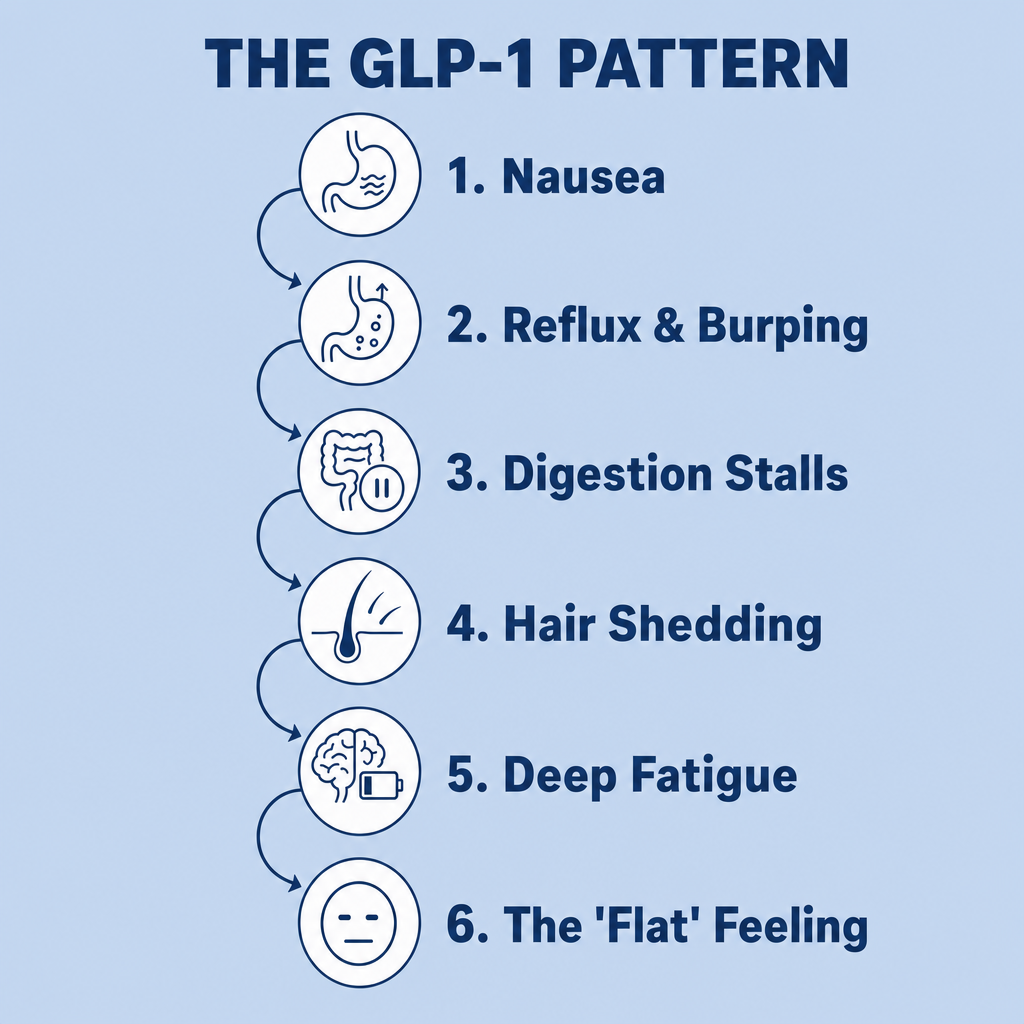
Each stage sets up the next.
By the time the last one appears, most people have spent months attributing the earlier stages to something else entirely — stress, getting older, poor sleep, simply eating less.
Rarely does anyone suspect the medication itself.
If you're already noticing one or more of these, keep reading — I lived through this exact progression myself, start to finish, all six stages.
And if none of this applies to you yet, or the symptoms are mild enough to shrug off, that's even more reason to pay attention.
There's no guarantee that stays true for the next year. The people who get caught off guard at month six are usually the same people who felt completely fine at month two.
When your body starts sending these signals, it's communicating something real.
It needs support.
Here's the mechanism behind it:
Your cortisol starts climbing.
The side effects themselves function as a physical stressor. Your body senses that something is off and raises cortisol output to compensate.
Weight loss stalls.
Elevated cortisol reads as a danger signal to your body, and it responds by switching into preservation mode — holding onto weight rather than releasing it. You hit a wall, and raising the dose doesn't move it. My own plateau landed around month six and held for four months straight, no matter what I adjusted, while the monthly cost of the medication kept coming out of my pocket.
Left unaddressed, it can progress toward anhedonia.
The connection will become clearer in the next section. This isn't depression in the everyday sense of the word. Anhedonia is the clinical term for a diminished capacity to feel pleasure, joy, or drive — it's not sadness so much as an absence of feeling altogether, a kind of emotional flatness. For some people on these medications, it can persist for as long as they stay on treatment.
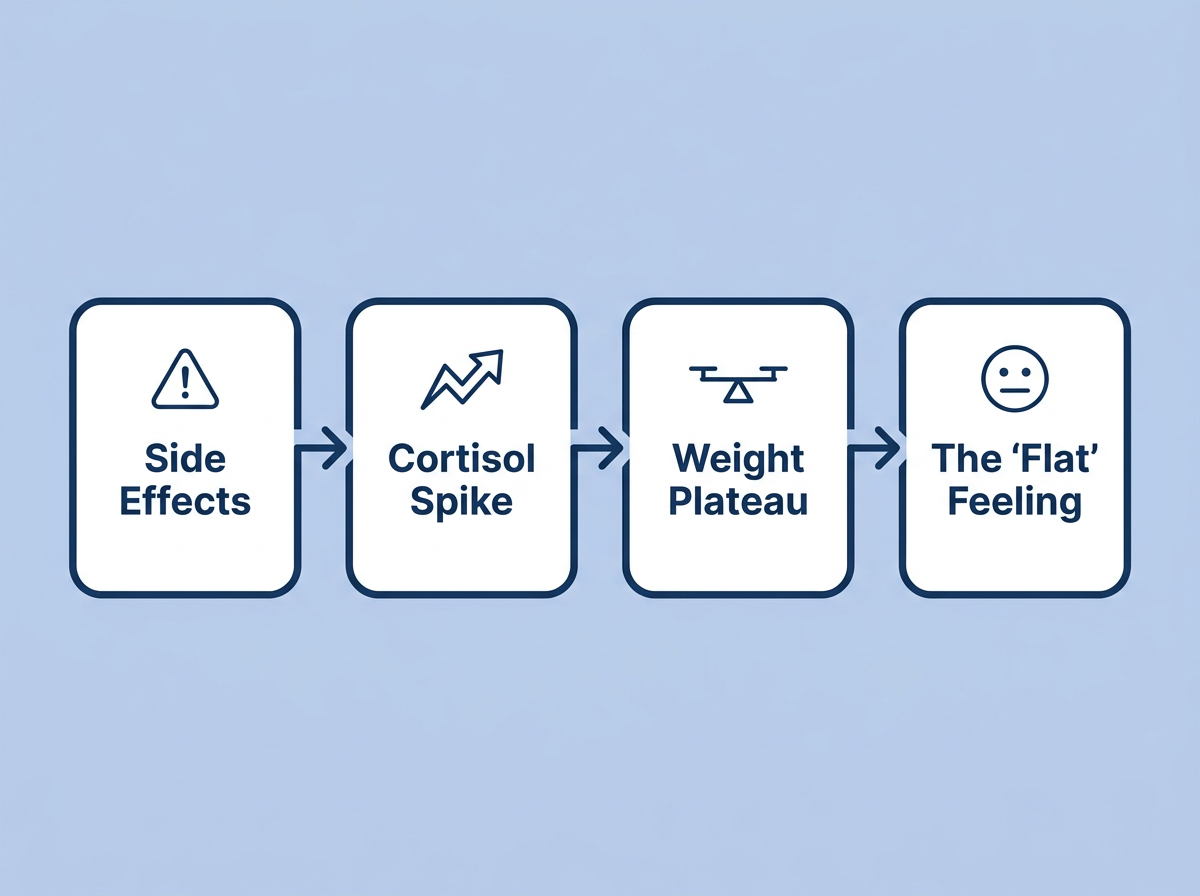
This pattern isn't rare — thousands of people on these medications describe it.
The timeline varies widely: some notice it within two weeks, others not until month six or twelve.
Search "Ozempic Personality" on Google or Reddit and you'll find no shortage of people describing this same progression in their own words.
The next question is the mechanism — how one injection produces all of this. Here's the simplest way to walk through it.
Why It Happens — and What to Do About It
When these symptoms started stacking up, I had an advantage a lot of people don't: a clinical background and colleagues I trusted enough to call.
I reached out to two people I'd worked alongside earlier in my career.
Dr. Laura Meier, a metabolic health practitioner, and Dr. James Aldridge, a neurologist.

They agreed to look into it with me, treating my case as a working example to understand what GLP-1s do to the body beyond suppressing appetite.
This article wouldn't exist without that collaboration.
Between the three of us, we landed on the same conclusion: all six symptoms are avoidable.
None of the fixes are complicated, and none of them work against the medication itself.
It comes down to targeted support, applied before the deficits build up.
So we mapped it out symptom by symptom.
What triggers each one, and what actually addresses it.
Along with the reasoning behind each fix — the specific compounds involved and the research supporting them. Here's the full breakdown, one symptom at a time.
TIP #1: Nausea — It's Not Your Stomach, It's Timing
Why This Happens
The nausea isn't just "acid" — it's a motility issue. Food is literally trapped in your stomach.
Here's what that means:
The shot slows down how fast food moves through your digestive system. That's partly how it works — food stays in your stomach longer, you feel full longer, you eat less.
But when food sits in your stomach for hours longer than it should, your body gets confused. It sends nausea signals because it thinks something's wrong.
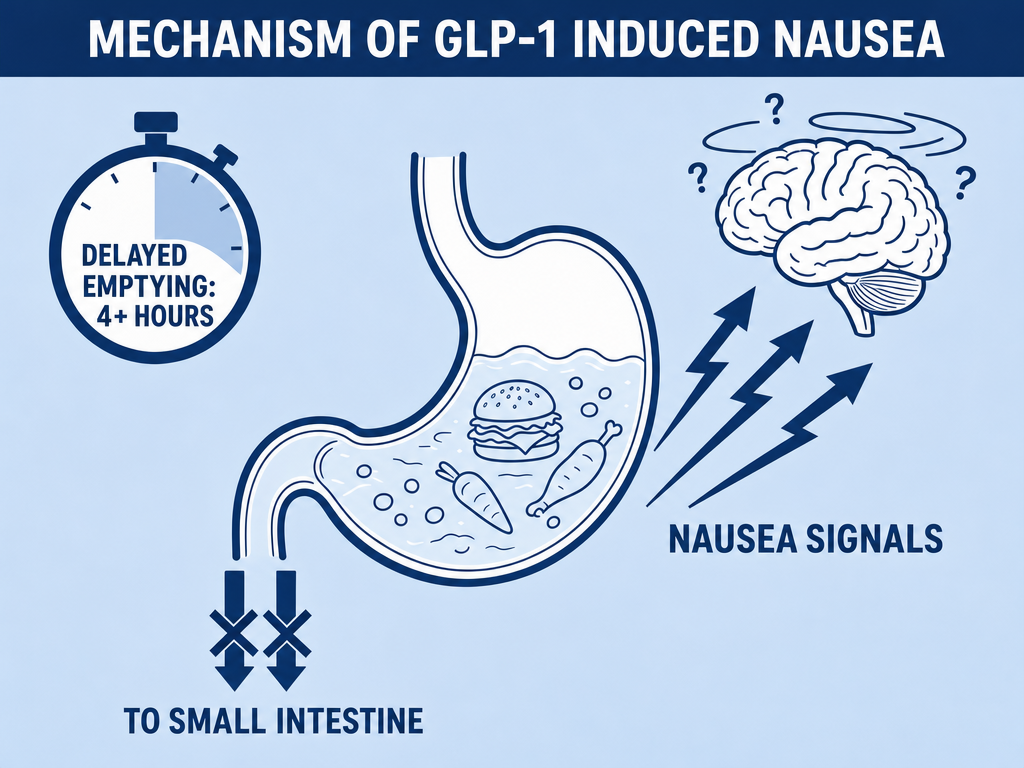
This is the opening trigger for everything that follows.
If food sits long enough to trigger nausea, it's also sitting long enough to ferment, build acid, and start everything else I described above.
What to Do
Eat smaller portions more frequently
Instead of three meals, eat 5-6 very small portions throughout the day. We're talking 200-300 calories max per "meal."
This prevents your stomach from ever getting too full, which is when the nausea kicks in hardest.
People who do this from day one often barely experience nausea at all.
Prioritize easily digestible foods
Focus on foods that move through your system faster: lean proteins (chicken, fish), cooked vegetables, rice, oatmeal.
Avoid heavy fats, dairy, and red meat — all of which sit in your stomach for hours and make the delayed emptying worse.
Stop eating 3-4 hours before bed
This made a bigger difference than almost anything else.
Eating too close to bedtime meant waking up nauseous, because the food hadn't cleared yet.
Letting the stomach empty before lying down cut morning nausea by roughly 80%.
Ginger extract — not just tea
Ginger tea offers mild relief at best.
The bigger shift comes from switching to ginger extract capsules (100mg, taken with food).
Ginger's active compounds — gingerols and shogaols — support gastric motility directly, helping the stomach empty faster and addressing the underlying cause rather than just the symptom.
This is the first thing every client at my clinic starts on now — not to treat nausea, but so they never reach it in the first place.
The Science Behind It
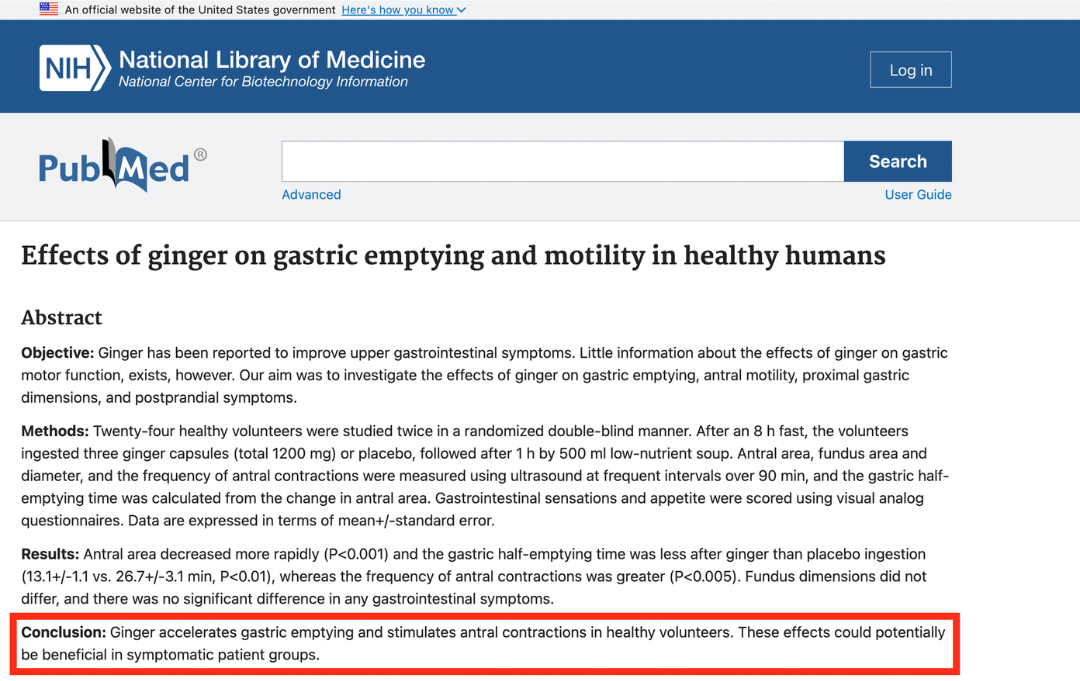
A 2019 study in Neurogastroenterology & Motility found that standardized ginger extract accelerated gastric emptying by 25% in people with delayed emptying.
It's not masking nausea — it's supporting the mechanism that causes it.
Ginger's active compounds (gingerols and shogaols) work directly on your digestive system:
They activate serotonin receptors in your GI tract
This triggers stomach contractions (gastric motility)
Your stomach pushes food through faster
Less time sitting
Less nausea
In plain English: ginger helps your stomach do the thing the shot is preventing it from doing as efficiently. It works with the mechanism instead of against it — and it doesn't interfere with the appetite control.
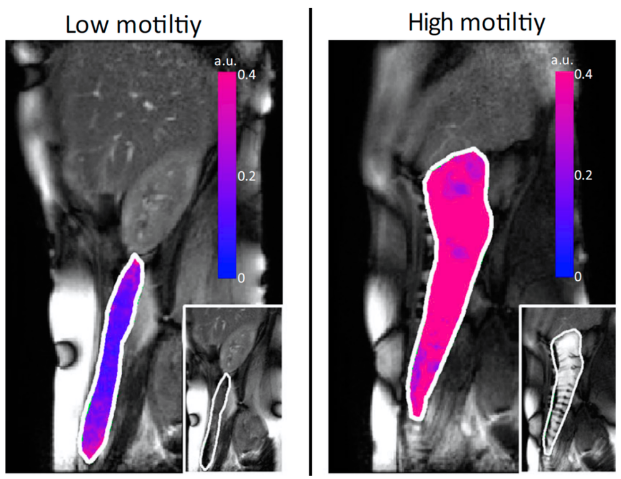
BASELINE: GASTRIC STASIS
POST-GINGER EXTRACT: INCREASED MOTILITY
You still feel full. You still eat less. Your stomach just clears what you've eaten before the nausea window opens.
Standardized ginger extract with at least 5% gingerols. Doses of 100mg taken with meals are clinically effective for reducing nausea and improving gastric emptying.
The nausea is a full meal meeting a slow stomach. Eat small, eat early, support the motility with ginger, and you get ahead of the cascade instead of chasing it.
TIP #2: The Burping and Reflux — Change What You Eat
Why This Happens
When food sits in your stomach longer (thanks to delayed gastric emptying), it starts to ferment.
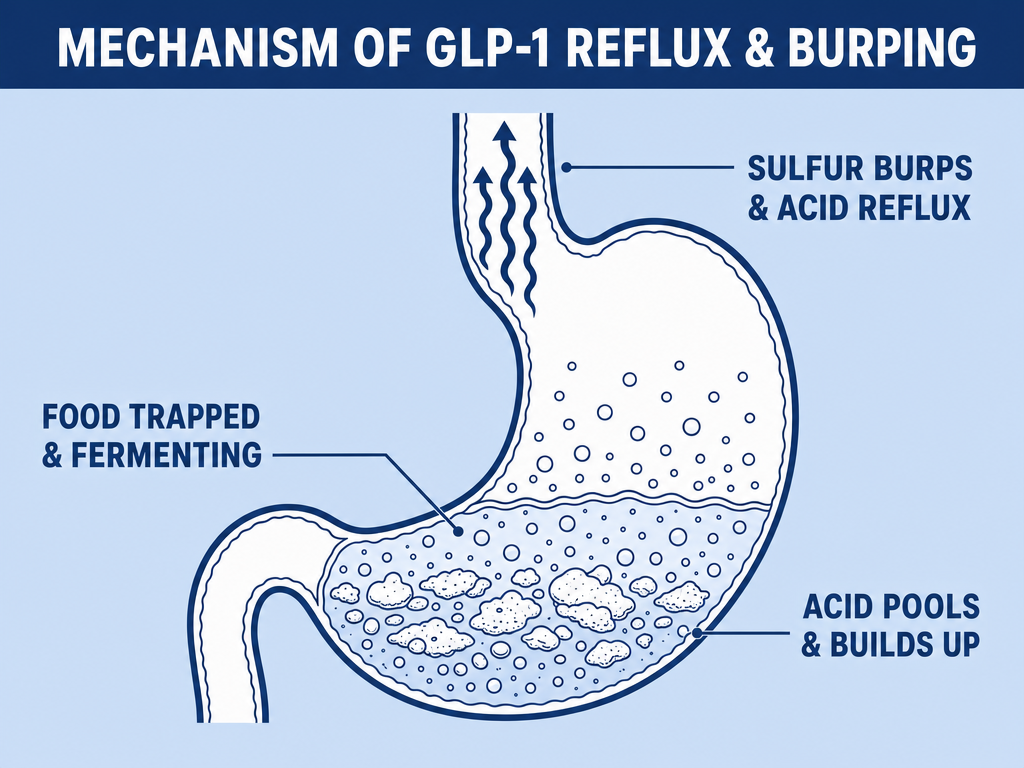
When food lingers for hours, it starts to ferment. Bacteria in your stomach break it down and produce gas — specifically hydrogen sulfide, which is what creates those sulfur burps.
At the same time, the longer food sits there, the more stomach acid builds up. That acid has nowhere to go, so it comes back up as reflux.
What to Do
Cut out high-sulfur foods
Eggs, red meat, cruciferous vegetables (broccoli, cauliflower, Brussels sprouts), dairy.
These foods carry naturally high sulfur content. Left sitting in the stomach for hours, they produce noticeably more gas.
Full elimination isn't necessary — shifting them earlier in the day and keeping portions small is usually enough.
Focus on low-residue foods
White rice, lean fish, chicken breast, well-cooked vegetables (not raw).
These digest faster and produce less gas during the extended time they're sitting in your stomach.
Digestive enzymes before meals
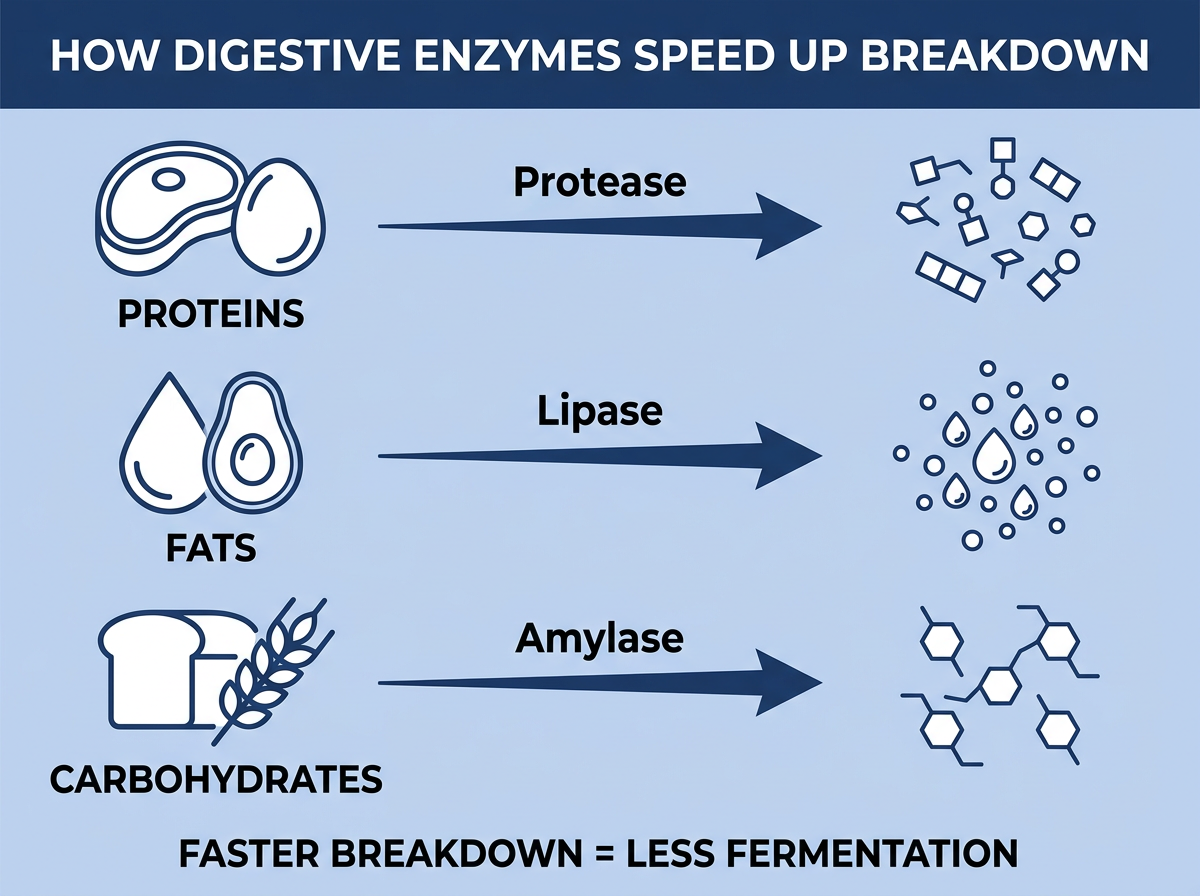
A broad-spectrum digestive enzyme — containing protease, lipase, and amylase — taken 15 minutes before eating.
These enzymes help break food down faster, reducing the fermentation window.
Elevate your head while sleeping
For nighttime reflux, raise the head of the bed 6-8 inches.
Gravity does the work of keeping acid where it belongs.
This outperformed every antacid tried for controlling overnight reflux.
The Science Behind It
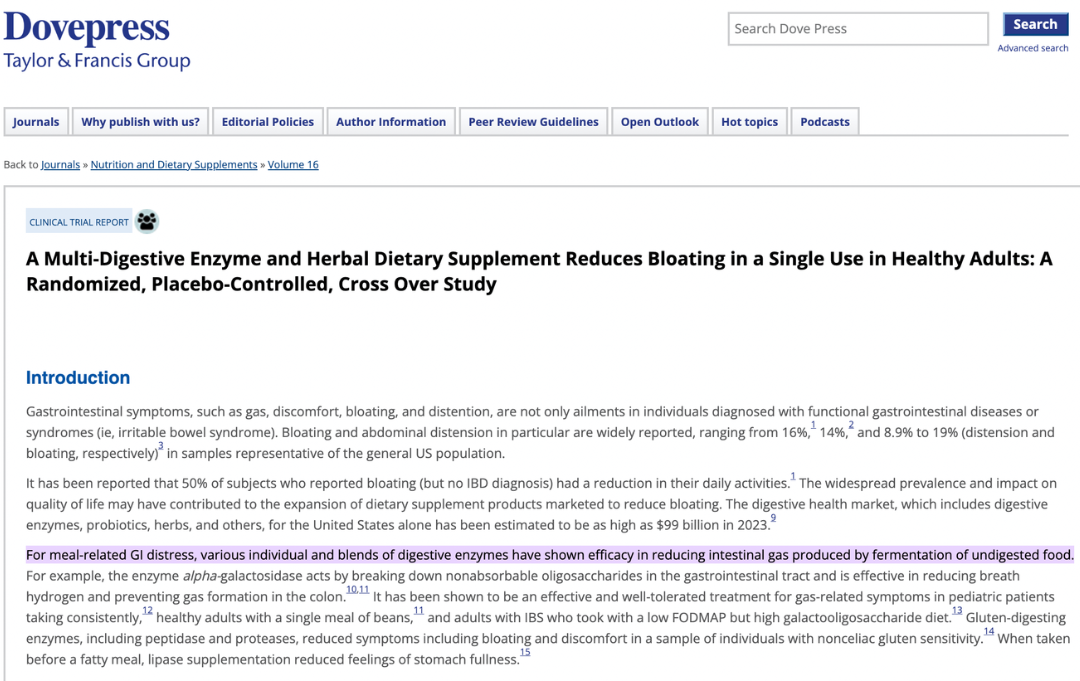
Research in Alimentary Pharmacology & Therapeutics shows that digestive enzyme supplementation reduces gas production by up to 50% in people with delayed gastric emptying.
Digestive enzymes speed up food breakdown, reducing fermentation time in the stomach:
- •Protease breaks down proteins
- •Lipase breaks down fats
- •Amylase breaks down carbohydrates
Ginger extract also helps here — and this is why Tip #1 and Tip #2 share the same foundation.
By supporting motility, ginger reduces the total time food sits in the stomach, which addresses both the fermentation and the acid buildup at the same time.
This is why formulations that combine ginger with digestive support tend to be more effective than either alone.
Broad-spectrum digestive enzymes with all three types (protease, lipase, amylase).
Ginger extract for motility support — same standardized form as Tip #1, 100mg with meals.
The burps and reflux come from food fermenting in a slow stomach. Change what you eat, support the breakdown with enzymes, support the motility with ginger, and you avoid this stage of the cascade entirely.
TIP #3: Hair Loss — It's Mineral Depletion, and It's Predictable
Why This Happens
Of everything on this list, this is the one that alarms people most — and, started early enough, one of the easiest to head off.
When you're on the shot, two things are happening at the same time:
- 1You're eating significantly less, which means far fewer minerals coming in.
- 2You're losing weight rapidly, which is metabolically expensive — your body is burning through its stored reserves faster than normal.
Less coming in. More going out. Every single day.
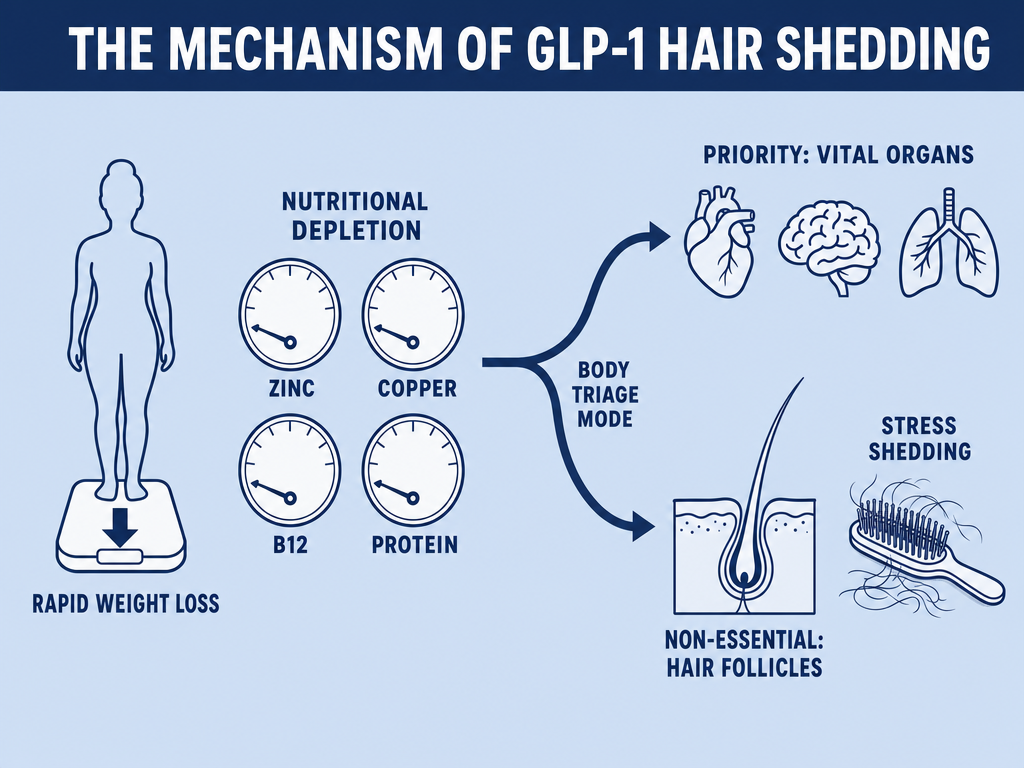
For a while, nothing happens — because your body has reserves to draw on.
Then the reserves run low, and your body triages. It sends what's left to the things that keep you alive — heart, brain, organs — and it cuts off the things it considers non-essential, which is hair.
This usually shows up around month four or five after the first symptoms appeared — roughly how long it takes for reserves to hit the triage point.
It seems sudden, but it's been building silently for weeks.
The clinical term is telogen effluvium — a stress response where follicles shift out of their growth phase and shed.
What to Do
Zinc and copper in the right ratio
The target is 10mg of zinc daily paired with 0.5mg of copper.
Getting that ratio right matters.
Zinc without enough copper can actually worsen shedding, since excess zinc blocks copper absorption.
Zinc supports keratin, the protein structure hair is built from. Copper supports iron absorption and collagen production, both of which strengthen the follicle itself.
B12 — the methylated form
Methylcobalamin, not cyanocobalamin.
Your cells need B12 to build hair, and the methylated form is the one your body can use immediately without having to convert it first.
Most cheap supplements use the wrong form.
Vitamin D3
2,000 IU daily. Most people on GLP-1s are already running low. D3 supports follicle health and wakes up dormant follicles.
Protein — more than you think
Hair is built from protein — keratin, specifically.
Without adequate protein intake, the body can't produce new hair regardless of how well the mineral piece is handled.
Target 0.8 to 1 gram per pound of body weight per day.
That's a meaningful amount when appetite is suppressed, so structuring each small meal around a protein source helps, and a shake with 25-30 grams can cover the shortfall.
The Science Behind It
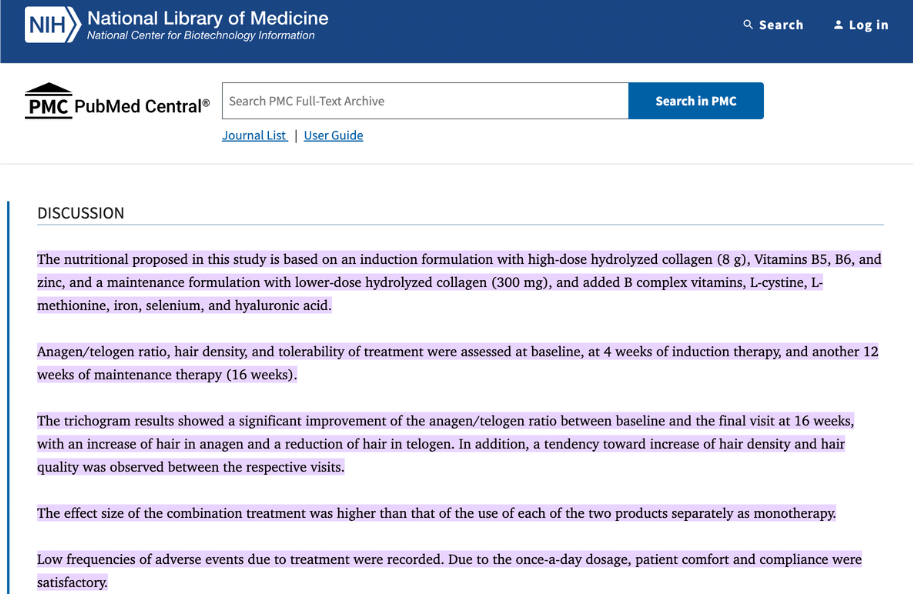
A 2018 study in Dermatology Practical & Conceptual found that zinc and iron supplementation stopped telogen effluvium in 87% of participants within 12 weeks.
- •Zinc is required for DNA and RNA synthesis in hair follicle cells — without it, follicles can't replicate.
- •Copper is essential for cross-linking collagen and elastin, which give hair its strength.
- •B12 feeds the cells that build new strands — low B12 means weak, thinning hair.
- •Vitamin D3 activates dormant follicle receptors.
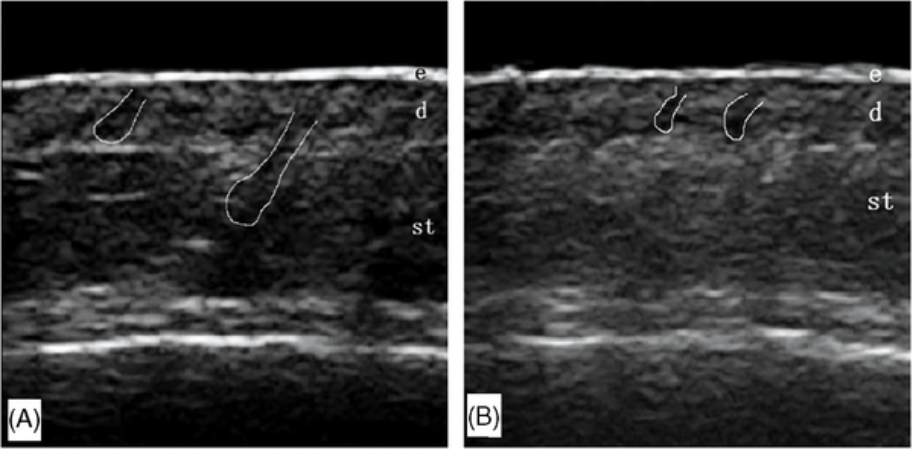
Healthy Hair Follicles
Telogen Effluvium - "Stressed" Follicles
When these minerals are depleted, follicles shift into a "resting phase" — they stop producing hair and eventually shed. Replace the specific minerals at the right doses and in the right forms, and the follicles can reactivate.
Zinc citrate (10mg), copper glycinate (0.5mg), methylcobalamin B12 (50mcg), vitamin D3 (2,000 IU). The zinc-to-copper ratio is the detail most supplements get wrong.
Typical timeline: Shedding tends to slow after roughly 6 weeks of consistent supplementation. Visible regrowth often follows by week 12, with a full return to normal by around month 6.
The hair loss is predictable, preventable, and reversible. Replace the specific minerals your body is burning through — in the right forms, at the right ratio — and you can stay ahead of this stage entirely.
TIP #4: Constipation — It's About Motility, Not Fiber
Why This Happens
The shot doesn't just slow your stomach. It slows your entire digestive tract.
Intestines move slower. Stool moves slower. Everything from entry to exit runs at reduced speed.
And here's where most people make the wrong move. The standard advice is always "eat more fiber." But on the shot, fiber is often the wrong answer.
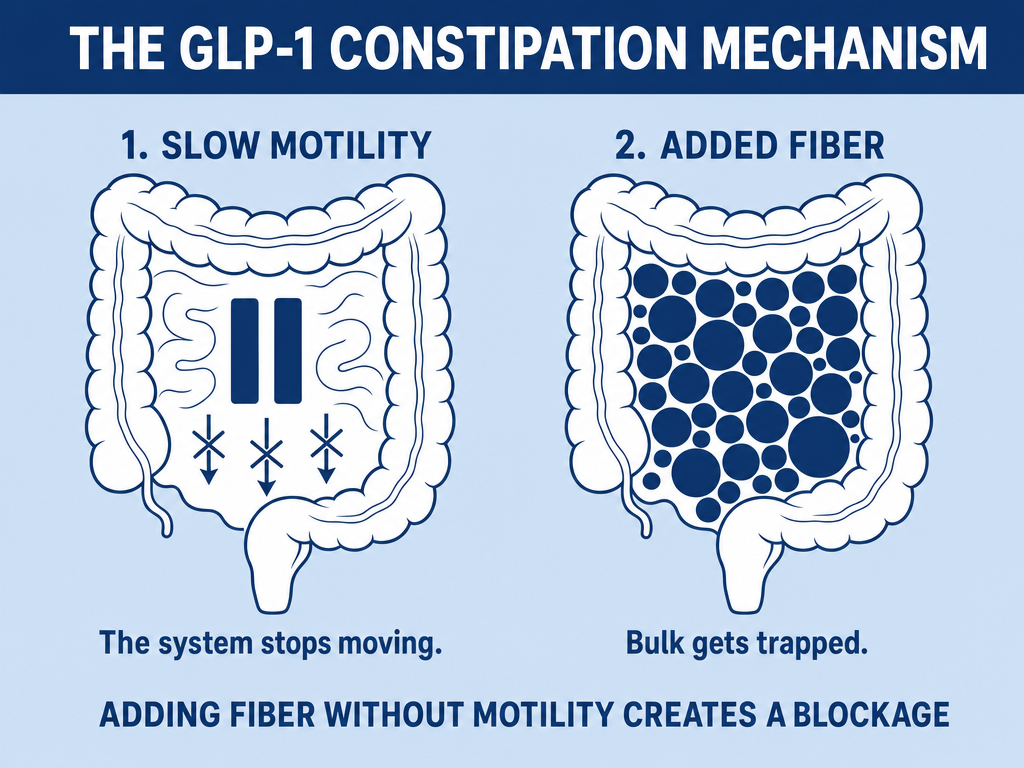
Adding fiber helps by creating bulk, but if your intestines aren't moving fast enough, the fiber just sits there. Sometimes it makes things worse because you're adding more bulk to a system that's already moving too slowly.
Think of it like this: fiber is the cargo. Motility is the truck. If the truck isn't moving, adding more cargo doesn't help.
What to Do
Magnesium glycinate
50mg before bed every night.
Magnesium draws water into your intestines, which softens stool and stimulates motility.
It's gentle — not like a harsh laxative — but incredibly effective.
Movement
This sounds simple, but physical movement directly stimulates what's called peristalsis — the wave-like contractions in your intestines that push everything through.
A short walk after eating is literally helping your gut do the job the shot is slowing down.
Stay well hydrated
Again, very simple, but a slow system without enough water is a stuck system.
Water works with magnesium to keep things soft and moving.
Psyllium husk fiber AFTER motility is supported
Psyllium husk specifically — a soluble fiber that absorbs water and creates gentle bulk.
But only after the magnesium has gotten things moving first.
I took 5g twice daily with a full glass of water — but only after the motility was already improving.
The Science Behind It
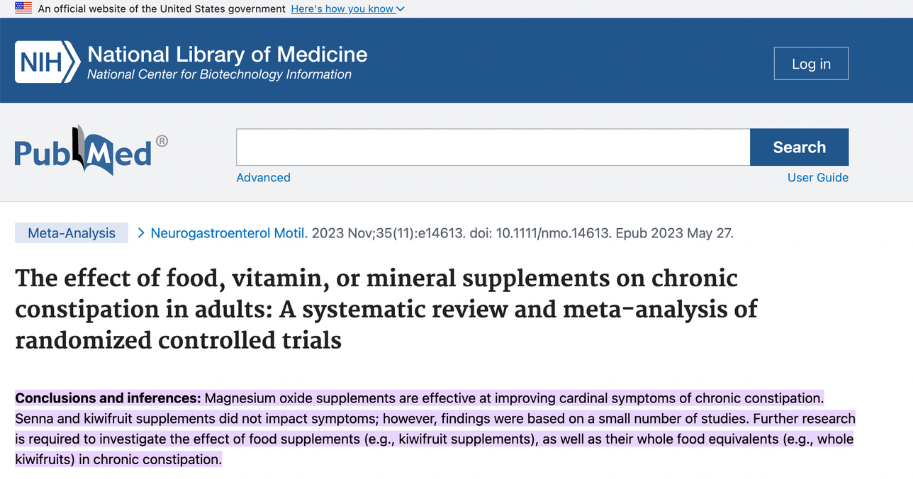
Research in Neurogastroenterology & Motility shows that magnesium supplementation increases bowel movement frequency by 40% in people with slow-transit constipation.
Magnesium restores natural bowel movement through a simple process:
Magnesium draws water into the intestines
This softens stool and increases intestinal volume
Increased volume triggers stretch receptors in the intestinal wall
Stretch receptors stimulate peristaltic contractions (the wave-like movements that push stool through)
It addresses the actual problem (motility) rather than just adding mass (fiber). That's why it works where fiber alone doesn't.
Magnesium glycinate specifically is effective because the glycinate form is well-absorbed and doesn't trigger the diarrhea that oxide and citrate can cause — which matters when the goal is gentle, consistent motility, not a harsh flush.
Magnesium glycinate (50mg minimum) for gentle motility support. Psyllium husk (5g) if needed for bulk. Probiotics with at least 10 billion CFUs for gut health.
GLP-1 constipation is a motility problem, not a fiber problem. Support movement with magnesium, walking, and water — before you reach for more bulk.
TIP #5: Fatigue Isn't About Sleep — It's About Dopamine
Why This Happens
This is the part that gets a little more involved, so stick with me.
Here the chain moves out of the digestive system and into the brain, and this is the piece that everything downstream connects to.
For a long stretch, the exhaustion gets chalked up to the obvious things: eating less, dropping weight, imperfect sleep. That's the default explanation most people land on, doctors included.
But the fatigue can persist even after the mineral gaps from Tip #3 are closed, even once digestion has settled and the nausea and shedding have eased. It's not ordinary tiredness — it's a heavy, sleep-resistant exhaustion that doesn't budge no matter how much rest you get.
Working through this with Dr. Aldridge reframed the whole problem.
The exhaustion has a neurological root, not just a physical one.
Here's the underlying mechanism. GLP-1 medications don't stop at the digestive tract — they act directly on the brain as well.
GLP-1 receptors are present throughout the brain regions that govern reward, motivation, drive, and pleasure.
Suppressing food cravings works by turning down the reward signal tied to eating.
That's the entire mechanism behind quieting food noise.
The catch is that the brain runs a single, shared reward system — it doesn't have one channel for food and a separate one for everything else.
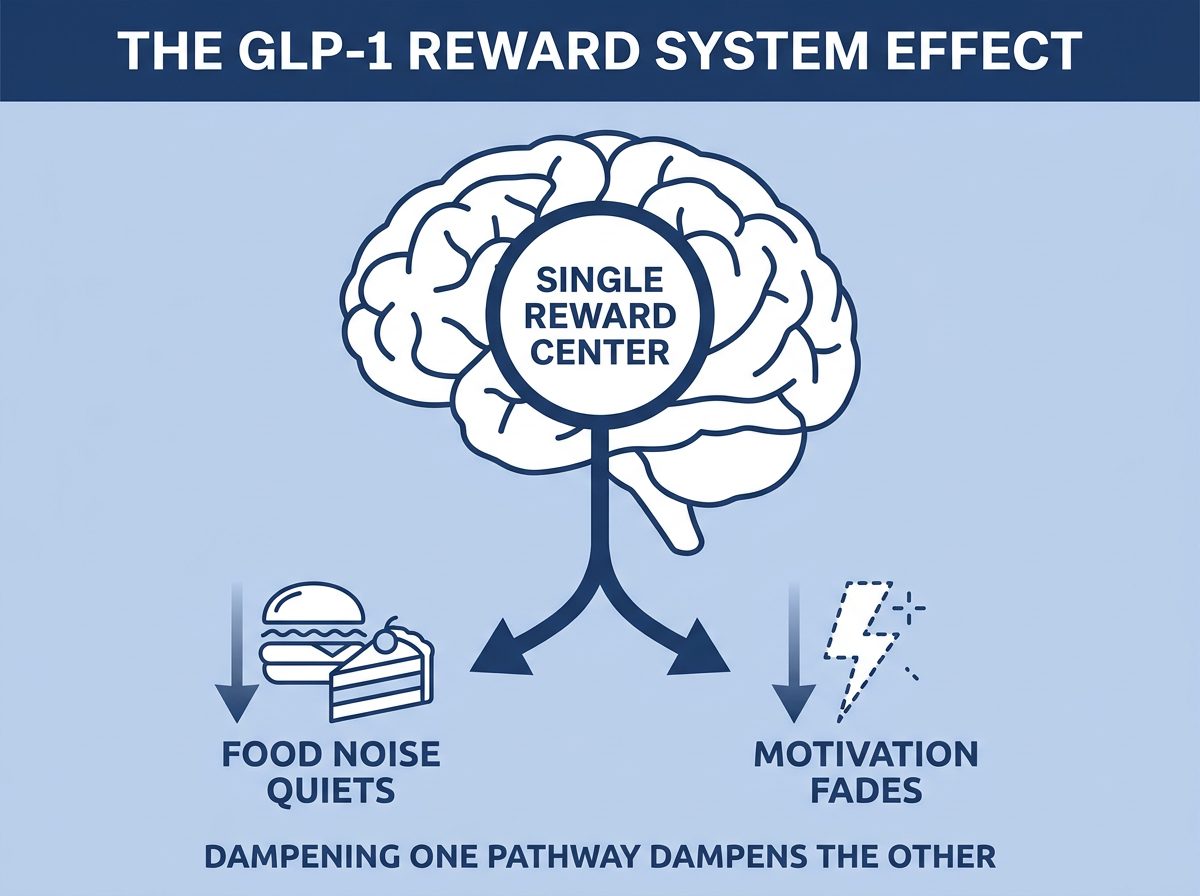
So when the signal around food gets dialed down, the same dial can turn down motivation, drive, and the sense that effort is worth making, across the board.
Which means fatigue on a GLP-1 isn't purely physical exhaustion.
It's a drop in the brain's capacity to generate motivation and drive.
That capacity runs on dopamine.
Dopamine is the neurotransmitter behind motivation, reward, and the pull to actually do something.
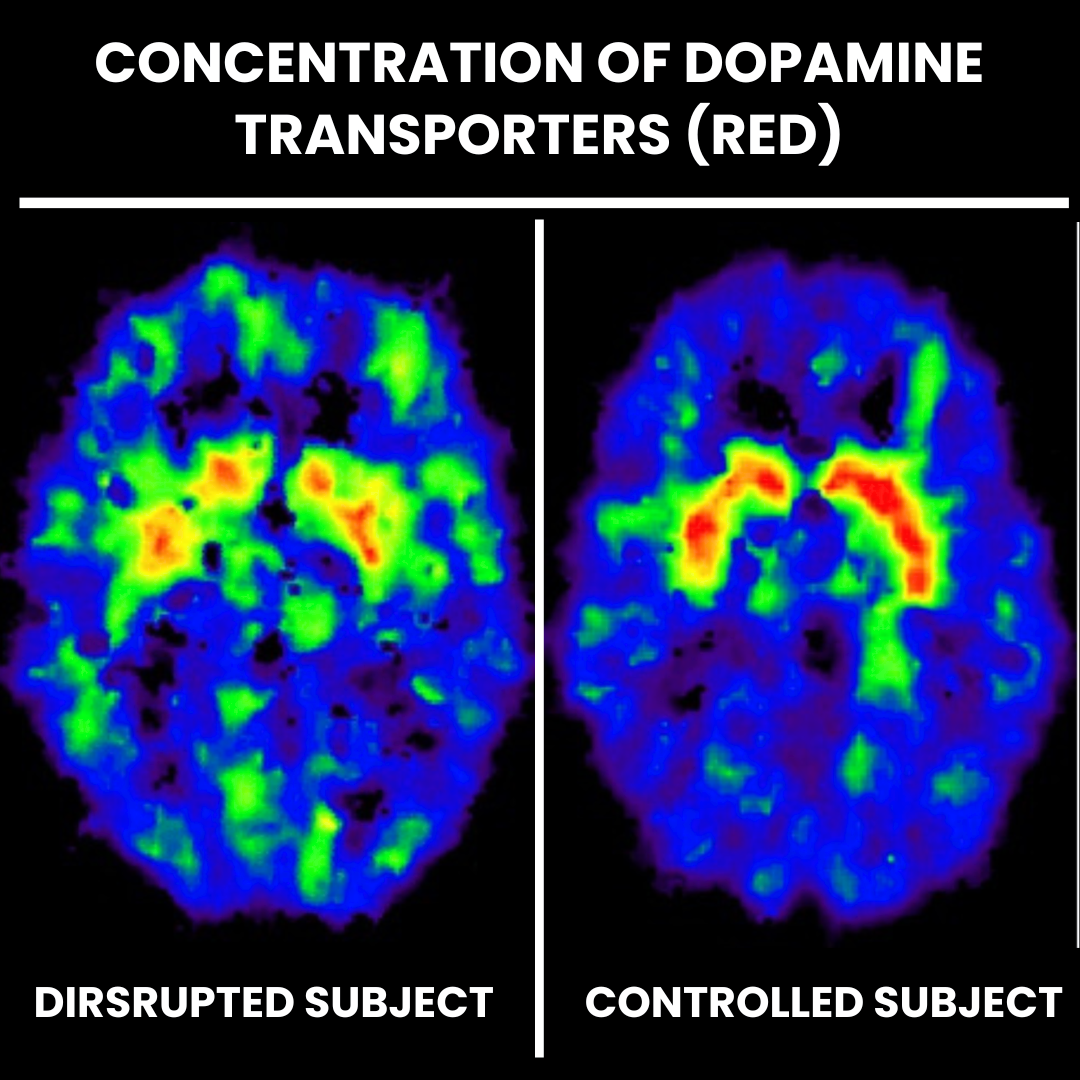
When dopamine signaling is disrupted, the result isn't just low motivation — it's physical exhaustion.
Because the brain has stopped generating the drive needed to move, act, or engage.
Important
When depleted energy reserves and a dimming drive system hit at the same time, the body interprets it as ongoing stress. Cortisol rises in response, and sustained high cortisol pushes the body into preservation mode, holding onto weight instead of releasing it. That's how a plateau forms. The fatigue itself is often an early signal that a stall in progress is coming.
What Didn't Work
Once dopamine looked like the underlying issue, the obvious move was to try raising it directly. Here's what got tried, and what happened.
L-tyrosine (dopamine precursor)
1500mg daily for 8 weeks. Barely noticeable — perhaps a touch more alert in the mornings, but the deep fatigue stayed put.
Mucuna pruriens (natural L-DOPA)
500mg standardized extract. A mild lift the first week, gone by week two, and by week four just jitteriness and anxiety layered on top of the same exhaustion.
5-HTP (serotonin precursor)
Added alongside the L-tyrosine. This made things worse — more restless and anxious, with no gain in energy or motivation.
B vitamins and cofactors
A high-dose B-complex with methylated B6, B9, and B12. Some benefit for mental clarity, none for the fatigue.
Omega-3s
2000mg EPA/DHA daily. Generally good for brain health, but no measurable effect on fatigue.
Rhodiola and ashwagandha
Adaptogens marketed for energy and stress resilience. Little to no change after six weeks.
Nothing on that list actually worked, despite months of trying and a fair amount of money spent.
The answer came from digging into it further with Dr. Aldridge.
Dopamine levels themselves weren't the issue — the medication doesn't deplete them, and production stays normal.
The breakdown was happening at the receptor level.
Here's the simplest way to picture it:
Think of dopamine as a message, and the neural pathways as the delivery system that carries it to the parts of the brain governing motivation, energy, pleasure, and reward.
When that delivery system is working normally, the message gets through and you feel energized and driven.
Semaglutide isn't cutting the message short at the source — dopamine output stays the same.
What it does is interfere with delivery.
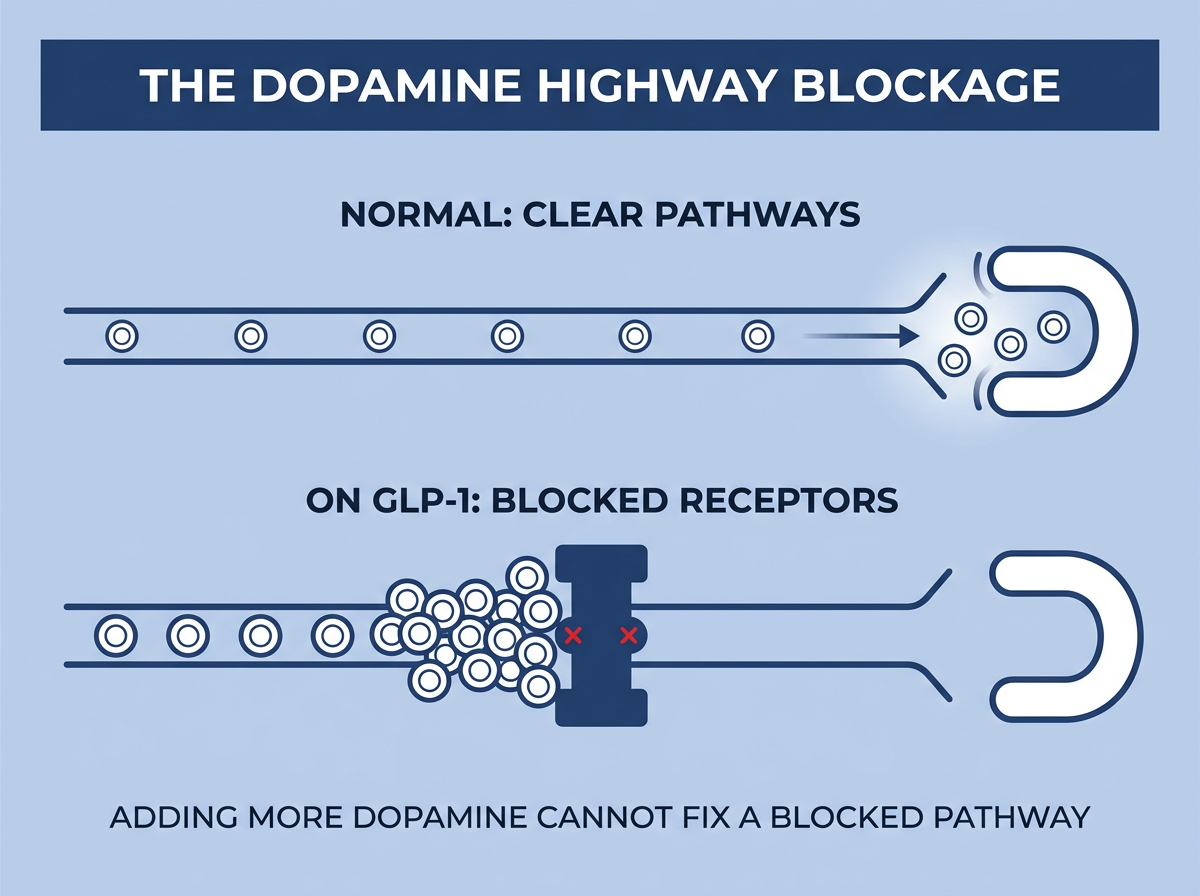
The dopamine is produced, but it isn't reaching its destination.
The message is sent. It just isn't arriving.
More dopamine doesn't help if the signal still can't get through. Restoring receptor function — covered in Tip #6 — is what actually clears the interference.
TIP #6: Depression, Anhedonia, and the Flat Feeling — The Root Cause Nobody Talks About
Why This Happens
This is the final stage in the sequence.
The slowest to develop.
The hardest to notice.
And the one most people don't recognize until it's already well established.
The same receptor changes behind the fatigue in Tip #5 don't necessarily stop there.
Left unaddressed, they can progress further.
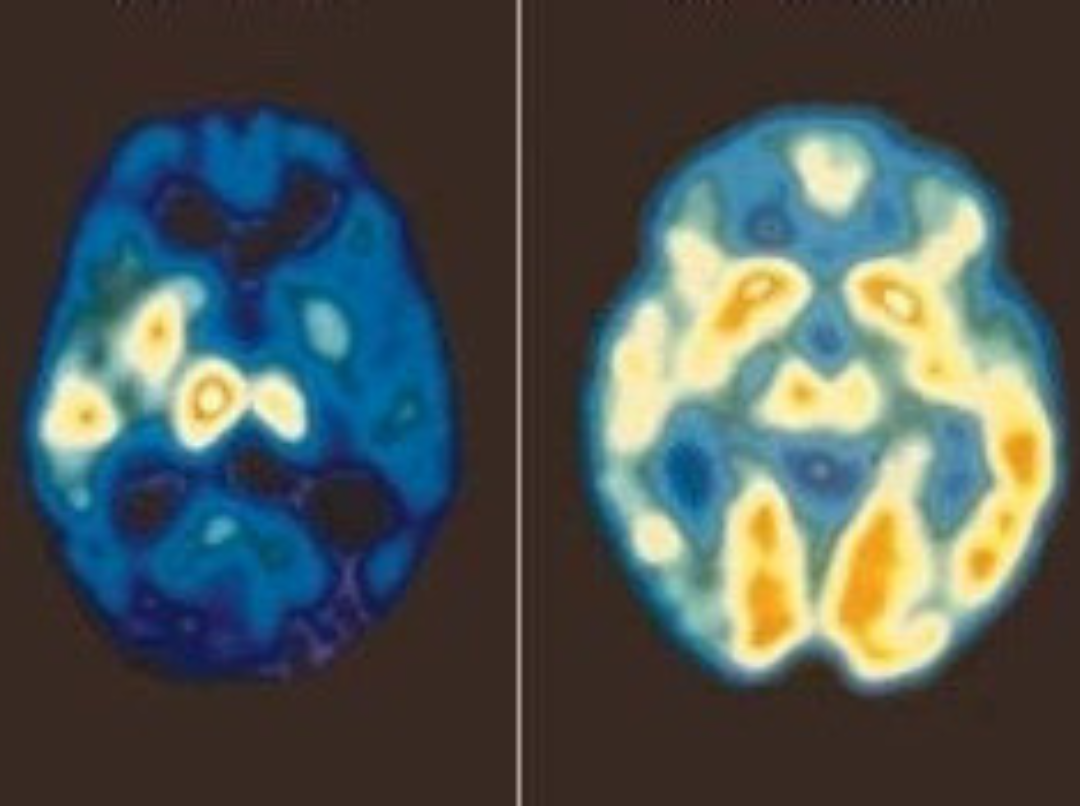
Here's what that tends to look like in practice:
- ×Interest in things fades — not sadness, just a flatness.
- ×Activities that used to bring enjoyment stop landing.
- ×Plans get called off.
- ×Hobbies quietly drop away.
- ×Life goes on, but on autopilot.
- ×The change happens slowly enough that it's rarely noticed as it's happening.
The clinical term is anhedonia — a diminished capacity to feel pleasure.
In practice, it's miserable to live through.
Because it takes six months or longer after the first symptom to fully develop, it's almost never connected back to the medication.
Instead, people attribute it to stress, aging, poor sleep, or something wrong with themselves.
The mechanism is the same one driving the fatigue in Tip #5:
Your brain has receptors in specific areas (ventral striatum, prefrontal cortex, nucleus accumbens)
These receptors process dopamine and serotonin
These chemicals control your reward system
Your reward system controls motivation and pleasure
Semaglutide activates GLP-1 receptors throughout your body — including in your brain
When GLP-1 receptors in the brain are activated, they interfere with how dopamine and serotonin receptors function
The pathways get disrupted
Dopamine and serotonin are there — but they can't flow properly
Your reward system stops functioning normally
You can't feel pleasure, motivation, or joy
This is also why conventional antidepressants tend to fall short here.
SSRIs such as Prozac or Zoloft work by keeping more serotonin in circulation through blocked reuptake.
But when the receptors themselves aren't responding properly, extra serotonin in circulation doesn't solve anything.
It's the same limitation that undermines dopamine precursors — more signal doesn't help if it can't be received.
What actually helps is something that restores the receptors' ability to respond.
What Worked for Me
After exhausting the dopamine-boosting options from Tip #5 with nothing to show for it, the compound that finally addressed the real problem turned out to be something different entirely.
Saffron extract.
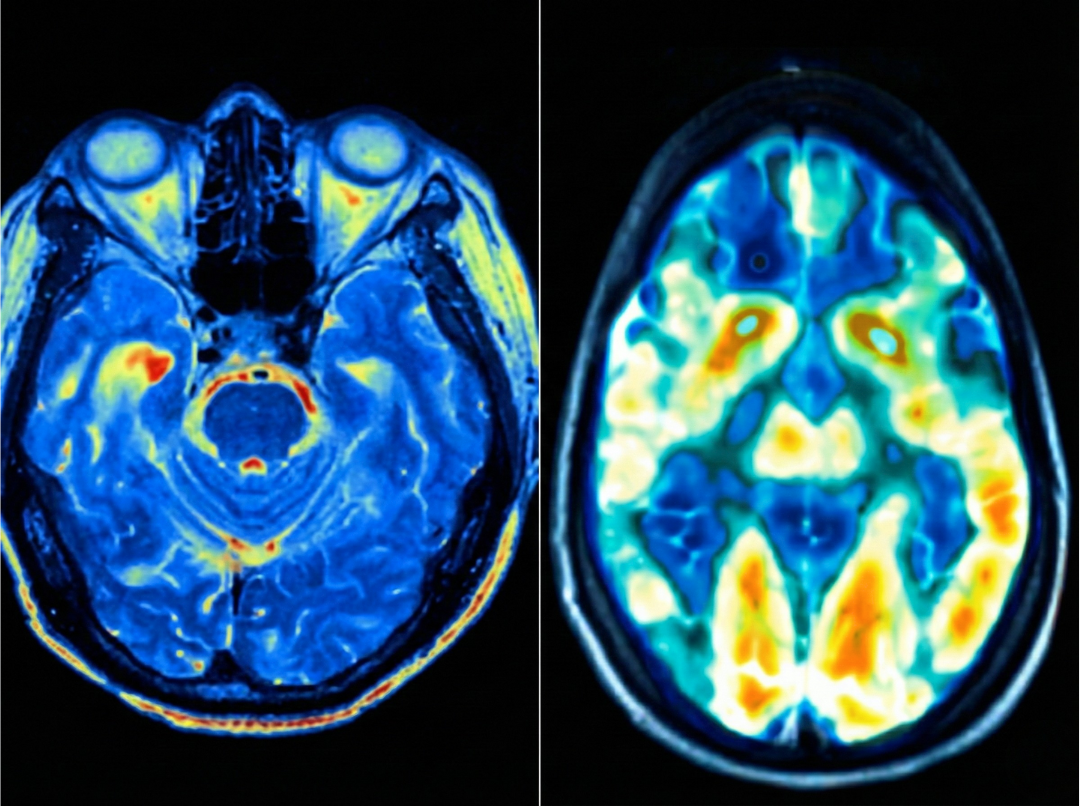
Not the spice from the kitchen cabinet — a pharmaceutical-grade extract standardized for specific bioactive compounds: crocin, crocetin, and safranal.
These are the compounds responsible for modulating receptor function and restoring pathway sensitivity.
The protocol was 30mg of 4:1 standardized saffron extract (equivalent to 120mg of raw saffron), in capsule form, twice a day.
Standardization matters here — the extract needs to deliver at least 8-10mg of crocin and 2-3mg of safranal per dose. Unstandardized saffron powder rarely contains reliable amounts of either.
Paired with:
L-Theanine (200mg)
- Supports calm, stable nervous system function without sedation.
- Takes the wired-but-tired edge off.
- Supports GABA function so the receptor support can work without cortisol interference.
Myo-Inositol (600mg)
- Supports receptor signaling at the cellular level.
- Helps the relay system that converts an incoming chemical signal into an actual felt experience work properly.
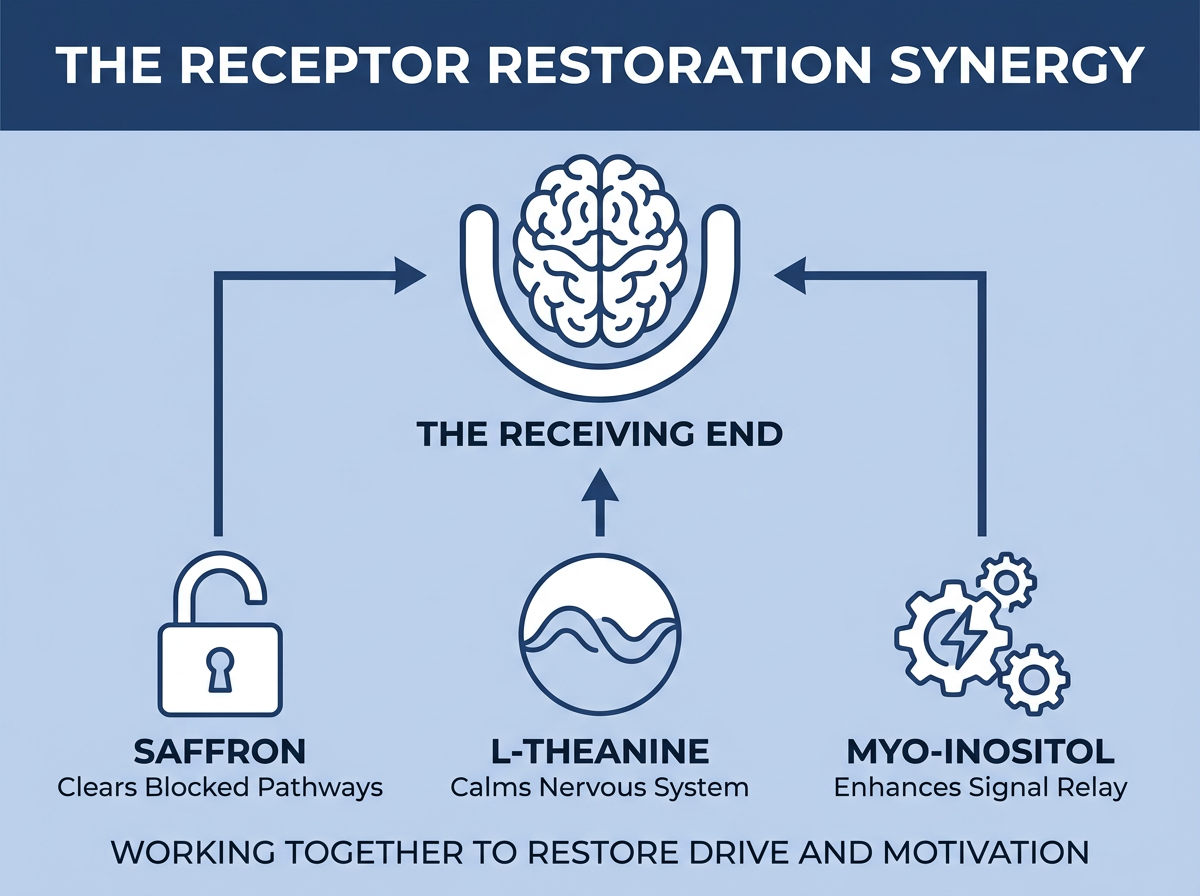
Together, these three target the receiving end of the signal chain — which is where the actual breakdown occurs.
Importantly, none of this undoes the appetite control.
Food noise stays quiet, cravings stay suppressed — the reward system gets support everywhere except around food.
That distinction mattered a great deal: giving back the weight-loss benefit in exchange for feeling better wasn't an acceptable trade, and it turned out it didn't have to be.
The Science Behind It
Saffron doesn't boost dopamine or serotonin levels.
It restores receptor sensitivity and pathway function.
Saffron's three bioactive compounds work together to restore pathway function:
- •Crocin — modulates how serotonin is reabsorbed (similar to SSRIs like Prozac), while also making receptors more sensitive and responsive.
- •Crocetin — prevents dopamine and serotonin from breaking down too quickly, keeping more available in the brain.
- •Safranal — acts on GABA and serotonin receptors to reduce anxiety and stabilize mood.
The key difference from everything in Tip #5:
- L-tyrosine adds more dopamine → still can't get through to unresponsive receptors
- 5-HTP adds more serotonin → same limitation
- SSRIs prevent serotonin breakdown → still doesn't fix receptor responsiveness
- Saffron restores receptor sensitivity and pathway function → the signal finally gets received
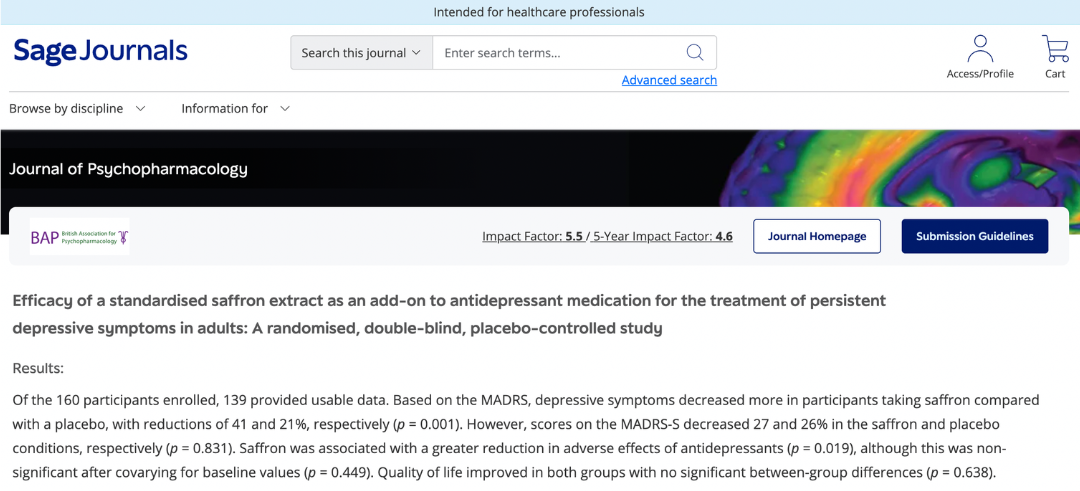
A 2022 study published in the Journal of Affective Disorders found that saffron extract improved anhedonia scores by 68% in participants with depression — significantly better than placebo and comparable to prescription antidepressants.
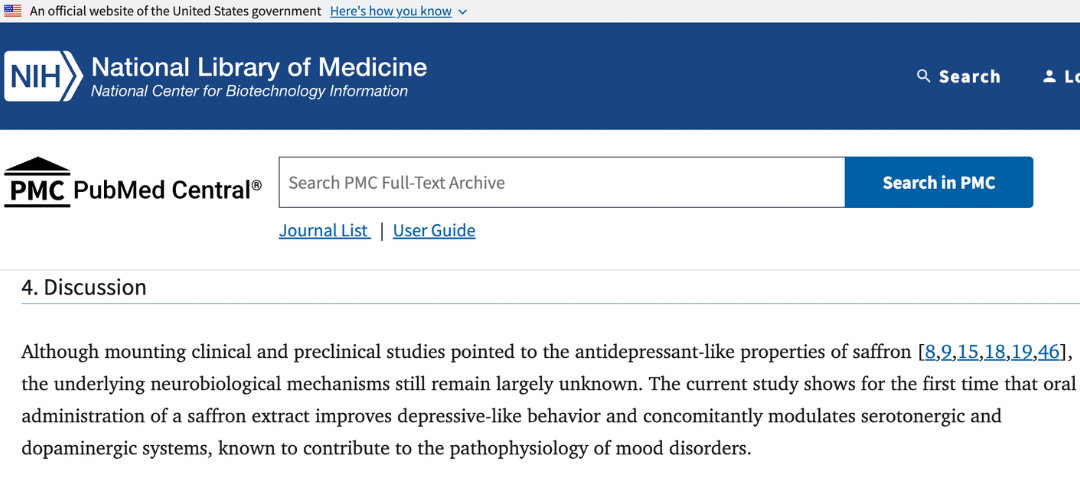
Another study in Nutrients (2021) showed that saffron increased dopamine D2 receptor sensitivity in brain regions associated with reward and motivation.
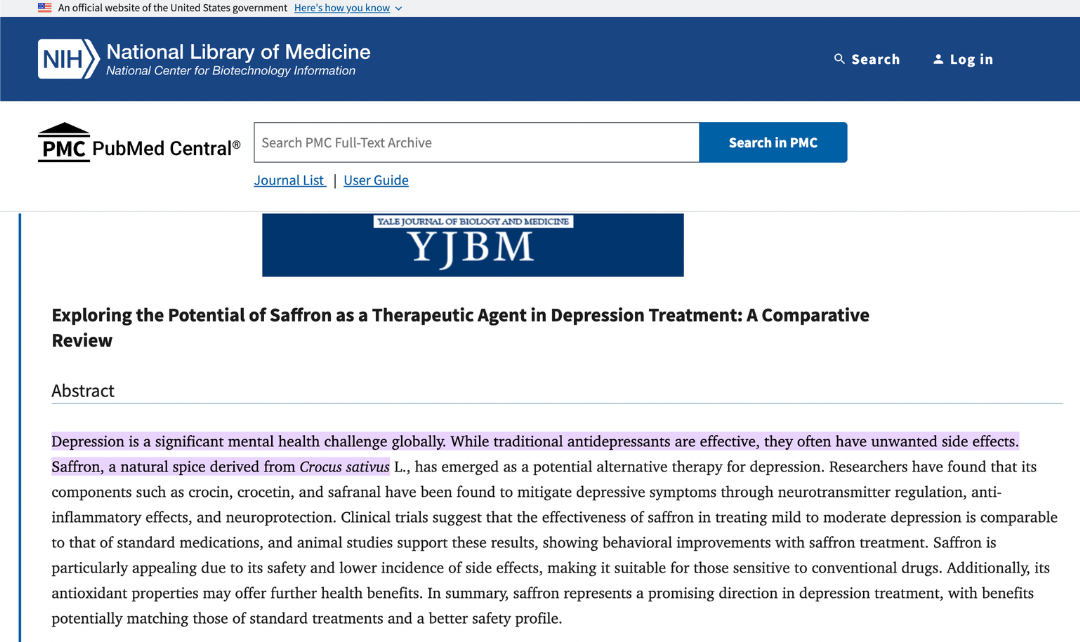
A 2020 meta-analysis in Human Psychopharmacology reviewing 12 clinical trials concluded that saffron extract (30mg daily) was as effective as standard antidepressants for mild to moderate depression, with significantly fewer side effects.
Saffron extract standardized for crocin (at least 8-10mg) and safranal (at least 2-3mg) content. The 4:1 extract ratio means 30mg of extract equals 120mg of raw saffron.
This is critical: most saffron supplements on shelves contain 10-30mg of raw saffron or unstandardized extract, which is nowhere near meaningful.
L-Theanine at 200mg. Myo-Inositol at 600mg. Together with the saffron, these three cover the receptor side completely.
Saffron doesn't just boost neurotransmitters — it restores receptor sensitivity and pathway function. That's why it works when dopamine boosters and SSRIs don't.
Finding the Right Formulation
With saffron confirmed as the piece that worked, the next step was finding a product that actually delivered it properly.
That search hit an immediate snag:
Most saffron supplements on the market don't do much of anything.
The Problems
- They contain 10-30mg of saffron total — not nearly enough to have a clinical effect.
- They don't specify whether it's standardized extract or just ground saffron powder (which is basically useless).
- They're formulated for general "mood support," not specifically for GLP-1 users dealing with disrupted dopamine and serotonin pathways.
What I was looking for
- Saffron extract standardized for crocin and safranal content (the bioactive compounds that restore receptor function).
- Myo-inositol (enhances dopamine receptor sensitivity).
- L-Theanine (reduces anxiety without sedation, supports GABA function).
- Ginger extract (for nausea and gastric motility).
- Magnesium glycinate (for gut motility and neurotransmitter synthesis).
- Zinc and copper (in the right ratio for hair and mineral depletion).
- B vitamins (methylated B12, vitamin C, vitamin D3 for cofactor support).
- Clean ingredients, no fillers, therapeutic doses.
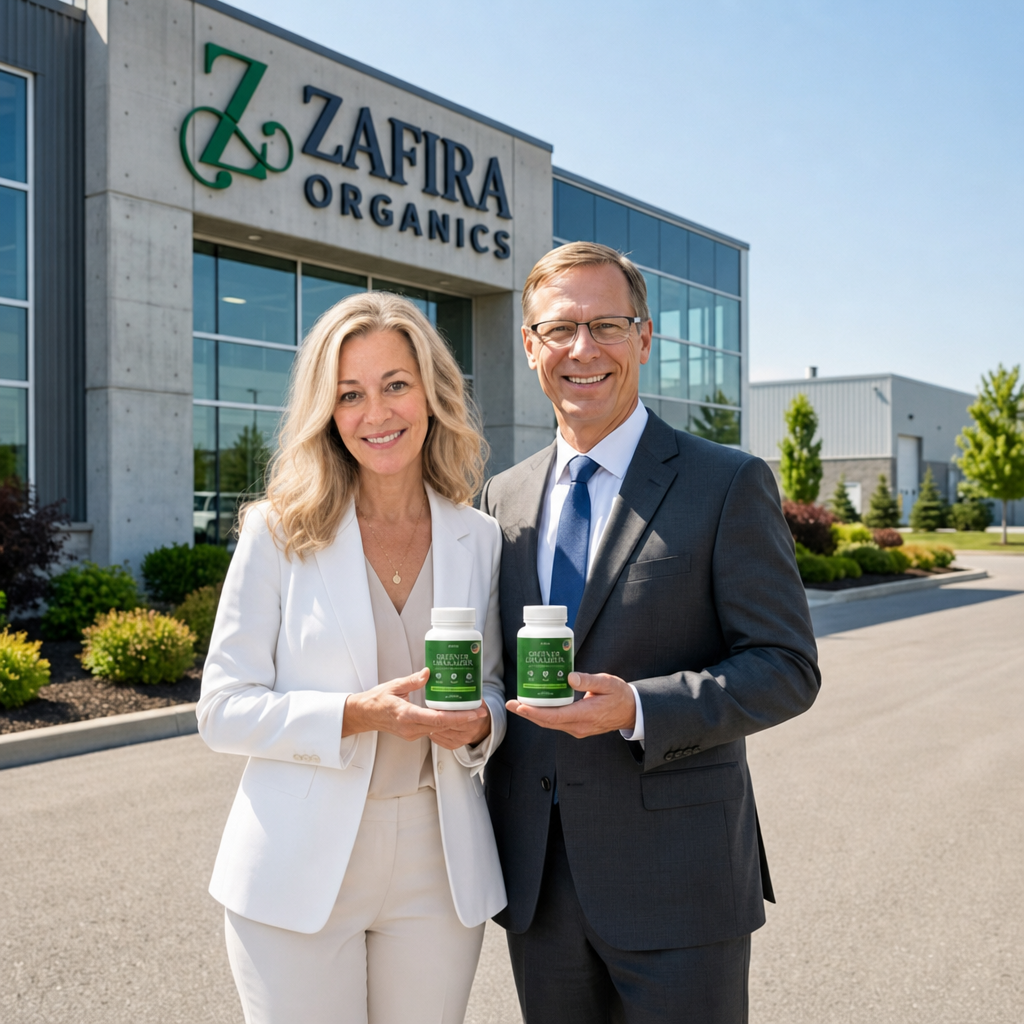
That search eventually led to Zafira Recovery Foundation.
There's no payment or financial arrangement behind this mention.
It's included here because it was the only product found that's positioned specifically for people on GLP-1 medications, rather than generic weight-loss or mood support.
It covered every ingredient identified as necessary, at the clinical doses the research actually supports:
- Saffron Extract 4:1 — 30mg (standardized for crocin and safranal)
- Myo-inositol — 600mg (dopamine D2 receptor sensitivity)
- L-Theanine — 200mg (calm focus, GABA support)
- Ginger extract — 100mg (gastric motility, nausea)
- Magnesium glycinate — 50mg (intestinal motility, neurotransmitter cofactor)
- Zinc citrate — 10mg & Copper glycinate — 0.5mg (20:1 ratio for hair and mineral support)
- B12 (methylcobalamin), Vitamin C, Vitamin D3 (neurotransmitter synthesis cofactors)
Every ingredient sat at a clinical dose, not a token amount for the label.
Before that, managing all the side effects meant juggling six or seven separate supplements.
This consolidated all of it into one formulation.
After starting it at two capsules daily with food, the improvement within three weeks was more noticeable than anything in the previous two years.
The Results
- The nausea improved
- The constipation resolved
- The fatigue lifted
- I started losing weight again after 4 months of plateau
- But most importantly — my mental health came back
The Clinic and What I Learned
That period also led to a decision that reshaped the rest of my career.
Nearly two years went into understanding exactly what these medications do to the body — the digestive slowdown, the nutrient depletion, the effect on the brain.
All of it firsthand. Every intervention tested personally.
What came out the other side was a protocol that actually worked.
The question that kept coming up was simple: how many other people on these medications were going through the exact same thing, with no one explaining any of it to them?
So a call went out to Patricia, a fellow nurse here in Chicago I'd known for years.
She'd been through her own version of this on a GLP-1.
Hers had actually run longer and hit harder than mine before she found her way through it.
But she'd landed in the same place: the same conclusions, the same underlying mechanisms, the same frustration that none of this gets explained to people early enough to matter.
So the two of us decided to change that.

We took a small storefront in Lincoln Park, put in what savings we had, and opened a weight-loss clinic built on a single premise: nobody should have to work this out alone, month by miserable month, the way we both had to.
Everyone who starts a GLP-1 through the clinic gets the full protocol from their very first visit.
All six habits, plus the nutritional support, from day one.
Not as damage control after problems appear — as prevention before they can.
Zafira came up in every one of those conversations.
Not for any commission or referral fee — there wasn't one.
Simply because it had worked for both of us, and we believed it could do the same for our clients.
An initial order of around 50 bottles went on a shelf in the clinic.
Available for anyone who wanted to try it, nothing more.
Within a week, the shelf was empty, so we reordered.
The second batch sold out in three days.
Two months in, we'd moved to ordering by the case.
That's around when Tom Parham, the formulation engineer behind Zafira Organics, got in touch directly.
The Discount We Negotiated for Our Readers
The clinic's monthly bulk orders came with enough volume to negotiate better pricing, and we asked whether that discount could be passed on to readers of this article.
The answer was yes.
Readers of this piece can get Zafira at $54.90 rather than the standard $84.90 — a $30 reduction.
It's the identical formulation and dosing the clinic's own clients receive.
Just the bulk pricing, passed straight through.
A bit about who makes it
Zafira was developed by Tom Parham, working alongside a group of endocrinologists, specifically for people on GLP-1 medications.
Clinical dosing, the right compound forms, the right ratios.
That's what made the label credible in the first place — it reads like something built by people who understood the underlying mechanisms, not assembled by a marketing department.
Every order includes:
- 60-day money-back guarantee — if you don't feel a real difference, full refund, no questions
- You don't even need to ship the bottle back
- Direct email access to Tom's team if you have questions
- 1-3 day delivery within the US
Why 60 days and not 30
The digestive benefits tend to show up within the first week or two, but the energy and receptor-related effects take longer to build — typically six to eight weeks.
Sixty days is enough time to know for certain. If it hasn't made a difference by then, the purchase is refunded.
That's the arrangement.
ZAFIRA
The GLP-1 Support Protocol
Regular price: $84.90
Reader price: $54.90
— Diane Castellano, RN, BSN
Why I'm Sharing This
This exists because working out what's in this article took more than a year — information that really should have taken fifteen minutes to hand over.
Nobody handed it over. Not a doctor, not a corner of the internet, not the insert tucked into the prescription box.
It had to be assembled the hard way — symptom by symptom, failed supplement by failed supplement, late nights spent tracking down studies that should have been common knowledge already.
And in the end, none of it was complicated.
Hard to find, yes. But straightforward once it was in front of you.
Six issues. Basic habits paired with the right support in the right form. That's the entirety of it.
There was nothing mysterious going on.
No bad luck, nothing uniquely wrong.
Just a medication with specific, predictable, well-documented effects on the body and brain, with no one explaining any of that beforehand.
That's the genuinely frustrating part.
Not that it happened, but that nearly all of it could have been avoided.
From the first dose, if the information had been there.
Hence this article.
Not on the assumption that everyone on a GLP-1 will experience this.
Plenty won't.
But for the ones who do — and there are a lot of them — the reaction is almost always the same: "I wish someone had told me sooner."
Consider this that someone.
Whichever route you take — the formulated product, assembling the supplements individually, or just adopting the six habits — matters far less than simply having this information now.
What separates the people who breeze through this from the ones blindsided at month six is rarely luck.
Rarely genetics.
Rarely a better doctor.
Almost always, it's just timing — whether someone told them soon enough.
This information came late for me. It's arriving early for you.
The six strategies in this article are the ones that made the actual difference.
Not speculation, not theory.
Tested approaches that turned things around after they'd gotten about as bad as they could.
Diane Castellano, RN, BSN
This investigation was entirely self-funded with no compensation from any mentioned company. Diane Castellano receives no financial benefit from product sales.
P.S. — If depression, anhedonia, or intrusive thoughts on a GLP-1 medication are severe, please bring it to your doctor. It's a real, biological effect, and there are ways to address it.
P.P.S. — This reader pricing is tied to a limited production run. Once Tom's current batch sells out, pricing reverts to retail, so it's worth acting on sooner rather than later.

Daily Fiber Intake Guidelines Explained

An Overview of Common Dietary Guidelines

Weekly Exercise Minute Recommendations Explained
Note: This product is not intended to replace medical advice. Always consult your healthcare provider before starting any new supplement, especially if you're on prescription medications.
Ozempic, Wegovy, and Mounjaro are registered trademarks of their respective owners. This product is not affiliated with or endorsed by these companies.
These statements have not been evaluated by the Food and Drug Administration. This product is not intended to diagnose, treat, cure, or prevent any disease.
Individual results may vary. Results described in testimonials and case studies are not typical, and your experience may differ.
This article is for informational purposes only and is not intended as a substitute for advice from your physician or other healthcare professional. Do not discontinue or modify your prescribed GLP-1 medication without consulting your physician.
Any references to scientific studies, researchers, or institutions are for informational context only and do not imply endorsement of this product.
This is a paid advertisement for Zafira Organics and is not an actual news article. The opinions expressed here are for promotional purposes only.