5 Reasons Your Ears Keep Ringing (Even Though Your Hearing Test Came Back Normal) — And How to Finally Quiet the Noise Naturally

Summary: If you live with a constant ringing in your ears — yet every hearing test comes back “normal” — you are not imagining it. Doctors often tell you to “just learn to live with it” because they cannot find anything wrong. The trouble is, they are not looking in the right place. Emerging findings suggest that tight neck muscles can irritate the nerves tied to your hearing, producing phantom sounds your brain reads as ringing. It is known as somatic tinnitus. Below, we break down 5 reasons your tinnitus keeps returning — and how you can release that tension and quiet the noise at its source, naturally.

1. The Real Problem Isn’t Your Ears — It’s Your Neck
Most people assume tinnitus is an ear problem: inner-ear damage, hearing loss, something broken deep inside the ear. But newer research points somewhere else entirely — especially when the hearing test comes back clean. In many of these cases, the ringing actually starts in the neck.
It is called somatic tinnitus. It happens when tight muscles along the cervical spine irritate the nerves that feed into your auditory system. Your brain then receives scrambled signals and translates them into sound — ringing, buzzing, hissing, static.
Here is the tell-tale sign: if your tinnitus shifts when you turn your head, clench your jaw, or press on certain muscles in your neck, it is not coming from your ears. It is coming from tension that is sending the wrong messages to your brain.
Plenty of people with somatic tinnitus also notice their neck feels tight or stiff — often on the same side as the ringing. Until that tension is released, the ringing keeps coming back.

2. Tight Neck Muscles Are Sending Scrambled Signals to Your Brain
Most people never realize how closely the neck and hearing are wired together. The muscles at the base of your skull sit right beside the nerves that connect to your auditory system. When those muscles are chronically tight, they can:
- Irritate the nerves connected to your hearing
- Restrict blood flow to the inner ear
- Send distorted signals that your brain reads as sound
That is exactly why so many tinnitus sufferers also deal with neck pain, jaw tension, or headaches. It is all connected. The ringing isn’t random — it’s your nervous system reacting to tension in your neck. And until that tension is released, masking the sound with white noise or “learning to live with it” solves nothing.

3. Standard Hearing Tests Don’t Check What’s Actually Causing the Ringing
Here is how it usually goes when you visit a doctor about ringing ears. They send you for a hearing test — it lands “within normal range.” Maybe they order an MRI to rule out a tumor — it comes back “all clear.” They look in your ears — “everything looks healthy.” And then comes the line you have heard a hundred times: “There’s nothing we can do. You’ll just have to learn to live with it.”
But here is what they never examine: your neck. Nobody asks whether the ringing changes when you turn your head. Nobody presses on the muscles at the base of your skull. Nobody stops to consider that chronic tension might be irritating the nerves tied to your hearing.
Standard tests are built to catch hearing loss and tumors. They were never designed to detect somatic tinnitus. That is why millions of people with “normal” results are left suffering — told the problem is in their head, when it is really in their neck.

4. White Noise and Masking Only Hide the Sound — They Don’t Fix the Source
If you have had tinnitus for any length of time, you have probably tried:
- White noise machines
- Sleep sound apps
- YouTube videos of rain, fans, or crickets
- Masking hearing aids
And maybe they help you drift off. Maybe they make the ringing less noticeable during the day. But the moment you switch them off, the sound is still there — sometimes even louder than before.
That is because masking never touches what is actually causing the tinnitus. It just papers over it. If your tinnitus is somatic — driven by neck tension irritating your nerves — no amount of white noise will loosen those tight muscles. No masking device will restore blood flow to your inner ear. No sound therapy will settle the nerves that are misfiring. You end up treating the symptom while the source keeps waiting for you in the silence.

5. Pills Can’t Release the Muscle Tension That’s Irritating Your Nerves
When doctors run out of options, they tend to reach for a prescription pad:
- Antidepressants “to help you cope”
- Anti-anxiety meds “to reduce your focus on the sound”
- Sleep aids “so the ringing doesn’t keep you up”
- Supplements like ginkgo biloba “to improve blood flow”
Here is the catch: none of these release the muscle tension that is causing the ringing in the first place. Pills cannot decompress the nerves at the base of your skull. They cannot restore blood flow to the inner ear. They cannot relax the deep cervical muscles that keep sending scrambled signals to your brain.
That is why the tinnitus always returns. The medication may take the edge off, but it never corrects the dysfunction at its root — the neck itself. Until that tension is released and those nerves are calmed, the ringing carries on.
So What Can You Actually Do About It?
If you want lasting relief, you have to address the somatic dysfunction itself — not just mask the symptoms. That means:
- ✓ Releasing the tension that is compressing the nerves connected to your auditory system
- ✓ Restoring blood flow to the inner ear and surrounding tissue
- ✓ Calming the nerves that are firing scrambled signals to your brain
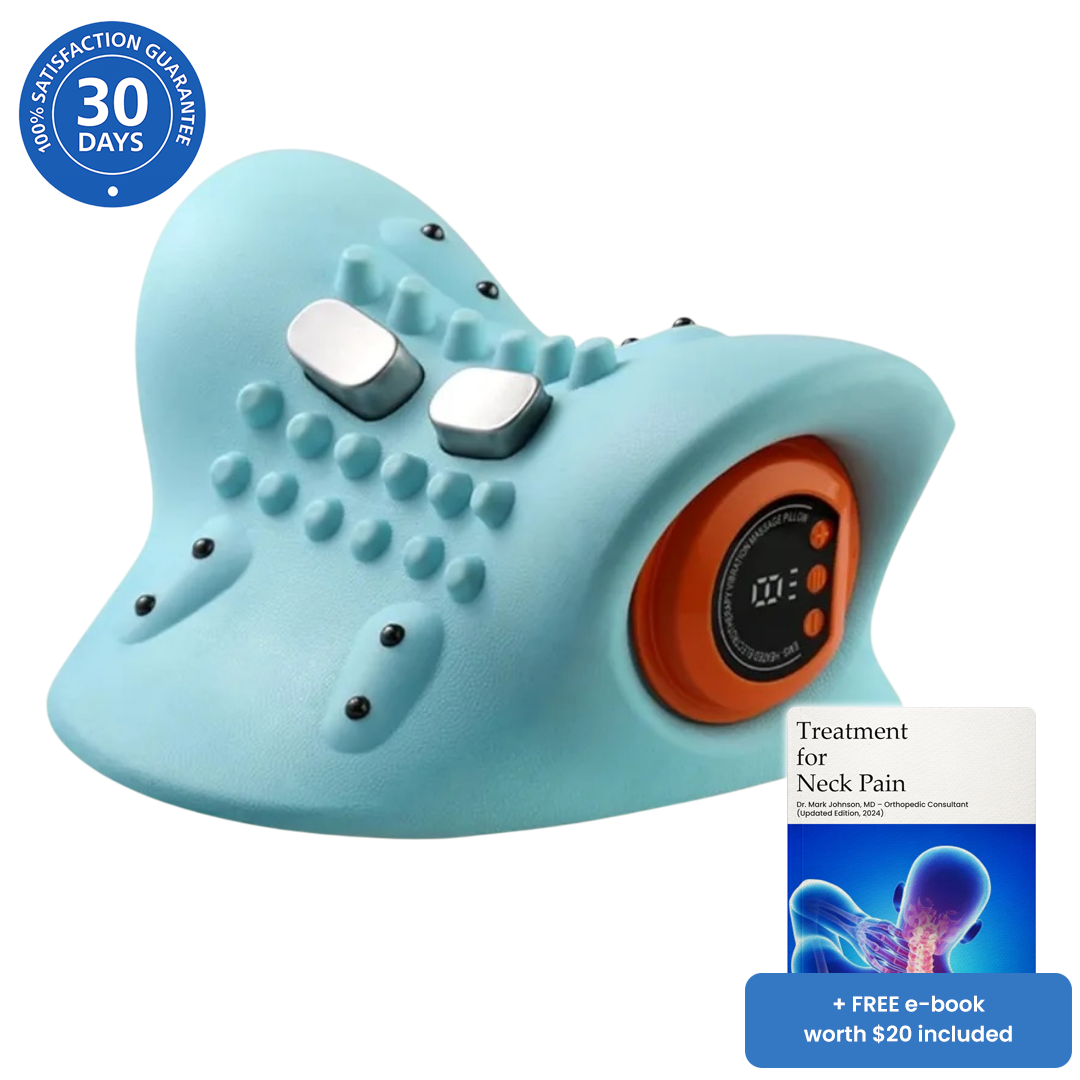
That is precisely what Neckline was built to do — a clinical-grade solution that targets somatic tinnitus safely, at home.

This Device Calms the Nerves While You Relax
Neckline is a 4-in-1 therapy device engineered to release the muscle tension that triggers somatic tinnitus. It brings together:
- Cervical Traction — gently decompresses the upper neck and eases pressure on the nerves at the base of your skull
- EMS (Electrical Muscle Stimulation) — reaches the deep muscle tension that manual massage can’t
- Massage Heads — work the muscles at the base of your skull, a key spot where nerve irritation begins
- Therapeutic Heat — boosts blood flow, loosens tight tissue, and calms overstimulated nerves
Just 15 minutes a day can help quiet the nervous system — easing the ringing, buzzing, and hissing from the root.
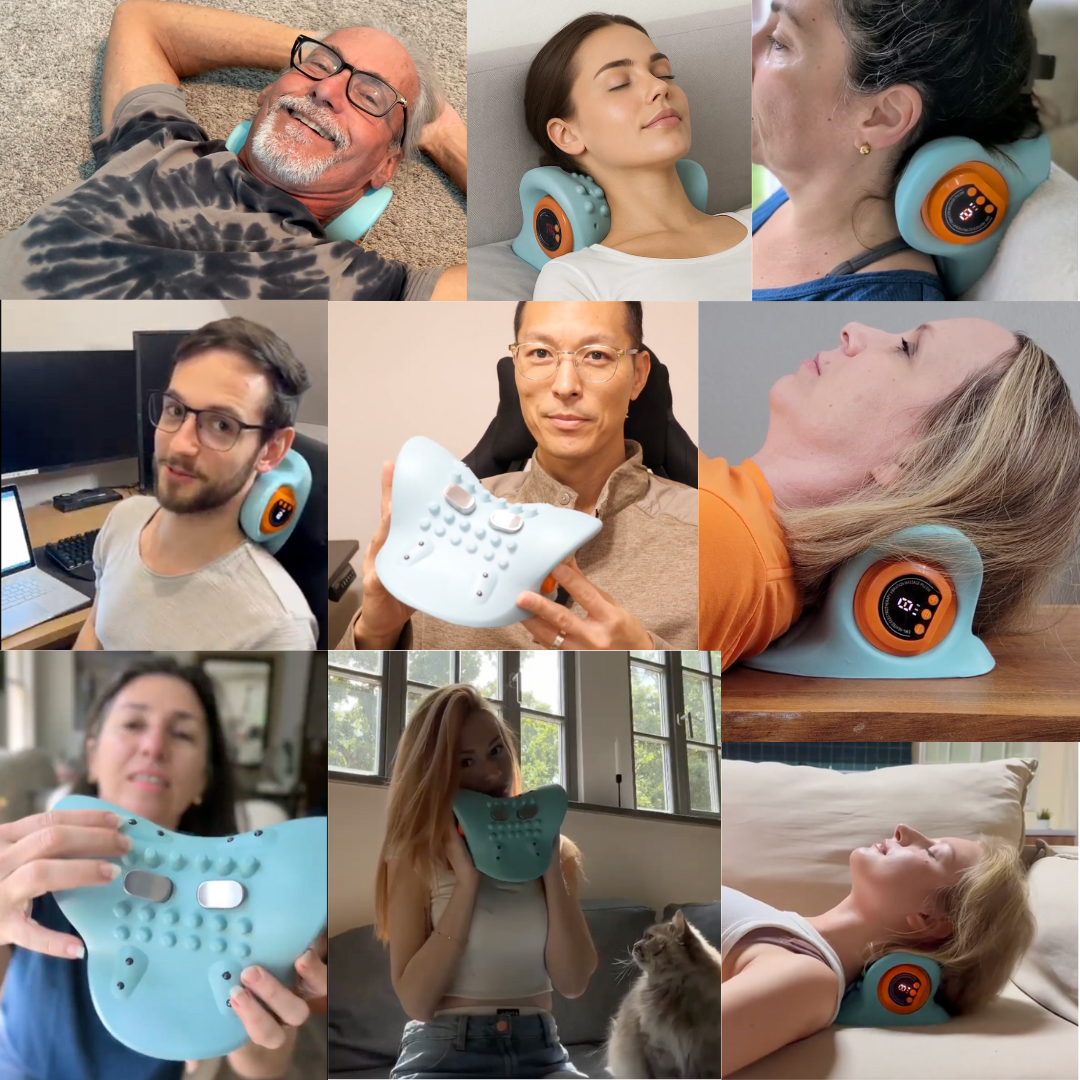
Quiet Your Tinnitus at the Source — Risk-Free. Thousands of people struggling with somatic tinnitus are already using Neckline to tackle the root cause of their symptoms — not just cover up the sound. By releasing cervical tension, improving blood flow, and calming the nerves connected to the auditory system, users are finally getting real relief — without leaning on white noise machines or medication. Best of all, every order is backed by a 30-day risk-free guarantee, so you can try it yourself with zero pressure.
Customer Reviews

This limited-time deal is in high demand and stock keeps selling out.
Try it today with a 30-Day Money-Back Guarantee!

















The information and other content provided on this page, or in any linked materials, are not intended and should not be construed as medical advice, nor is the information a substitute for professional medical expertise or treatment. If you or any other person has a medical concern, you should consult with your health care provider or seek other professional medical treatment. Never disregard professional medical advice or delay in seeking it because of something you have read on this page or in any linked materials. If you think you may have a medical emergency, call your doctor or emergency services immediately.