"5 Signs Your 'Ear Crystals' Aren't Causing Your Dizziness (And It's Your Neck Instead)

Sign #1: Your Neck Hurts (But Your Doctor Ignores It)
You mention the constant ache at the base of your skull. The stiffness when you turn your head. Your doctor nods and says, "That's just from the stress of dealing with vertigo."
But here's what they're missing: BPPV doesn't cause neck pain. It's not part of the diagnosis. Cervicogenic dizziness? Neck pain is almost always present.
That ache at the base of your skull? Those are your suboccipital muscles — tiny, deep muscles at C1-C2 that are chronically tight.
When they stay tight, they:
→ Compress your vertebral arteries (reducing blood flow to your brain's balance centers)
→ Irritate your vagus nerve (causing dizziness, anxiety, nausea)
→ Disrupt proprioceptive signals (your brain gets faulty information about head position)
Your neck isn't reacting to your dizziness. Your neck is causing it.
But most ENTs never examine your neck. They check your balance. Test your inner ear. Order a brain MRI. Everything comes back normal. So they diagnose BPPV.
What they missed: Your neck was never part of the evaluation. Research shows that over 70% of patients with "unexplained positional dizziness" have significant cervical spine dysfunction. But standard BPPV protocols don't include neck assessment. That's why you've been doing the Epley for 18 months while that ache gets worse every day.

Sign #2: You Feel "Floating" (Not Spinning)
When you describe your dizziness, your ENT hears "positional vertigo" and immediately thinks BPPV. But here's what they're not asking: "What exactly does it feel like?" Because BPPV and cervicogenic dizziness feel completely different.
BPPV causes violent vertigo:
The room spins aggressively
Episodes are brief but brutal (20-30 seconds)
You might vomit from the intensity
Then it stops completely until the next trigger
Cervicogenic dizziness feels like instability:
A floating sensation, like you're on a boat
Your balance is off, but the room isn't violently rotating
It's persistent, constantly there in the background
It never fully goes away
You might feel nauseous when you turn your head or change positions. But it's not the violent, incapacitating nausea of true BPPV. It's more like constant unsteadiness that makes you grab onto counters and brace yourself before every movement.
Your ENT hears "dizziness with head movement" and checks the BPPV box. But they never asked you to describe the actual sensation. If they had, they would've realized your symptoms don't match true BPPV at all.
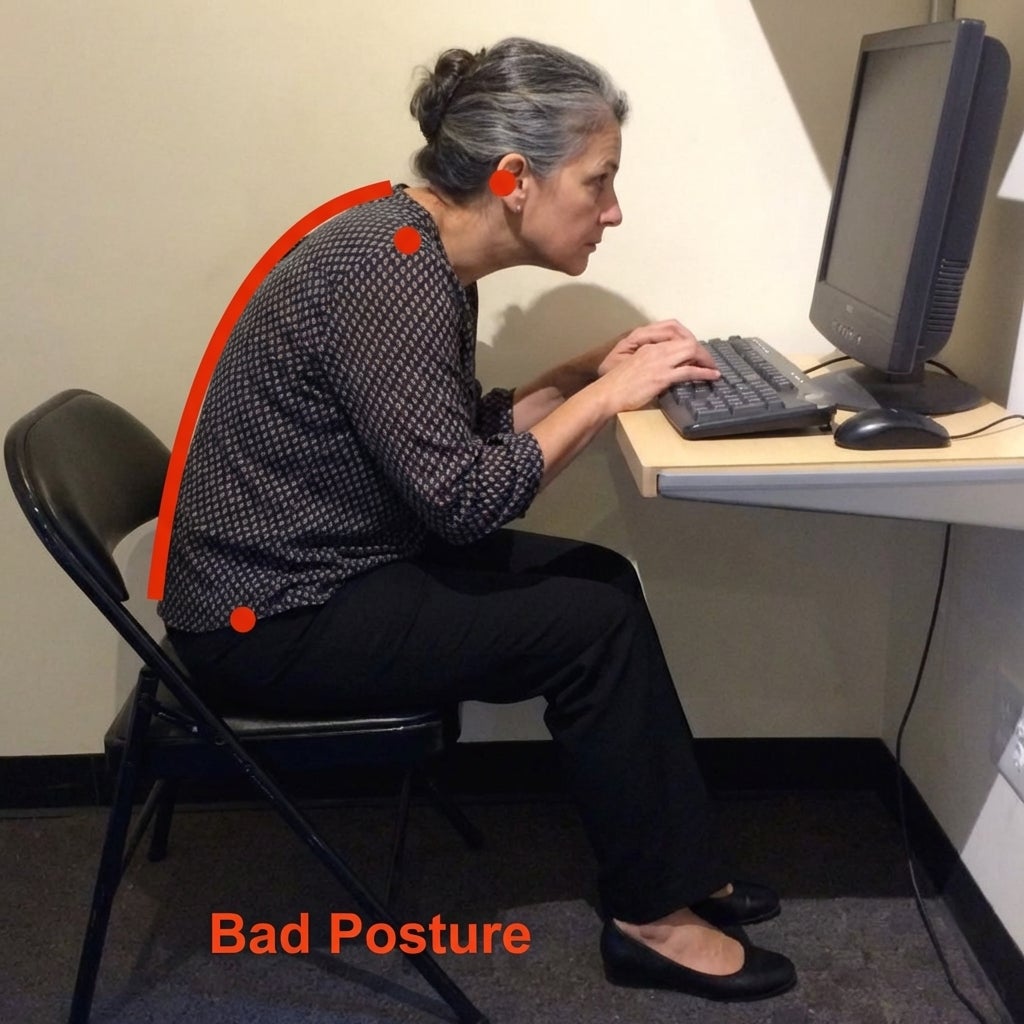
Sign #3: Bad Posture Makes Everything Worse
You've noticed the pattern: After sitting at your desk for hours — worse. After scrolling on your phone — worse. After a long drive — worse. After sleeping in a weird position — you wake up and can barely stand.
Your vestibular therapist says, "You need more habituation exercises." But here's the thing: BPPV is triggered by specific head positions when lying down. Cervicogenic dizziness is triggered by posture, neck position, and sitting too long. Every time you look down at your phone, you're putting 60 pounds of pressure on your neck.
Your already-tight C1-C2 muscles get tighter. Blood flow to your brain gets more restricted. And you get dizzier.
After a long day hunched over your computer, those suboccipital muscles are screaming. The compression on your vertebral arteries intensifies. And by evening, you're holding onto furniture just to walk across the room.
No amount of vestibular retraining can fix a mechanical neck problem. Your brain isn't broken. Your neck is. And until you release that chronic tension at C1-C2, the dizziness will keep getting worse with every hour you spend looking down.

Sign #4: The Epley Maneuver Never Really Works (But They Keep Doing It)
Your ENT does the Epley maneuver. Maybe you feel slightly better for a day. Or maybe nothing changes at all. So you go back. They do it again. Still dizzy. They try different variations. The Semont maneuver. Brandt-Daroff exercises at home. You do everything they ask. But the dizziness stays.
Your doctor says, "The crystals are just stubborn. Some people need multiple treatments." So you keep going back. Five times. Eight times. Twelve times.
Here's what they're not telling you: Real BPPV responds to repositioning maneuvers within 1-3 treatments. Studies show that over 80% of true BPPV cases resolve completely after one or two Epley procedures. If you've had the Epley done 5+ times and you're still dizzy? You don't have loose ear crystals.
You have cervicogenic dizziness — dizziness caused by tight muscles at C1-C2 compressing your vertebral arteries. The Epley repositions crystals in your inner ear. It cannot release chronically tight neck muscles. It cannot open compressed blood vessels. It cannot fix mechanical dysfunction at C1-C2. That's why it never works. Not because your crystals are "stubborn."
But because you never had a crystal problem in the first place.

Sign #5: You've Been "Managing" This For Months (Or Years)
True BPPV typically resolves within 4-6 weeks with proper treatment.
If you've been dealing with positional dizziness for longer than that... you probably don't have BPPV. You have chronic cervicogenic dizziness that's been misdiagnosed. The pattern looks like this:
Month 1: ENT diagnoses BPPV, does Epley
Month 2: Still dizzy, try Epley again
Month 3: Switch to Semont maneuver
Month 6: "Maybe it's just stubborn BPPV"
Month 12: Still holding onto walls
Month 18: Accepting "this is just my life now"
But here's the truth: Cervicogenic dizziness is chronic and persistent because those tight C1-C2 muscles are constantly compressing your arteries. Every day you sit at your desk, they get tighter. Every night you sleep on a bad pillow, they stay locked up. The dizziness never goes away because the mechanical problem creating it never goes away.
Until you release that compression, the dizziness will never stop. No amount of Epley maneuvers can fix a mechanical neck problem. And that's why you're still dizzy 18 months later. Not because BPPV is "stubborn." But because you never had BPPV at all.

4 Out of 5 People With Cervicogenic Dizziness Are Misdiagnosed
Here's why: Most ENTs never examine your neck. They check your balance. Order a brain MRI. Run inner ear tests. Everything comes back normal. So they diagnose BPPV based purely on your positional symptoms.
What they missed: Your neck was never part of the evaluation. Research shows that over 70% of patients with "unexplained chronic dizziness" have significant cervical spine dysfunction. But standard diagnostic protocols don't include neck assessment.
That's why you've been doing the Epley for 18 months and you're still bracing before every head turn.
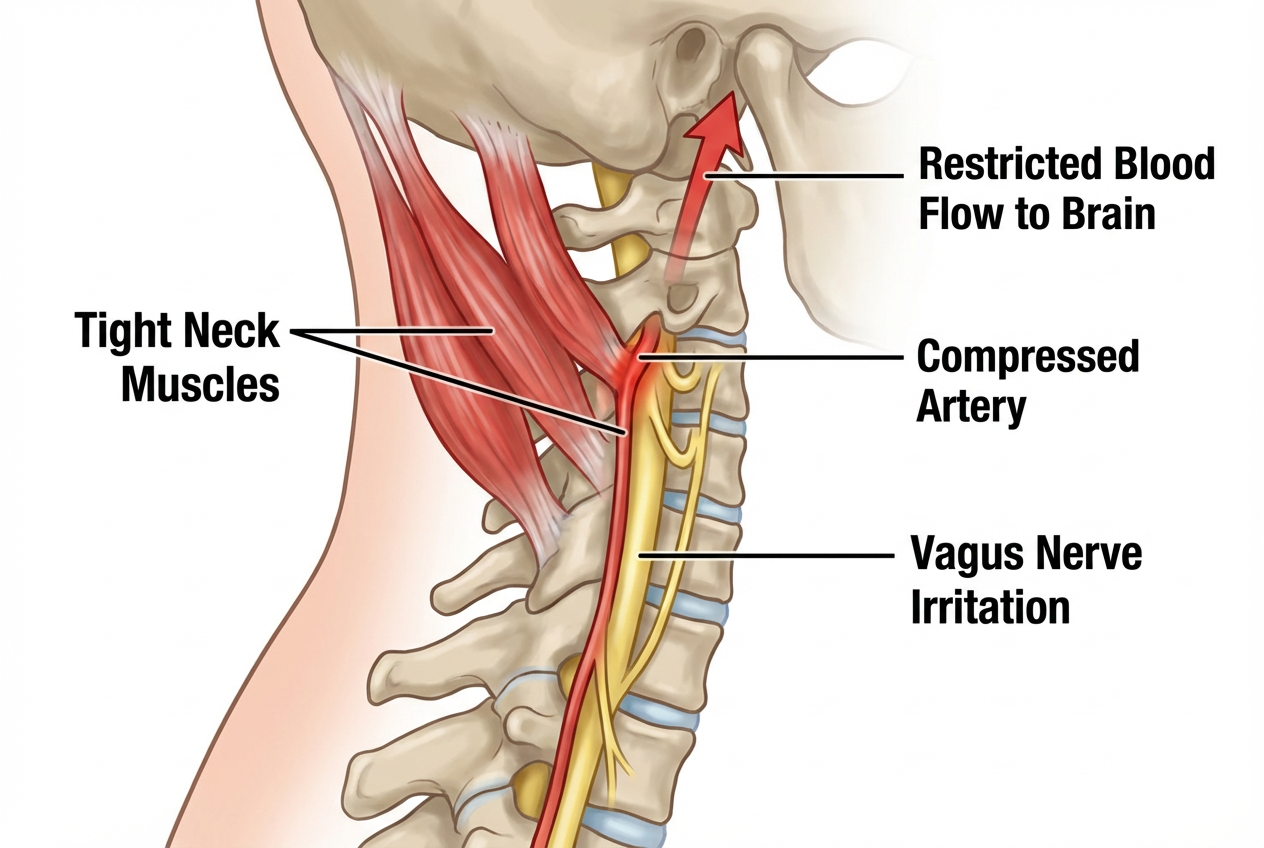
So What IS Cervicogenic Dizziness?
It's dizziness caused by problems in your neck—specifically at C1-C2, where your skull meets your spine. When the deep muscles at the base of your skull become chronically tight, they:
→ Compress your vertebral arteries (reducing blood flow to your brain's balance centers)
→ Irritate your vagus nerve (causing anxiety, heart palpitations, digestive issues)
→ Disrupt proprioceptive signals (your brain gets faulty information about where your head is in space)
This explains:
Why you feel dizzy but all your tests are normal
Why moving your head makes it worse
Why you feel anxious and your heart races
Why the base of your skull aches constantly
Why the Epley doesn't help
Your muscles need to release. It's not your inner ear. Nothing else will fix this.

Recent Research Confirms the Neck-Dizziness Connection
Studies show that patients with "chronic positional dizziness" who received cervical treatment, manual therapy, heat, and deep muscle stimulation targeting C1-C2, saw significant improvement.
One study followed 127 patients diagnosed with "recurrent BPPV" who hadn't responded to multiple Epley treatments. After 4 weeks of cervical-focused therapy: Result: Over 85% reported major symptom reduction.
But most ENTs don't know about this research. Why? Because pharmaceutical companies can't patent manual therapy techniques. No profit means no education. Medical conferences are sponsored by drug companies. Continuing education focuses on medications that generate revenue. A simple neck release technique that costs nothing? There's no financial incentive to teach it.
So you keep getting prescribed Epley maneuvers or betahistine that can't possibly work.
Over 47,000 People Have Found Relief With Neckline
Meet the device that's changing everything: Neckline uses a precisely engineered 26-degree angle positioned exactly where those deep cervical muscles sit at C1-C2.
How it works:
Heat Therapy: Relaxes superficial muscles and increases blood flow.
EMS Technology: Reaches deep suboccipital muscles that massage can't touch. Forces them to contract and release, breaking up chronic tension.
Ergonomic Positioning: The 26-degree angle targets C1-C2 specifically—not your entire neck.
The result? Compressed arteries open up. Blood flows freely to your brain. The irritated vagus nerve calms down. And the dizziness disappears.
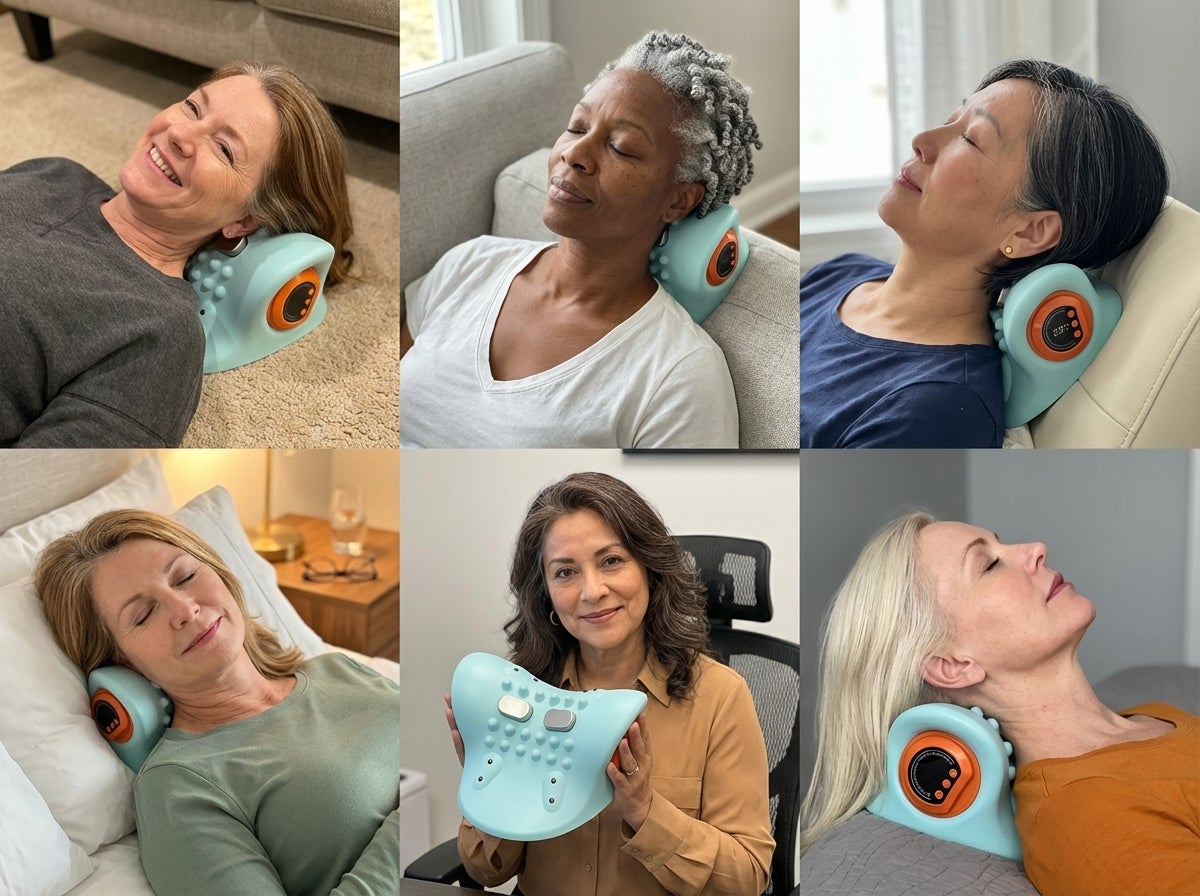
What Others Are Saying
"I've had this floating feeling for three years. Did the Epley Maneuver multiple times. Tried Betahistine. Nothing worked. Started using Neckline two weeks ago—the constant boat feeling is GONE. I can turn my head without the world tilting. First time in years I feel steady."
''After my sixth Epley failed, I started researching on my own. Found out about cervicogenic dizziness and everything clicked. Got Neckline, used it for 10 days, and the vertigo that had plagued me for 9 months just... stopped. I'm furious no doctor ever examined my neck."
"Spent $8,000 on specialists and medications over two years. Nothing helped. This $147 device did what five doctors couldn't. The ache at the base of my skull is almost gone."
A Message From Rachel, The Founder
Look, I know what you're thinking. "Another device? Another thing that won't work?"
Here's the truth: your body wants to heal. The problem is mechanical compression blocking those signals. I've been treating cervicogenic dizziness for 12 years. When I combined manual cervical work with deep muscle release at C1-C2, patients who'd been dizzy for years improved within weeks. But I could only treat 20 patients a week. That's why I created Neckline—to deliver the same treatment at home.
Why hasn't your doctor told you about this? Because they don't know it exists. Medical schools teach doctors to treat dizziness as a brain or inner ear problem. Cervicogenic dizziness? One paragraph in a 600-page textbook.
Try Neckline for 30 days. If the floating feeling doesn't stop, if you're still grabbing onto the grocery cart—full refund, no questions asked. You risk nothing.
But every day without treatment, those compressed arteries stay compressed. Your dizziness gets worse. Don't waste another year on medication number six.
— Dr. Rachel Morrison
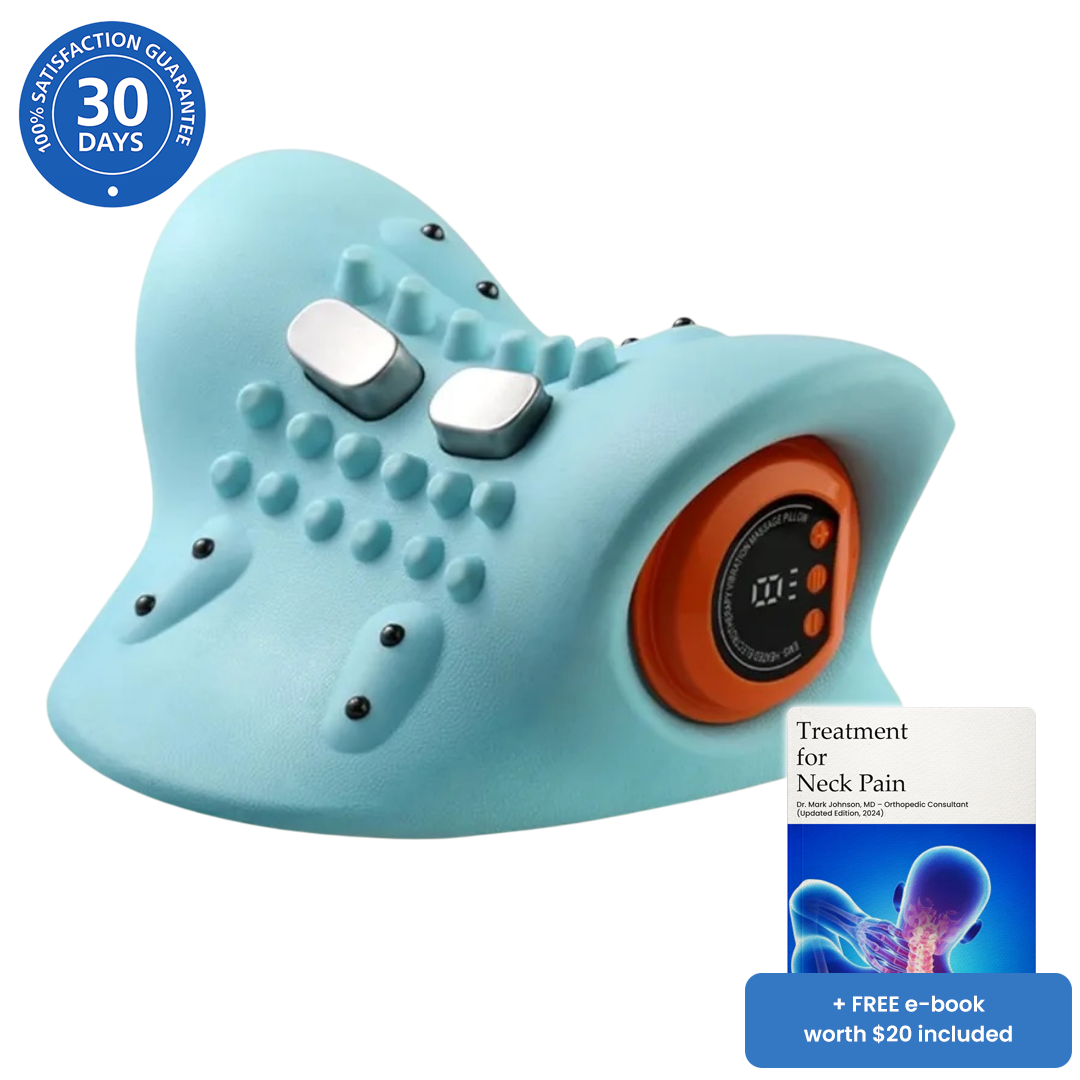
SPECIAL OFFER:
As an exclusive offer for readers of my blog, the Neckline is now offering 50% Off + Free Shipping to all new customers. But this incredible deal only lasts while there's still inventory available, and my sources inside the company say they'll be completely sold out within 2 hours! Plus, you have 30 days to test out your Neckline, and if you don't like it for any reason, you can get a full refund no questions asked.
Remember, there's a HUGE discount when you order 2 Neckline devices (89% of Neckline customers order 2 pieces, to give to family, have as a backup!)
CHECK AVAILABILITY 》Click the link above to see if Neckline™ is still offering a 50% discount and free shipping.

REVIEWS
This is how our website visitors rated Neckline™.
Based on 759 Reviews