 Trending in the US
Doctor Explains: Most Tinnitus Cases Have Nothing to Do With Your Ears
The real culprit? Your neck.
Dr. Michael Chen, a neuro-otologist at Stanford Medical Center, recently studied 847 patients who had constant ringing, buzzing, or high-pitched hissing in their ears.
Every single one had been told their hearing was normal.
Most were handed a white noise machine and sent home with "learn to live with it."
But Dr. Chen noticed something audiologists weren't checking.
89% of these patients had severe muscle tension at C1-C2 — the two vertebrae at the very base of the skull.
The same spot where critical arteries supply blood to your inner ear.
Your Neck Controls More Than You Think
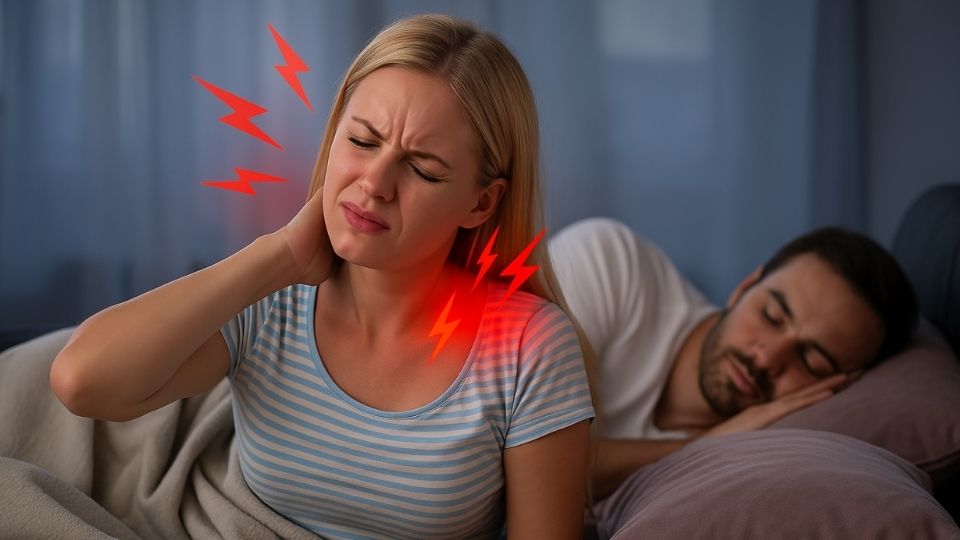
Here's what most audiologists won't explain:
Your inner ear needs constant, fresh blood flow to function properly.
That blood arrives through tiny arteries that run right alongside the muscles at the base of your skull.
When those muscles stay chronically tight — from stress, desk work, phone use, or an old injury — they compress those arteries. Like someone standing on a garden hose.
Your inner ear stops getting enough oxygen. The auditory nerves begin misfiring. Your brain receives scrambled signals — signals that don't correspond to any real sound.
But your brain tries to make sense of them anyway. It interprets the static as sound. Constant sound. Sound nobody else can hear.
And here's the brutal part: no hearing test will ever catch this.
Your hearing is fine. Your inner ear structure is fine. It's the muscle tension at C1-C2 that's choking off blood flow and manufacturing the phantom noise.
Why Doctors Get It Wrong

Sarah Mitchell, 54, burned through sixteen months and $5,800 chasing specialists.
Not one of them examined her neck.
"My neck ached around the clock. The ringing actually changed pitch when I turned my head — but nobody ever connected the two," she says.
Sarah's experience isn't unusual — it's the norm.
Dr. Chen puts it plainly:
The result? Millions of prescriptions for white noise machines and sound therapy that only mask the sound — while the real problem quietly gets worse.
Meanwhile, those compressed arteries at C1-C2 keep starving the inner ear of oxygen.
Why Normal Treatments Don't Work

Even when neck tension is suspected, the usual treatments still fall short.
Sound therapy masks the noise for a while — but does nothing about the compressed arteries.
Regular massage feels great, yet it only reaches the surface muscles. The deep cervical muscles at C1-C2 — where the compression actually happens — stay locked up.
Anti-anxiety medication dulls you emotionally but never restores blood flow.
Physical therapy can genuinely help, but it means months of appointments at $150-300 per session.
That's exactly why Dr. Chen went looking for a better solution.
The Four-Part Solution That Works
Dr. Chen's research uncovered something critical: four specific treatments used together released the deep neck tension faster and more completely than anything else on its own.
Part 1: Electric Muscle Stimulation (EMS)
EMS drives gentle electrical pulses deep into your neck muscles — the ones a regular massage can't reach. Those pulses force the muscles to contract and release, breaking up years of chronic tension. Studies show EMS activates deep muscle 300% more effectively than manual therapy alone.
Part 2: Therapeutic Heat
Heat opens up the blood vessels, boosting flow to the inner ear. It carries fresh oxygen and nutrients in while flushing the metabolic waste trapped in tight tissue out. Research from Johns Hopkins found targeted heat therapy raised cervical blood flow by 47% in just 15 minutes.
Part 3: Precision Massage
Unlike surface rubbing, deep-tissue work hits the exact points where arterial compression occurs at C1-C2. It also switches on your parasympathetic nervous system — the body's natural "calm down and heal" response.
Part 4: Cervical Traction
This is the key. Gentle traction opens space between the vertebrae, lifting direct pressure off the compressed arteries. It's what chiropractors reach for — but safer, gentler, and more controlled.
Together, these four don't just mask the ringing. They restore normal blood flow to your inner ear.
How a $3,000/Month Clinic Fix Now Costs $119.99
Dr. Chen's four-part protocol worked remarkably well. Patients felt dramatic relief within two weeks. But there was one enormous obstacle: cost.
Getting all four treatments meant juggling multiple weekly appointments across different clinics. Insurance rarely covered any of it.
Most patients paid $200-300 per session, two or three times a week. Over a month, that piled up to $2,500-4,000.
"We had something that genuinely worked," Dr. Chen said. "But only wealthy patients could afford it."
That's when medical device engineer Thomas Keller spotted an opening. What if all four clinical treatments could be delivered by a single device at home?
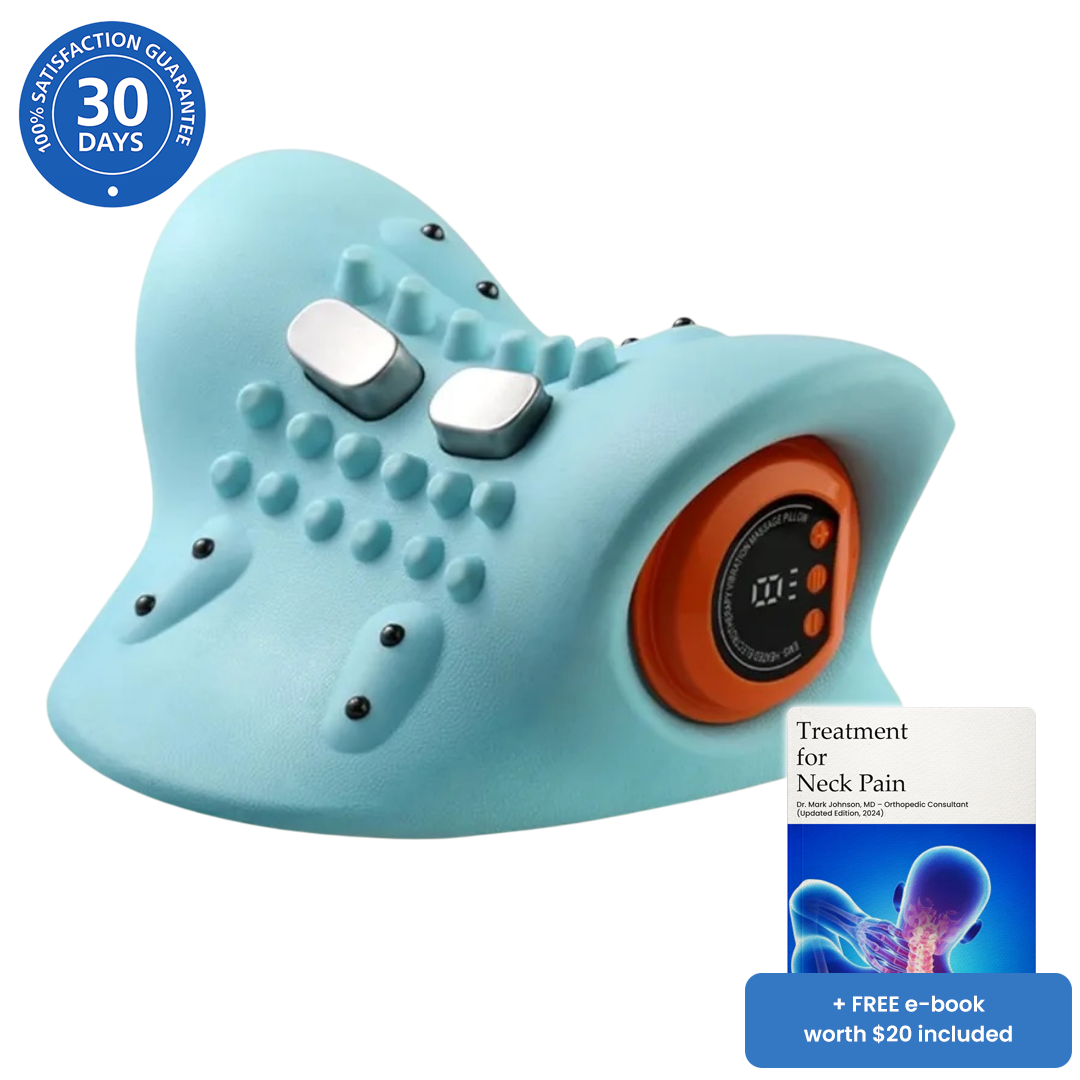
After 18 months of development, he built Neckline — a home device that runs the same four-part clinical protocol simultaneously. Medical-grade technology. Professional-level results. Home-use convenience. All for $119.99.
But not for long. The regular price is $239.98. Right now Neckline is running its annual relief campaign — 50% off to reach as many sufferers as possible before they spend a fortune on clinical treatments. Once the promotion ends, the price returns to $239.98.
From the Clinic to Your Living Room
The Neckline device replicates every piece of Dr. Chen's four-part clinical protocol:
- Medical-grade EMS that reaches the deep C1-C2 muscles (replacing specialist electrical stimulation)
- Therapeutic heat set to the exact temperature used in clinical settings
- Precision massage points positioned right where arterial compression occurs
- Gentle cervical traction that safely opens space between the vertebrae (replacing physical therapy sessions)
You use it for 15 minutes a day.
Dr. Chen was skeptical at first. Could a home device really match his $200-per-session protocol? His team tested it on 50 patients who'd already tried everything — sound therapy, white noise machines, medication — with no relief.
The results stunned them. After two weeks of daily 15-minute sessions:
- 91% experienced significantly quieter ringing
- 87% noticed the sound fade into the background
- 84% had their first quiet morning in months
- 79% reported better sleep
- 76% felt less anxious
"These results matched — and sometimes beat — what we were seeing in the clinic," Dr. Chen said. "Except patients were getting them at home, on their own schedule, without the $3,000-a-month price tag."
Real People, Real Relief


Why It Works When Everything Else Failed
The difference comes down to one thing: depth and blood-flow restoration.
White noise machines mask the symptom. Sound therapy retrains your brain's reaction to the noise. Basic massage only reaches the surface. None of them touch the actual cause.
Neckline's four-part clinical protocol fixes the problem at C1-C2, where the arterial compression lives:
- The EMS breaks up deep muscle tension that's been there for years
- The heat restores blood flow to oxygen-starved auditory nerves
- The massage calms your overworked nervous system
- The traction releases the compressed arteries driving the phantom sound
Together, they don't just hide the ringing. They restore normal blood flow to your inner ear — the same way Dr. Chen's $3,000/month protocol does.
What You're Probably Spending Now

Think about what you're already paying:
- Sound therapy sessions: $100-200 each
- White noise machines: $50-150
- Specialist visits: $150-400 per appointment
- Medications: $50-200/month
- Sleepless nights worrying it will never stop: Priceless
Most people pour thousands into treating a symptom that never improves — because they're never addressing the cervical compression underneath it.
Neckline costs $119.99 (regular price $239.98). One-time payment. Use it forever. That's less than a single specialist visit.
The 30-Day Guarantee

Here's what makes this completely risk-free:
Use Neckline for 30 days. If the ringing doesn't quiet down — if you don't feel the relief that over 47,000 others have — send it back for a full refund. No questions asked.
Dr. Chen stands behind that offer because he's watched the results. Fewer than 1.3% of customers ever request a refund.
What Happens If You Don't Act

Here's the truth about cervical compression: it doesn't resolve on its own. It gets worse.
Every day the muscles at C1-C2 stay tight, the arterial compression deepens. The ringing grows louder. The sleep deprivation compounds. What could be eased in two weeks might take months later — or turn permanent.
Dr. Chen is blunt about it:
Your Two Choices

Choice 1: Keep running white noise machines that only mask the sound. Keep seeing audiologists who test everything except your neck. Keep hoping the ringing fades on its own. (It won't.)
Choice 2: Address the real source with the same four-part clinical protocol that's helping thousands quiet their phantom ringing in just 15 minutes a day — without the $3,000/month cost.
Click the button below to check if it's still in stock. If it is, your discount will be applied automatically.
Rated 4.8/5 | 12,000+ Customers
 Addresses tinnitus caused by neck tension
- Calms irritated nerves connected to your hearing
- Restores blood flow to the inner ear
- Releases deep cervical muscle tension