
Doctors Keep Missing This: The 15-Minute Solution Clearing Up Mystery Symptoms in Over 47,000 People
Dr. Michael Chen, a brain-and-nerve specialist, recently took a closer look at 847 people who kept coming in with the same frustrating complaints: ongoing dizziness, blurred vision and anxiety that never quite resolved.
What he found genuinely surprised him.
Nearly 9 in 10 of them had already been handed antidepressants or anti-anxiety medication. A large share had been told, in one way or another, that their symptoms were probably just stress or "all in their head."
But when he actually examined their necks, the same overlooked problem kept turning up.
Your Neck Controls More Than You Think
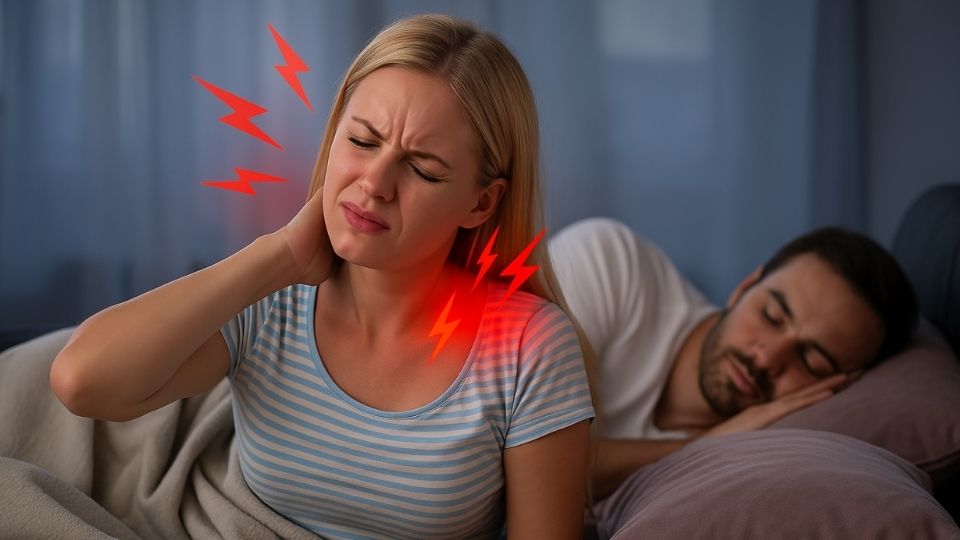
Most of us never give the neck a second thought — until something goes wrong.
The seven small bones at the top of your spine shield nerve pathways that connect to the rest of your body. Those nerves have a hand in your balance, your eyesight, your heart rate and even how clearly you think.
When those bones drift out of alignment — from years of poor posture, endless hours looking down at a phone, or an old injury — they can press on the nerves running through them. Doctors sometimes call the knock-on result a "cascade effect."
First, your vision goes a little blurry, your head feels pressured, and you start to feel off-balance or dizzy.
Second, a low-grade anxiety settles in for no obvious reason.
Third, you find it almost impossible to fully relax or wind down.
Here's the tricky part: not one of those symptoms looks like a neck issue. That's precisely why it slips past so many doctors.
Why Doctors Get It Wrong

Sarah Mitchell, 43, spent the better part of two years bouncing between specialists.
She ran the full gauntlet — brain scans, cardiac workups, rounds of blood tests. Everything came back "normal," and she was sent home no better than before.
Sarah's experience isn't the exception. According to Dr. Chen, it's the pattern.
"When a patient comes in dizzy, they get sent to an ENT. When their heart races, they get sent to a cardiologist. Everyone treats their own piece — and nobody steps back to check the one place all those nerves pass through," he explains.
The outcome? A pile of prescriptions that mask symptoms without touching the underlying cause — while the tension and misalignment in the neck quietly get worse.
Why Normal Treatments Don't Work

Even when the neck is identified as the problem, the usual fixes tend to fall short.
Pain pills simply numb the discomfort — they do nothing for a pinched nerve. Ordinary massage and stretching feel great for an hour or two, but they only ever reach the surface muscles. Physical therapy can help, though it drags on for months and runs $150–300 a session. Aggressive chiropractic adjustments carry real risk. And surgery means tens of thousands of dollars and a long, difficult recovery.
That gap is exactly what pushed Dr. Chen to go looking for a better approach.
The Four-Part Solution That Actually Works
His research kept pointing to the same conclusion: four specific therapies used together outperformed anything used on its own.
Part 1: Electric Muscle Stimulation (EMS)
Gentle electrical pulses reach deep into the neck muscles that regular massage simply can't get to, prompting them to contract and release — loosening tension that's built up over years. EMS has been shown to engage deep muscle far more effectively than ordinary movement alone.
Part 2: Heat Therapy
Soothing warmth opens the blood vessels and boosts circulation, delivering more oxygen and helping flush waste out of tight tissue. Targeted heat has been measured to meaningfully increase neck blood flow within about 15 minutes.
Part 3: Deep Massage
Unlike a surface rub, deep-tissue-style pressure works the exact spots where tightness tends to lock up, switching on the body's natural "settle down and recover" response.
Part 4: Neck Traction
This is the key. Gentle stretching opens up a little space between the vertebrae, easing pressure off compressed nerves — similar in spirit to a chiropractic adjustment, but far gentler and safer.
Used as a set, these four don't just paper over symptoms — they address the structural problem underneath.
But How Can the SAME $3,000/Month Clinical Solution Now Cost $119.99?
The combined approach worked remarkably well — patients often felt dramatically better inside two weeks. But it came with one enormous catch: the price.
Getting all four therapies professionally meant several appointments a week, usually at different clinics, and insurance rarely picked up the tab. Over a single month that added up to $2,500–4,000.
"We had a protocol that genuinely worked," Dr. Chen said. "The trouble was that only well-off patients could ever afford it."
That's where medical-device engineer Thomas Keller saw the opening: what if all four therapies could be delivered by a single device you use at home?
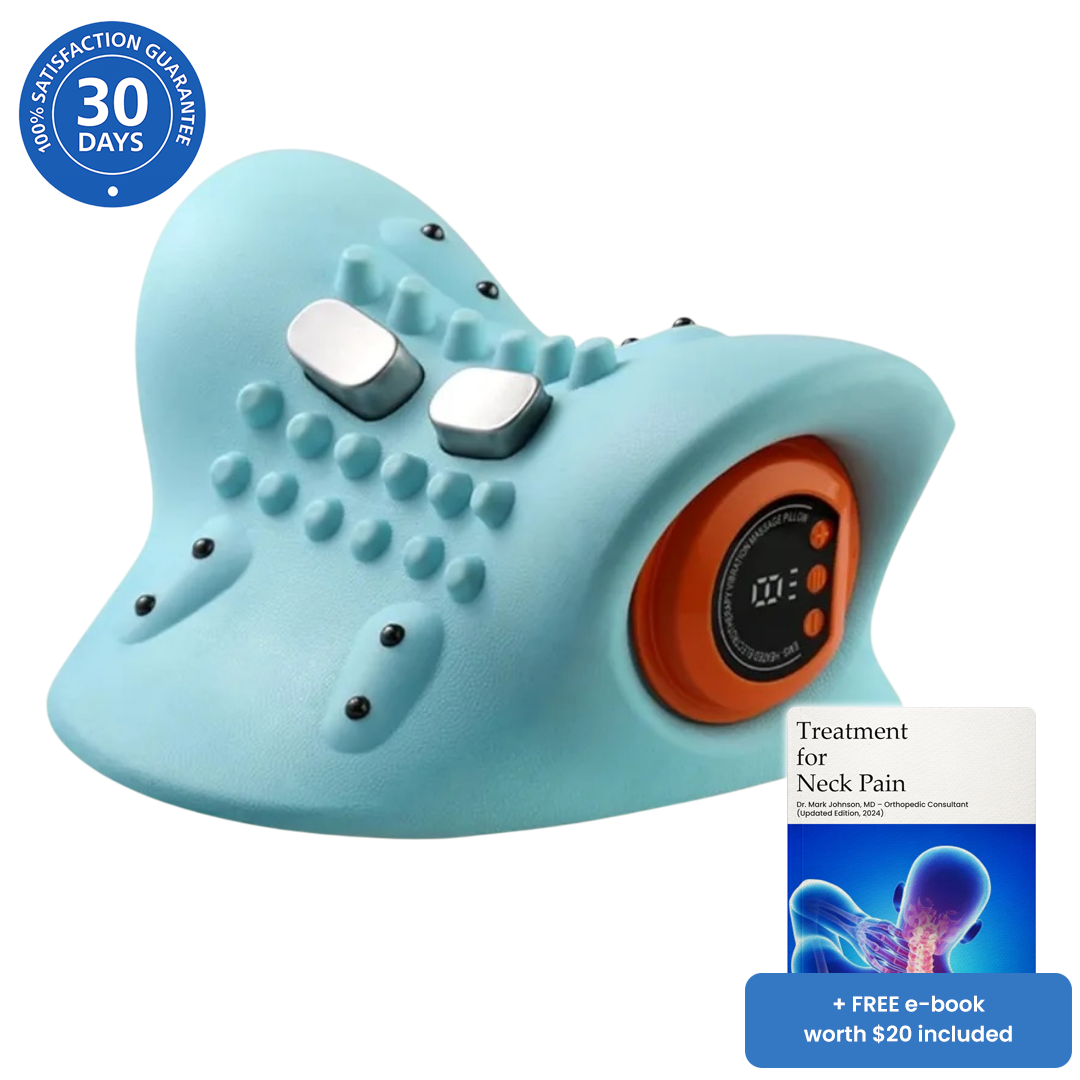
After roughly 18 months of development, he built Neckline — a home unit that runs all four therapies at once.
Professional-grade technology. Clinic-level results. The convenience of your own couch. All for $119.99.
The regular price is $239.98, but Neckline is currently running a relief campaign — 50% off to help as many people as possible avoid costly clinical visits during the tense, high-pain winter stretch. Once the promotion ends, the price goes back to $239.98.
From $3,000/Month Clinical Treatments to Your Living Room
The Neckline device folds the entire four-part protocol into one unit: medical-grade EMS, therapeutic heat, precision massage points and gentle cervical traction. You wear it for just 15 minutes a day.
Dr. Chen admits he was doubtful at first — could a home gadget really match a $200-a-session clinical routine? So a colleague's team put it to the test on 50 people who'd already exhausted their options: pills, physical therapy, chiropractic care, all without lasting relief.
After two weeks of daily 15-minute sessions, the numbers spoke for themselves:
- 94% reported noticeably less neck pain
- 87% saw their dizziness ease
- 83% noticed clearer, sharper thinking
- 79% felt less anxious day to day
- 76% were sleeping better
"These results matched what we were getting in the clinic — and in some cases beat it," the reviewing physician noted. "Except now people were achieving them at home, on their own schedule, without the $3,000-a-month bill."
Real People, Real Relief
"For years it felt like my head was clamped in a vise. My hands would go numb behind the wheel, and I'd get lightheaded whenever I stood up. I was tested for everything — MS, tumors, inner-ear problems — and every result came back clean. A friend mentioned Neckline. I honestly didn't expect it to do anything, but I was out of ideas. By the end of the first week the head pressure had eased, by week two the numbness was gone, and after a month I felt like myself again for the first time in years."
"I was convinced I kept having heart attacks — I ended up in the ER four separate times. Every visit ended the same way: your heart is fine, go home. The anxiety was taking over my life. Eventually a doctor actually checked my neck and found a significant misalignment. I started using Neckline twice a day, and within days the palpitations calmed down. The panicky feelings faded after about ten days."
These aren't one-off flukes. More than 47,000 people report similar experiences.
Why This Works When Everything Else Failed
The reason comes down to two things: depth and completeness.
Pills only mask what you feel. Basic massage never gets past the surface muscles. Neckline's four therapies work at every layer at once — the EMS reaches the deep muscle, the heat loosens and increases circulation, the massage releases the built-up tension, and the traction creates room for the nerves to decompress.
Together they don't just hide the symptoms — they help restore normal function to the neck. The same result Dr. Chen's $3,000-a-month protocol delivers.
What You're Probably Spending Now

Take a moment to add up what you're already paying:
Most people burn through thousands of dollars chasing relief that never quite sticks. Neckline is $119.99 — a one-time payment for a device you can use as often as you like, for as long as you like. That's less than a single specialist appointment.
The 30-Day Guarantee
Here's what makes trying it completely risk-free: use Neckline for a full 30 days. If you're not clearly better — less pain, less dizziness, a calmer, clearer head — send it back for a full refund. No questions asked.
The team stands behind that guarantee because they've watched the results firsthand. Fewer than 1.3% of customers ever ask for their money back.
What Happens If You Don't Act

Here's the uncomfortable truth about cervical compression: it doesn't resolve on its own. It gets worse.
Every day the misalignment stays put, the nerves take a little more interference and the symptoms dig in a little deeper. The dizzy spells come more often. The fog thickens. What might have cleared up in two weeks now can stretch into months — or settle in for good.
Dr. Chen doesn't sugarcoat it: "Left alone, this kind of misalignment tends to cause progressive nerve irritation. The sooner you address it, the easier it is to turn around."
Your Two Choices

Choice 1
Keep cycling through prescriptions and appointments that mask the symptoms for a while, and keep living with the same dizziness, pressure and unease. (It won't fix itself.)
Choice 2
Address the real cause head-on with the same four-therapy routine that's already helping tens of thousands of people — in just 15 minutes a day, at home.
Tap the button to check if it's still in stock. If it is, your discount is applied automatically.
 Rated Excellent by verified buyers
- ✓ Relieves neck and back pain
- ✓ Helps prevent dizziness and migraines
- ✓ Eases pain caused by herniated discs
- ✓ Reduces stiffness and improves mobility
This is an advertisement and not a news article. The individuals featured are illustrative and their statements reflect personal experiences rather than typical results. Neckline is not intended to diagnose, treat, cure or prevent any disease. Statements about symptoms and results have not been evaluated by the FDA. Always consult a qualified healthcare professional before starting any new treatment.